



Process layout
This application case features an automated picking and replenishment system utilizing 15 Geek+ P800 mobile robots within an e-commerce fulfillment center. By integrating specialized picking and replenishment stations, the system uses self-learning algorithms to optimize warehouse layouts based on SKU movement frequency, maximizing storage density and operational efficiency in a compact space.
Components
| Robot |
|
|---|
Workflow
| STEP 1. | [Picking Process] |
|---|---|
| STEP 2. | Order Entry: Online orders are received and entered into the system. |
| STEP 3. | Targeting: Robots navigate to the specific racks containing the ordered items. |
| STEP 4. | Transport: Robots lift the racks and move them to the designated picking station. |
| STEP 5. | Item Picking: Workers pick the required items from the delivered rack. |
| STEP 6. | Return: Robots return the racks to their optimized storage positions. [Replenishment Process] |
| STEP 7. | Restock Request: A replenishment order is initiated for stock. |
| STEP 8. | Rack Retrieval: Robots move to the corresponding storage racks. |
| STEP 9. | Inbound Flow: Robots carry the racks to the replenishment station. |
| STEP 10. | Loading: New stock is loaded onto the racks by workers. |
| STEP 11. | Final Placement: Robots transport the replenished racks back to the storage area. |
Features
Exceptional Performance & Maximized Space Utilization
Compact Efficiency: Build a high-performance logistics center even within limited footprints by utilizing space-saving mobile robot technology.
Intelligent Storage Optimization: Automatically reconfigures storage layouts based on SKU movement frequency to minimize travel time for both picking and replenishment.
Heavy-Duty Handling: Robustly transports heavy loads up to 1,000kg.
Operational Versatility: Supports a hybrid mix of pallet and rack-based workflows.
Flexible Picking Strategies: Adaptable to multiple methods, including discrete order picking and total (batch) picking.
High Throughput: Achieves a picking rate of 300 to 600 pieces per hour per worker.
Minimized Investment & Operational Excellence
RaaS (Robots-as-a-Service) Model: Minimizes initial CAPEX while maximizing uptime through professional maintenance and service-based operation.
Massive Fleet Management: Advanced technology capable of coordinating and optimizing fleets of over 100 units simultaneously.
24/7 Productivity: Automated self-charging ensures non-stop, day-and-night operation.
High Stability and Global Reliability
Proven Track Record: Reliability is guaranteed by a global installation base of over 10,000 units operating worldwide.
Results
| Key Benefits | Storage Efficiency: Significant increase in inventory density within the existing footprint.
Time Optimization: Drastic reduction in lead times for both restocking and picking processes.
|
|---|---|
| Client Feedback | By implementing the Geek+ solution, we reduced our storage footprint by 30% and successfully gained the capacity to rapidly process approximately 300,000 orders per day. |
Unauthorized copying or reproduction of any content on Marosol may violate the Unfair Competition Prevention Act and Copyright Act.
Recommended Solution

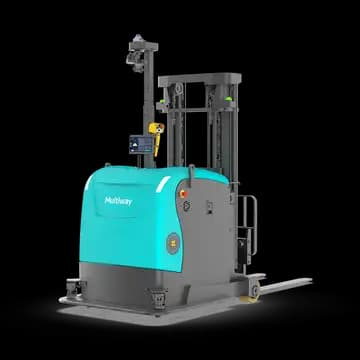
Haemil FA Unmanned Forklift SFL-COD140
This video information presents an autonomous logistics transport Forklift system based on SLAM (Simultaneous Localization and Mapping). It provides an autonomous unmanned method for logistics transport and stacking tasks, ensuring safety through Navigation Scan Lidar for positioning, Multi-Lidar for object and obstacle recognition, and 2D/3D cameras for pallet and cage loading. What is SLAM (Simultaneous Localization and Mapping)? It is a core technology for autonomous driving where a robot creates an accurate map of its work environment using only its onboard autonomous sensors while navigating the workspace. Project Background & Objectives Accurate and repetitive logistics tasks using autonomous robots.

LG CNS Smart Logistics Equipment (Hybrid Wheel Sorter)
This application case features the LG CNS Hybrid Wheel Sorter, a smart logistics solution that enhances sorting accuracy and stability by improving the structural drawbacks of conventional circular roller wheel sorters through a belt-type application. It is an ideal solution for scenarios requiring the stable sorting of long items, sacks, and irregular-shaped cargo. The Belt-Type Wheel Sorter is a next-generation wheel sorter developed to overcome sorting errors caused by the narrow contact surfaces of traditional circular rollers. By replacing circular rollers with belt-type rollers, the contact area with the cargo is widened, significantly improving both sorting precision and stability. Additionally, its modular configuration ensures easy installation and maintenance. This system enables the construction of efficient logistics centers capable of handling high throughput by stably transporting and sorting diverse types of goods.

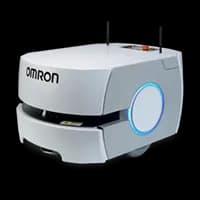
Cart Towing and Elevator Navigation using OMRON LD-250
This solution implements cart towing and cross-floor transport using OMRON's LD-250. The OMRON LD-250 is an Autonomous Mobile Robot (AMR) that maps its environment and navigates along optimal paths, adapting to real-time changes on-site. While the LD-250 has a direct payload of 250kg, it can move even heavier loads when configured for towing. Its ability to interface with elevators allows for a much broader scope of automated cart transport across multiple floors of a building.
Process layout
This application case features an automated picking and replenishment system utilizing 15 Geek+ P800 mobile robots within an e-commerce fulfillment center. By integrating specialized picking and replenishment stations, the system uses self-learning algorithms to optimize warehouse layouts based on SKU movement frequency, maximizing storage density and operational efficiency in a compact space.
Components
| Robot |
|
|---|
Workflow
| STEP 1. | [Picking Process] |
|---|---|
| STEP 2. | Order Entry: Online orders are received and entered into the system. |
| STEP 3. | Targeting: Robots navigate to the specific racks containing the ordered items. |
| STEP 4. | Transport: Robots lift the racks and move them to the designated picking station. |
| STEP 5. | Item Picking: Workers pick the required items from the delivered rack. |
| STEP 6. | Return: Robots return the racks to their optimized storage positions. [Replenishment Process] |
| STEP 7. | Restock Request: A replenishment order is initiated for stock. |
| STEP 8. | Rack Retrieval: Robots move to the corresponding storage racks. |
| STEP 9. | Inbound Flow: Robots carry the racks to the replenishment station. |
| STEP 10. | Loading: New stock is loaded onto the racks by workers. |
| STEP 11. | Final Placement: Robots transport the replenished racks back to the storage area. |
Features
Exceptional Performance & Maximized Space Utilization
Compact Efficiency: Build a high-performance logistics center even within limited footprints by utilizing space-saving mobile robot technology.
Intelligent Storage Optimization: Automatically reconfigures storage layouts based on SKU movement frequency to minimize travel time for both picking and replenishment.
Heavy-Duty Handling: Robustly transports heavy loads up to 1,000kg.
Operational Versatility: Supports a hybrid mix of pallet and rack-based workflows.
Flexible Picking Strategies: Adaptable to multiple methods, including discrete order picking and total (batch) picking.
High Throughput: Achieves a picking rate of 300 to 600 pieces per hour per worker.
Minimized Investment & Operational Excellence
RaaS (Robots-as-a-Service) Model: Minimizes initial CAPEX while maximizing uptime through professional maintenance and service-based operation.
Massive Fleet Management: Advanced technology capable of coordinating and optimizing fleets of over 100 units simultaneously.
24/7 Productivity: Automated self-charging ensures non-stop, day-and-night operation.
High Stability and Global Reliability
Proven Track Record: Reliability is guaranteed by a global installation base of over 10,000 units operating worldwide.
Results
| Key Benefits | Storage Efficiency: Significant increase in inventory density within the existing footprint.
Time Optimization: Drastic reduction in lead times for both restocking and picking processes.
|
|---|---|
| Client Feedback | By implementing the Geek+ solution, we reduced our storage footprint by 30% and successfully gained the capacity to rapidly process approximately 300,000 orders per day. |
Unauthorized copying or reproduction of any content on Marosol may violate the Unfair Competition Prevention Act and Copyright Act.
Recommended Solution
Haemil FA Unmanned Forklift SFL-COD140
This video information presents an autonomous logistics transport Forklift system based on SLAM (Simultaneous Localization and Mapping). It provides an autonomous unmanned method for logistics transport and stacking tasks, ensuring safety through Navigation Scan Lidar for positioning, Multi-Lidar for object and obstacle recognition, and 2D/3D cameras for pallet and cage loading. What is SLAM (Simultaneous Localization and Mapping)? It is a core technology for autonomous driving where a robot creates an accurate map of its work environment using only its onboard autonomous sensors while navigating the workspace. Project Background & Objectives Accurate and repetitive logistics tasks using autonomous robots.
LG CNS Smart Logistics Equipment (Hybrid Wheel Sorter)
This application case features the LG CNS Hybrid Wheel Sorter, a smart logistics solution that enhances sorting accuracy and stability by improving the structural drawbacks of conventional circular roller wheel sorters through a belt-type application. It is an ideal solution for scenarios requiring the stable sorting of long items, sacks, and irregular-shaped cargo. The Belt-Type Wheel Sorter is a next-generation wheel sorter developed to overcome sorting errors caused by the narrow contact surfaces of traditional circular rollers. By replacing circular rollers with belt-type rollers, the contact area with the cargo is widened, significantly improving both sorting precision and stability. Additionally, its modular configuration ensures easy installation and maintenance. This system enables the construction of efficient logistics centers capable of handling high throughput by stably transporting and sorting diverse types of goods.
Cart Towing and Elevator Navigation using OMRON LD-250
This solution implements cart towing and cross-floor transport using OMRON's LD-250. The OMRON LD-250 is an Autonomous Mobile Robot (AMR) that maps its environment and navigates along optimal paths, adapting to real-time changes on-site. While the LD-250 has a direct payload of 250kg, it can move even heavier loads when configured for towing. Its ability to interface with elevators allows for a much broader scope of automated cart transport across multiple floors of a building.