




Process layout
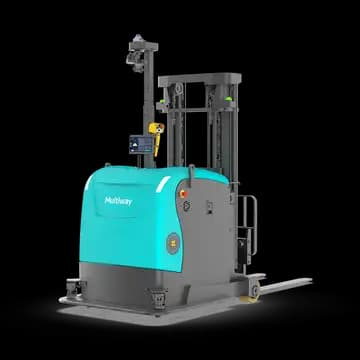
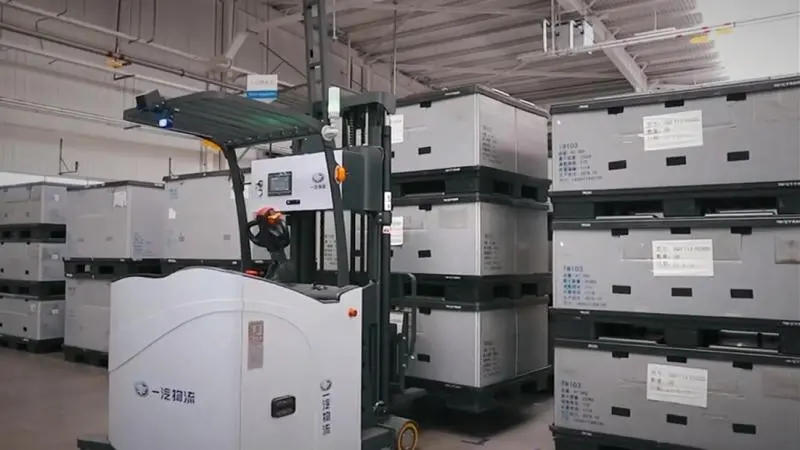
This video information presents an autonomous logistics transport Forklift system based on SLAM (Simultaneous Localization and Mapping). It provides an autonomous unmanned method for logistics transport and stacking tasks, ensuring safety through Navigation Scan Lidar for positioning, Multi-Lidar for object and obstacle recognition, and 2D/3D cameras for pallet and cage loading.
What is SLAM (Simultaneous Localization and Mapping)? It is a core technology for autonomous driving where a robot creates an accurate map of its work environment using only its onboard autonomous sensors while navigating the workspace.
Project Background & Objectives
Accurate and repetitive logistics tasks using autonomous robots.
Components
| Robot |
|
|---|
Workflow
| STEP 1. | Scenario Configuration: Configure transport and loading scenarios according to the work environment. |
|---|---|
| STEP 2. | System Integration: Install and connect the system to the site. |
| STEP 3. | SLAM Mapping: Create a work map using the AMR’s built-in SLAM function. |
| STEP 4. | Site Application: Implement the system for operational use. |
Features
Operational Efficiency and Safety
Market Proven AMR: Secured stability with the world's No. 1 global market share in autonomous mobile robots.
Efficient Space Utilization & Optimal Logistics Routing: Implementation of SLAM-based 3D mapping and Digital Twin CCTV monitoring.
Max 12–18 Months ROI
Expected ROI within 12–18 months for standard sales.
Labor costs (including incidental expenses) X 2 Shifts = 90–100 million KRW per year (Forklift purchase cost excluded).
Results
| Key Benefits | Reduced operational losses + reduced accidents = increased opportunity cost.
|
|---|---|
| Client Feedback | "Thanks to the outstanding performance of the unmanned forklift, we were able to configure stable and accurate logistics scenarios."
|
Unauthorized copying or reproduction of any content on Marosol may violate the Unfair Competition Prevention Act and Copyright Act.
Recommended Solution

An Order Picking System Solution for Logistics Warehouses using AMRs
Process Overview This case study demonstrates an order picking system that optimizes the operation of ten Eugene Gocart 180s using Marosol's remote control system, SOLlink. With the self-developed SOLlink, multiple AMRs are clustered and controlled to maximize logistics system efficiency. The order picking system, integrated with WMS, allows for flexible handling during peak periods without the need for additional workers. Warranty Period 1 Year Performance Year 2023 Project Duration Need for consultation Project Background and Objectives Improved workforce supply and employment stability through the introduction of logistics robots Introducing robots for high-intensity, repetitive tasks reduces the risk of musculoskeletal disorders and industrial accidents among workers Integrating WMS and order picking systems increases work efficiency and reduces error rates

CMES Palletizing Solution Revealed: Why Coupang Chose This AI-Powered Robot
Project Overview The CMES Palletizing solution is a robot automation system designed to automatically stack boxes of various sizes and shapes onto pallets. This system optimizes palletizing—one of the most critical tasks in Logistics—by integrating 3D vision and AI technology. Even when irregular boxes arrive at random, the AI independently generates optimal stacking patterns, providing high efficiency and space utilization. Project Background & Objectives Palletizing is crucial in large-scale logistics centers and manufacturing, but the increasing variety of box sizes and shapes makes manual labor time-consuming and costly. To address this, CMES has developed AI learning algorithms since 2014 and finalized an automated palletizing solution through various verification stages. This solution was specifically implemented to meet the technical need for fast and accurate processing of irregular boxes in large-scale logistics centers like Coupang.

YASKAWA Industrial Robot Hanger-Box Palletizing Automation
Process Overview This deployment uses a YASKAWA GP180 to palletize boxes of hanger products weighing over 20 kg onto pallets. By replacing manual handling in heavy-payload work, it helps prevent musculoskeletal disorders and enables faster, more consistent palletizing performance. Note: Cost may vary depending on the installation environment, robot brand, and payload requirements.
Process layout
This video information presents an autonomous logistics transport Forklift system based on SLAM (Simultaneous Localization and Mapping). It provides an autonomous unmanned method for logistics transport and stacking tasks, ensuring safety through Navigation Scan Lidar for positioning, Multi-Lidar for object and obstacle recognition, and 2D/3D cameras for pallet and cage loading.
What is SLAM (Simultaneous Localization and Mapping)? It is a core technology for autonomous driving where a robot creates an accurate map of its work environment using only its onboard autonomous sensors while navigating the workspace.
Project Background & Objectives
Accurate and repetitive logistics tasks using autonomous robots.
Components
| Robot |
|
|---|
Workflow
| STEP 1. | Scenario Configuration: Configure transport and loading scenarios according to the work environment. |
|---|---|
| STEP 2. | System Integration: Install and connect the system to the site. |
| STEP 3. | SLAM Mapping: Create a work map using the AMR’s built-in SLAM function. |
| STEP 4. | Site Application: Implement the system for operational use. |
Features
Operational Efficiency and Safety
Market Proven AMR: Secured stability with the world's No. 1 global market share in autonomous mobile robots.
Efficient Space Utilization & Optimal Logistics Routing: Implementation of SLAM-based 3D mapping and Digital Twin CCTV monitoring.
Max 12–18 Months ROI
Expected ROI within 12–18 months for standard sales.
Labor costs (including incidental expenses) X 2 Shifts = 90–100 million KRW per year (Forklift purchase cost excluded).
Results
| Key Benefits | Reduced operational losses + reduced accidents = increased opportunity cost.
|
|---|---|
| Client Feedback | "Thanks to the outstanding performance of the unmanned forklift, we were able to configure stable and accurate logistics scenarios."
|
Unauthorized copying or reproduction of any content on Marosol may violate the Unfair Competition Prevention Act and Copyright Act.
Recommended Solution
An Order Picking System Solution for Logistics Warehouses using AMRs
Process Overview This case study demonstrates an order picking system that optimizes the operation of ten Eugene Gocart 180s using Marosol's remote control system, SOLlink. With the self-developed SOLlink, multiple AMRs are clustered and controlled to maximize logistics system efficiency. The order picking system, integrated with WMS, allows for flexible handling during peak periods without the need for additional workers. Warranty Period 1 Year Performance Year 2023 Project Duration Need for consultation Project Background and Objectives Improved workforce supply and employment stability through the introduction of logistics robots Introducing robots for high-intensity, repetitive tasks reduces the risk of musculoskeletal disorders and industrial accidents among workers Integrating WMS and order picking systems increases work efficiency and reduces error rates
CMES Palletizing Solution Revealed: Why Coupang Chose This AI-Powered Robot
Project Overview The CMES Palletizing solution is a robot automation system designed to automatically stack boxes of various sizes and shapes onto pallets. This system optimizes palletizing—one of the most critical tasks in Logistics—by integrating 3D vision and AI technology. Even when irregular boxes arrive at random, the AI independently generates optimal stacking patterns, providing high efficiency and space utilization. Project Background & Objectives Palletizing is crucial in large-scale logistics centers and manufacturing, but the increasing variety of box sizes and shapes makes manual labor time-consuming and costly. To address this, CMES has developed AI learning algorithms since 2014 and finalized an automated palletizing solution through various verification stages. This solution was specifically implemented to meet the technical need for fast and accurate processing of irregular boxes in large-scale logistics centers like Coupang.
YASKAWA Industrial Robot Hanger-Box Palletizing Automation
Process Overview This deployment uses a YASKAWA GP180 to palletize boxes of hanger products weighing over 20 kg onto pallets. By replacing manual handling in heavy-payload work, it helps prevent musculoskeletal disorders and enables faster, more consistent palletizing performance. Note: Cost may vary depending on the installation environment, robot brand, and payload requirements.