





Process layout
Project Overview
The CMES Palletizing solution is a robot automation system designed to automatically stack boxes of various sizes and shapes onto pallets. This system optimizes palletizing—one of the most critical tasks in Logistics—by integrating 3D vision and AI technology. Even when irregular boxes arrive at random, the AI independently generates optimal stacking patterns, providing high efficiency and space utilization.
Project Background & Objectives
Palletizing is crucial in large-scale logistics centers and manufacturing, but the increasing variety of box sizes and shapes makes manual labor time-consuming and costly. To address this, CMES has developed AI learning algorithms since 2014 and finalized an automated palletizing solution through various verification stages. This solution was specifically implemented to meet the technical need for fast and accurate processing of irregular boxes in large-scale logistics centers like Coupang.
Components
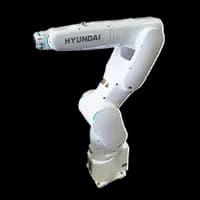
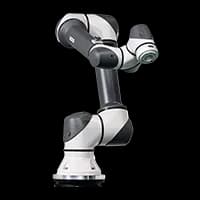
| Robot | Robot Arm: Performs palletizing tasks according to AI commands, safely handling boxes of various sizes and weights with precise movements. |
|---|
Workflow
| STEP 1. | Incoming Box Scan: The 3D vision system scans the size and shape of incoming boxes in real-time. |
|---|---|
| STEP 2. | Palletizing Pattern Generation: The AI analyzes box data to automatically generate the optimal palletizing pattern. |
| STEP 3. | Buffer System Operation: Temporarily stores items in a buffer system if necessary to maximize palletizing efficiency. |
| STEP 4. | Palletizing Execution: The robot arm completes the task by systematically stacking boxes onto the pallet as directed by the AI. |
Features
Random Box Handling: Even with varying box sizes and shapes, the AI automatically generates optimal patterns to enable efficient palletizing.
High Space Utilization: Maximizes pallet space through AI and 3D vision technology, greatly enhancing the efficiency of Logistics operations.
Flexible Scalability: The system can be expanded or customized to meet the specific demands of various logistics centers, making it suitable for diverse work environments.
Speed and Accuracy: The combination of a 3D vision system and AI allows for fast and precise item processing, accelerating overall logistics workflows.
Results
| Key Benefits | Improved Operational Efficiency: Automating the processing of irregular boxes significantly increases task speed and reduces manual labor requirements.
Space Optimization: Maximizing pallet space leads to reduced logistics costs and optimized flow of goods.
Cost Reduction: Overall operating costs are lowered through labor savings and a decrease in manual errors thanks to automation.
Enhanced Global Competitiveness: Successfully applied to major logistics firms like Coupang since 2021, this technology is recognized for its competitiveness in the global market.
|
|---|
Unauthorized copying or reproduction of any content on Marosol may violate the Unfair Competition Prevention Act and Copyright Act.
Recommended Solution

Indoor Logistics Transport and Loading Using VisionNav VNPA15🏗️
Process Overview This case study showcases a logistics automation solution that uses VisionNav's VNPA15 autonomous mobile robot (AMR) to automate the transport and loading/stacking of packaged products in indoor material-handling operations. Built on robust safety functions, the solution minimizes changes to existing workflows while enabling unattended load/unload tasks, and provides effective monitoring and control of real-time operations.

AMR Logistics Robots Introduced to Manufacturing Factory ✨ Logistics Automation that Quickly Resolves Even 1 Ton of Waste Derbris (2 KUKA KMP 1500P Logistics Robots)
Process Overview This case study demonstrates the installation of a KUKA KMP 1500P logistics robot at Bigwave Robotics (Marosol) to transport rollers and scrap debris within the space manufacturing facility. The KMP 1500P autonomously handles up to 1 ton of scrap debris over a 1.2 km distance and automatically transports heavy-duty roller modules weighing up to 1 ton. Furthermore, sensors embedded in the KMP 1500P enabled the development of an unmanned system capable of safely transporting heavy-duty materials. Project Background and Purpose Automated unmanned transport using autonomous robots Robots perform simple, repetitive tasks Safe operation of heavy-duty products using various sensors Remote control and monitoring using SOLlink

Omron AMR Logistics Robot Successfully Automates Raw Material Transport to Boost Operational Efficiency
Project Overview This implementation case features a large-scale circular raw material transport solution utilizing Omron AMR Logistics robots. Previously, raw material transport involved workers manually rolling large circular containers, which created issues with fatigue and efficiency, necessitating an automation solution. This project aimed to automate the movement of raw materials by introducing Omron AMR Logistics robots, thereby reducing worker burden and significantly improving operational efficiency. Project Background & Objectives When raw materials arrived in large containers, the manual transport process by workers involved high labor intensity and the risk of injury. Furthermore, productivity decreased due to time consumption and operational imbalances. The objective of this project is to implement an AMR-based automation solution to resolve these issues and achieve efficient logistics operations.
Process layout
Project Overview
The CMES Palletizing solution is a robot automation system designed to automatically stack boxes of various sizes and shapes onto pallets. This system optimizes palletizing—one of the most critical tasks in Logistics—by integrating 3D vision and AI technology. Even when irregular boxes arrive at random, the AI independently generates optimal stacking patterns, providing high efficiency and space utilization.
Project Background & Objectives
Palletizing is crucial in large-scale logistics centers and manufacturing, but the increasing variety of box sizes and shapes makes manual labor time-consuming and costly. To address this, CMES has developed AI learning algorithms since 2014 and finalized an automated palletizing solution through various verification stages. This solution was specifically implemented to meet the technical need for fast and accurate processing of irregular boxes in large-scale logistics centers like Coupang.
Components
| Robot | Robot Arm: Performs palletizing tasks according to AI commands, safely handling boxes of various sizes and weights with precise movements. |
|---|
Workflow
| STEP 1. | Incoming Box Scan: The 3D vision system scans the size and shape of incoming boxes in real-time. |
|---|---|
| STEP 2. | Palletizing Pattern Generation: The AI analyzes box data to automatically generate the optimal palletizing pattern. |
| STEP 3. | Buffer System Operation: Temporarily stores items in a buffer system if necessary to maximize palletizing efficiency. |
| STEP 4. | Palletizing Execution: The robot arm completes the task by systematically stacking boxes onto the pallet as directed by the AI. |
Features
Random Box Handling: Even with varying box sizes and shapes, the AI automatically generates optimal patterns to enable efficient palletizing.
High Space Utilization: Maximizes pallet space through AI and 3D vision technology, greatly enhancing the efficiency of Logistics operations.
Flexible Scalability: The system can be expanded or customized to meet the specific demands of various logistics centers, making it suitable for diverse work environments.
Speed and Accuracy: The combination of a 3D vision system and AI allows for fast and precise item processing, accelerating overall logistics workflows.
Results
| Key Benefits | Improved Operational Efficiency: Automating the processing of irregular boxes significantly increases task speed and reduces manual labor requirements.
Space Optimization: Maximizing pallet space leads to reduced logistics costs and optimized flow of goods.
Cost Reduction: Overall operating costs are lowered through labor savings and a decrease in manual errors thanks to automation.
Enhanced Global Competitiveness: Successfully applied to major logistics firms like Coupang since 2021, this technology is recognized for its competitiveness in the global market.
|
|---|
Unauthorized copying or reproduction of any content on Marosol may violate the Unfair Competition Prevention Act and Copyright Act.
Recommended Solution
Indoor Logistics Transport and Loading Using VisionNav VNPA15🏗️
Process Overview This case study showcases a logistics automation solution that uses VisionNav's VNPA15 autonomous mobile robot (AMR) to automate the transport and loading/stacking of packaged products in indoor material-handling operations. Built on robust safety functions, the solution minimizes changes to existing workflows while enabling unattended load/unload tasks, and provides effective monitoring and control of real-time operations.
AMR Logistics Robots Introduced to Manufacturing Factory ✨ Logistics Automation that Quickly Resolves Even 1 Ton of Waste Derbris (2 KUKA KMP 1500P Logistics Robots)
Process Overview This case study demonstrates the installation of a KUKA KMP 1500P logistics robot at Bigwave Robotics (Marosol) to transport rollers and scrap debris within the space manufacturing facility. The KMP 1500P autonomously handles up to 1 ton of scrap debris over a 1.2 km distance and automatically transports heavy-duty roller modules weighing up to 1 ton. Furthermore, sensors embedded in the KMP 1500P enabled the development of an unmanned system capable of safely transporting heavy-duty materials. Project Background and Purpose Automated unmanned transport using autonomous robots Robots perform simple, repetitive tasks Safe operation of heavy-duty products using various sensors Remote control and monitoring using SOLlink
Omron AMR Logistics Robot Successfully Automates Raw Material Transport to Boost Operational Efficiency
Project Overview This implementation case features a large-scale circular raw material transport solution utilizing Omron AMR Logistics robots. Previously, raw material transport involved workers manually rolling large circular containers, which created issues with fatigue and efficiency, necessitating an automation solution. This project aimed to automate the movement of raw materials by introducing Omron AMR Logistics robots, thereby reducing worker burden and significantly improving operational efficiency. Project Background & Objectives When raw materials arrived in large containers, the manual transport process by workers involved high labor intensity and the risk of injury. Furthermore, productivity decreased due to time consumption and operational imbalances. The objective of this project is to implement an AMR-based automation solution to resolve these issues and achieve efficient logistics operations.