



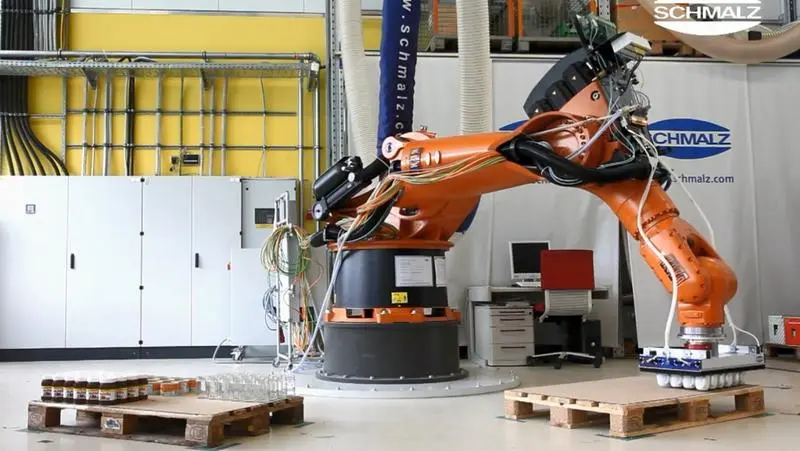
Process layout
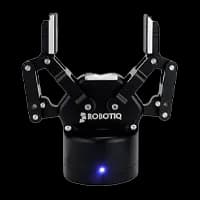
This application case features a solution for gripping and transferring workpieces using Schmalz's Layer Vacuum Gripping System (SPZ).
The Schmalz SPZ is an optimized solution for wide-range palletizing tasks. It is ideally suited for transporting large workpieces, making it easy to implement in environments such as logistics warehouses. As an innovative gripper concept designed to support processes requiring high weight or high flow, it enables more stable and reliable palletizing.
Components
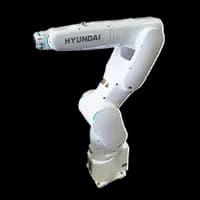
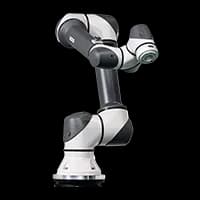
| Robot | The system consists of the following modular units:
|
|---|
Workflow
| STEP 1. | Gripping: The robot equipped with the SPZ system grips the target workpiece or entire layer. |
|---|---|
| STEP 2. | Transfer: The robot moves to the destination and places the workpiece down. |
| STEP 3. | Repeat: The robot moves to the next starting point and repeats the process. |
Features
Optimized for Wide-Range Palletizing
A specialized solution designed for versatile palletizing tasks across various industries.
Flexible Layer Handling
Grips workpieces securely regardless of differing layer sizes or patterns, ensuring zero damage to the product surface.
Advanced Connectivity
Seamless integration with smart machinery, power systems, and software interfaces for real-time control.
Innovative Gripper Concept
Designed to support demanding processes that require high load capacity or high vacuum flow for stable handling.
Results
| Key Benefits | Large-Scale Transfer: Efficiently handles oversized or bulky workpieces.
Versatile Palletizing: Adaptable to various product types and stacking configurations.
Damage-Free Gripping: Protects product integrity through soft yet powerful vacuum technology.
High Capacity Support: Reliability in high-weight and high-flow industrial environments.
|
|---|---|
| Client Feedback | "By using Schmalz's Layer Vacuum Gripping System (SPZ), we've been able to implement a process that handles large-scale workpieces with absolute stability and no surface damage."
|
Unauthorized copying or reproduction of any content on Marosol may violate the Unfair Competition Prevention Act and Copyright Act.
Recommended Solution

Haemil FA Unmanned Forklift SFL-COD140
This video information presents an autonomous logistics transport Forklift system based on SLAM (Simultaneous Localization and Mapping). It provides an autonomous unmanned method for logistics transport and stacking tasks, ensuring safety through Navigation Scan Lidar for positioning, Multi-Lidar for object and obstacle recognition, and 2D/3D cameras for pallet and cage loading. What is SLAM (Simultaneous Localization and Mapping)? It is a core technology for autonomous driving where a robot creates an accurate map of its work environment using only its onboard autonomous sensors while navigating the workspace. Project Background & Objectives Accurate and repetitive logistics tasks using autonomous robots.

Achieve Tech Large Packaging Film (Vinyl) Automatic Cutting System
This application case features an automatic cutting system for packaging film or vinyl used for wrapping construction-related products or large-scale goods prior to transport. In the conventional cutting process, workers manually mounted large packaging vinyl rolls onto stands and cut them to the required length using scissors. This method posed risks of injury due to repetitive mounting tasks at high elevations and led to potential raw material waste from inaccurate cutting. Additionally, a lack of storage space for the vinyl rolls caused significant inconvenience during continuous operations. To solve these issues, the system was automated to ensure easy mounting and sufficient storage space. It is designed to cut precisely to the length entered via a touch panel and includes features for storing and retrieving operational data.

Altiol AMR System
This application case showcases a logistics automation solution implemented using AMRs (Autonomous Mobile Robots) developed by Altiol. By introducing autonomous driving technology—a core pillar of the Fourth Industrial Revolution—the system is easy to deploy on-site. Furthermore, it allows customers to configure their own programs, making maintenance simple and intuitive. By adopting this unmanned transport system in logistics centers and manufacturing sites, companies have successfully reduced worker fatigue, increased operational efficiency, and lowered labor costs.
Process layout
This application case features a solution for gripping and transferring workpieces using Schmalz's Layer Vacuum Gripping System (SPZ).
The Schmalz SPZ is an optimized solution for wide-range palletizing tasks. It is ideally suited for transporting large workpieces, making it easy to implement in environments such as logistics warehouses. As an innovative gripper concept designed to support processes requiring high weight or high flow, it enables more stable and reliable palletizing.
Components
| Robot | The system consists of the following modular units:
|
|---|
Workflow
| STEP 1. | Gripping: The robot equipped with the SPZ system grips the target workpiece or entire layer. |
|---|---|
| STEP 2. | Transfer: The robot moves to the destination and places the workpiece down. |
| STEP 3. | Repeat: The robot moves to the next starting point and repeats the process. |
Features
Optimized for Wide-Range Palletizing
A specialized solution designed for versatile palletizing tasks across various industries.
Flexible Layer Handling
Grips workpieces securely regardless of differing layer sizes or patterns, ensuring zero damage to the product surface.
Advanced Connectivity
Seamless integration with smart machinery, power systems, and software interfaces for real-time control.
Innovative Gripper Concept
Designed to support demanding processes that require high load capacity or high vacuum flow for stable handling.
Results
| Key Benefits | Large-Scale Transfer: Efficiently handles oversized or bulky workpieces.
Versatile Palletizing: Adaptable to various product types and stacking configurations.
Damage-Free Gripping: Protects product integrity through soft yet powerful vacuum technology.
High Capacity Support: Reliability in high-weight and high-flow industrial environments.
|
|---|---|
| Client Feedback | "By using Schmalz's Layer Vacuum Gripping System (SPZ), we've been able to implement a process that handles large-scale workpieces with absolute stability and no surface damage."
|
Unauthorized copying or reproduction of any content on Marosol may violate the Unfair Competition Prevention Act and Copyright Act.
Recommended Solution
Haemil FA Unmanned Forklift SFL-COD140
This video information presents an autonomous logistics transport Forklift system based on SLAM (Simultaneous Localization and Mapping). It provides an autonomous unmanned method for logistics transport and stacking tasks, ensuring safety through Navigation Scan Lidar for positioning, Multi-Lidar for object and obstacle recognition, and 2D/3D cameras for pallet and cage loading. What is SLAM (Simultaneous Localization and Mapping)? It is a core technology for autonomous driving where a robot creates an accurate map of its work environment using only its onboard autonomous sensors while navigating the workspace. Project Background & Objectives Accurate and repetitive logistics tasks using autonomous robots.
Achieve Tech Large Packaging Film (Vinyl) Automatic Cutting System
This application case features an automatic cutting system for packaging film or vinyl used for wrapping construction-related products or large-scale goods prior to transport. In the conventional cutting process, workers manually mounted large packaging vinyl rolls onto stands and cut them to the required length using scissors. This method posed risks of injury due to repetitive mounting tasks at high elevations and led to potential raw material waste from inaccurate cutting. Additionally, a lack of storage space for the vinyl rolls caused significant inconvenience during continuous operations. To solve these issues, the system was automated to ensure easy mounting and sufficient storage space. It is designed to cut precisely to the length entered via a touch panel and includes features for storing and retrieving operational data.
Altiol AMR System
This application case showcases a logistics automation solution implemented using AMRs (Autonomous Mobile Robots) developed by Altiol. By introducing autonomous driving technology—a core pillar of the Fourth Industrial Revolution—the system is easy to deploy on-site. Furthermore, it allows customers to configure their own programs, making maintenance simple and intuitive. By adopting this unmanned transport system in logistics centers and manufacturing sites, companies have successfully reduced worker fatigue, increased operational efficiency, and lowered labor costs.