

Process layout
[Process Overview]
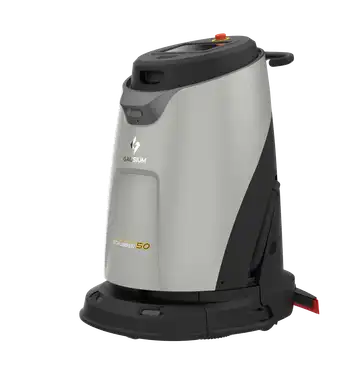
This case study features the implementation of the Omnie industrial wet cleaning robot, Workstation, and Mobile Water Tank at the Seoul Station KTX terminal, delivered by Bigwave Robotics (Marosol). As Korea’s primary railway hub connecting the Gyeongbu Line, Gyeongui Line, and Airport Railroad, Seoul Station is a complex transit center that requires high-level floor cleanliness 24/7. In this project, Omnie’s superior cleaning performance and cutting-edge sensor detection were augmented by the Mobile Water Tank to secure an overwhelming capacity of 123L of clean water and 99L of wastewater, enabling seamless cleaning automation even within a massive station environment.
[Project Background and Objective]
Automation of Floor Cleaning: Automating the wet cleaning process for the main waiting rooms, passages, and concourses of Seoul Station KTX.
High-Capacity System: Establishing a large-scale wet cleaning system capable of handling the dust and pollutants continuously accumulated in Korea's highest-traffic environment (averaging over 100,000 daily visitors).
Structural Adaptation: Achieving automated water supply and drainage even in older station structures where water line access is limited, by utilizing the Mobile Water Tank.
Maximizing Performance: Leveraging the combined high-capacity system of Omnie and the Mobile Water Tank to maximize cleaning power with a sufficient water supply.
Operational Efficiency: Assigning large floor areas to autonomous robots, allowing cleaning staff to focus on high-touch areas that require human attention, such as stairs, escalators, and seating areas.
Continuous Night Operation: Realizing uninterrupted cleaning during unmanned night shifts by eliminating work stoppages caused by water shortages.
Components
| Robot |
|
|---|---|
| Peripherals |
|
Workflow
| STEP 1. | [Scheduled Cleaning Setup] Customizing operations by specific time slots and zones to align with station activity |
|---|---|
| STEP 2. | [Full Day/Night Coverage] Providing 24-hour response to meet the continuous operational demands of the KTX station |
| STEP 3. | [High-Capacity Water Integration] Securing overwhelming supply and drainage capacity by integrating the Mobile Water Tank |
| STEP 4. | [Workstation Automation] Fully automating the charging, water refilling, and drainage process through workstation docking |
| STEP 5. | [Remote Management via SOLlink] Utilizing SOLlink software for real-time monitoring and remote oversight of all cleaning tasks |
Features
1. High-Capacity Water System Optimized for Korea’s Busiest Transit Hub
In environments like Seoul Station KTX, where foot traffic is the highest in the country, small-scale equipment with limited water capacity often fails to provide a thorough clean. While the Omnie features a robust internal capacity (33L clean / 24L wastewater), integrating the Mobile Water Tank (90L clean / 75L wastewater) secures an overwhelming total capacity of 123L of clean water and 99L of wastewater. This system prevents work interruptions due to water shortages during early morning or night shifts, eliminating the inefficiency of manual refilling. It effectively removes everyday contaminants like footprints, luggage tracks, and beverage spills in a single cycle.
2. Automation Possible Even in Older, Complex Architectural Structures Seoul Station KTX is a complex mix of old and new structures. In certain sections, narrow spaces near water lines make direct plumbing connections for robots physically difficult. By utilizing the Mobile Water Tank, the same effect as a direct water line connection can be achieved. This allows for the implementation of industrial wet cleaning robot automation regardless of the station's structural limitations.
3. Maximized Cleaning Performance with Ample Water Supply Small-capacity equipment cannot use enough water to ensure a deep clean. In high-traffic environments like Seoul Station, where fine dust and pollutants accumulate continuously, a significant volume of water is required for effective scrubbing. The Omnie + Mobile Water Tank system supplies sufficient water to thoroughly lift and remove grime. Furthermore, the Omnie’s V-shaped squeegee provides superior suction compared to standard U-shaped models, ensuring that even with high water usage, no residue is left behind. This prevents slip-and-fall accidents and maintains a pleasant environment for passengers.
4. Advanced Sensor System for Congested Environments
During rush hour, Seoul Station becomes a high-density environment with passengers moving rapidly. Omnie utilizes a cutting-edge integrated sensor system—combining LiDAR, 3D cameras, and ultrasonic sensors—to recognize and avoid obstacles and people in real-time, ensuring safe operation even in crowded conditions.
5. Scheduled Cleaning and Remote Management
The robot can be programmed to start cleaning automatically based on station operating hours. Through the SOLlink app, administrators can perform remote management, including real-time status checks, task history logs, and instant error notifications, enabling efficient control across large-scale station environments.
Results
| Key Benefits | Visible Improvements: Significant enhancement in floor condition (pollutant removal rate and gloss levels).
Safety in Crowds: High-performance sensor recognition for real-time obstacle and pedestrian avoidance.
Operational Continuity: Improved cleaning quality and uninterrupted workflow via the high-capacity water system.
Labor Environment: Reduced physical fatigue for cleaning staff, increasing job sustainability.
Efficiency: Realization of unmanned night-time cleaning automation, boosting overall operational productivity.
|
|---|---|
| Client Feedback | "As one of the busiest stations in Korea, the pressure regarding floor cleanliness was immense. We frequently dealt with work being interrupted due to water capacity issues. Since integrating the Mobile Water Tank, we can now complete cleaning across vast areas in a single session without stopping, which has been highly satisfying." — KORAIL Tech
|
Unauthorized copying or reproduction of any content on Marosol may violate the Unfair Competition Prevention Act and Copyright Act.
Curious about the robots used?
![[신제품] 가우시움 AI 산업용 청소로봇 Omnie 옴니](/_next/image?url=https%3A%2F%2Fd1fchzsdhim61l.cloudfront.net%2FStore%2Fthumbnail%2FE0moX54CQvhsQ8WSzr4W%2F9d58ed69-b28b-4be8-ac12-8d634bc93efa%2F1767595044288E0moX54CQvhsQ8WSzr4W.png&w=256&q=75)
Recommended Solution

DEEPBLUE Cleaning Robot Baby-Orca
DEEPBLUE's cleaning Robot , Baby-Orca, is a solution designed to perform automated cleaning tasks in large indoor spaces such as department stores, large malls, and large buildings. Through autonomous driving, the Baby-Orca can perform continuous cleaning for up to six hours, whether during the day when foot traffic is high or at night when there is no foot traffic. Equipped with SLAM technology, 3D Vision recognition technology, and fusion sensors, it enables stable operation even in environments with high foot traffic.

LG CLOi Guide Robot
This solution is a simulation of facility guidance and advertising using the LG CLOi GuideBot developed by LG Electronics. The LG CLOi GuideBot utilizes two body displays mounted on the robot to manage guidance and advertising. The robot can autonomously navigate within a facility or conduct patrols at night. As an option, a docent function can be used to guide visitors and explain exhibits at museums or exhibitions.

Wonik Robotics' Indoor Disinfection Robot, diro
The sterilization robot, diro, is a solution that automates indoor disinfection tasks using autonomous robots. It regularly sterilizes indoor floors and air according to a schedule set by the user. Capable of 24-hour unmanned disinfection, diro is safer as it uses UV-C with a wavelength of 222nm, which is harmless to the human body.