



Process layout
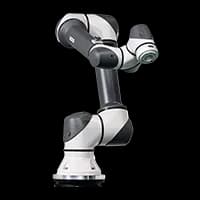
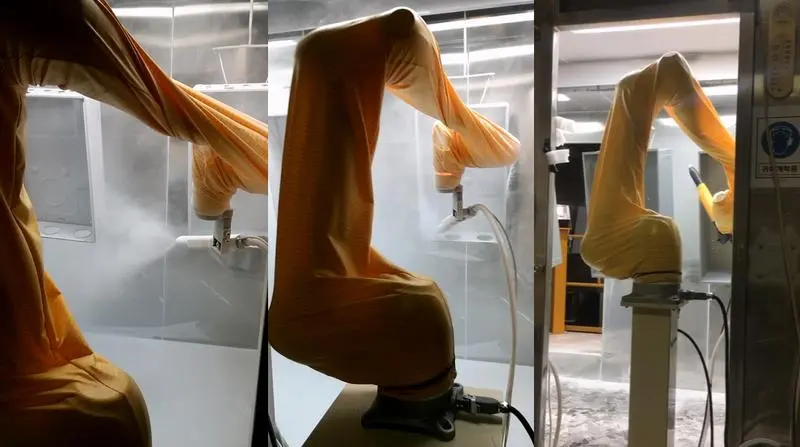
This powder coating automation solution utilizes the Doosan M1013 collaborative robot to automate the powder coating of thin plate covers on a conveyor line.
Due to the nature of powder coating, high levels of dust are generated, and the repetitive motions cause significant strain on the wrists, making it a task often avoided by workers.
By implementing three robots to perform tasks previously handled by six manual workers, the working environment has been improved, and consistent quality has been secured.
Components
| Robot |
|
|---|
Workflow
| STEP 1. | Loading: Workpieces are fed into the system. |
|---|---|
| STEP 2. | Data Transfer: Workpiece shape information is sent from the PLC to the robot. |
| STEP 3. | Signal Confirmation: The robot confirms the entry signal of the workpiece. |
| STEP 4. | Powder Coating: Powder coating is performed according to the outer shape of the workpiece. |
Features
Work Environment Improvement for High-Avoidance Tasks
Removal of Harsh Conditions: Eliminates exposure to hazardous working environments filled with fine dust.
Health Protection: Eliminates the risk of wrist-related musculoskeletal disorders caused by repetitive manual arm movements.
Efficient Response to High-Mix Production
Flexible Operation: Capable of handling over 100 different workpiece shapes by receiving real-time geometry data.
Consistent Quality: Ensures uniform coating quality by performing tasks precisely according to each workpiece's specific shape.
Non-Stop Productivity: Operates seamlessly on active conveyor lines without the need for pauses, maintaining high throughput.
Ensured Operational Safety
Advanced Sensitivity: Equipped with high-resolution (0.2Nm) torque sensors on all 6 axes, allowing the robot to detect and stop upon sensitive collisions from any direction (including collisions with workpieces).
Compact Installation
Space Optimization: Utilizes compact collaborative robots to minimize the floor space required for installation.
Results
| Key Benefits | Increased job satisfaction through the reassignment of human workers to higher-value roles.
Improved fatigue levels by eliminating simple, repetitive labor.
Achieved consistent and standardized work quality.
|
|---|---|
| Client Feedback | This was the task workers avoided most due to the extremely harsh environment, but replacing it with robots has significantly increased employee satisfaction. While we were concerned about handling a wide variety of products, the system is efficiently processing over 100 different models.
|
Unauthorized copying or reproduction of any content on Marosol may violate the Unfair Competition Prevention Act and Copyright Act.
Recommended Solution

Solenoid Valve Coil Winding Automation with NACHI MZ07L
This industrial robot solution utilizes the NACHI MZ07L to automate the coil winding process for solenoid valves. By using a single robot to manage two winding machines simultaneously, the system minimizes idle time and maximizes production throughput through continuous operation.

Steel Plate Bending through Hyundai Robotics HS220
This automation solution utilizes the Hyundai Robotics HS220 to automate the high-risk task of bending heavy steel plates into complex shapes. Due to the weight and large dimensions of these products, manual operation is physically demanding and significantly hinders production efficiency. This project was initiated to boost productivity through heavy-load automation and to ensure workplace safety by removing workers from hazardous zones. Because the robot maintains its grip on the steel plate during the entire bending process, cycle times are shortened, ensuring high output and consistent quality.

Medical Fabric Cutting Automation using Vention’s Design Platform
This automated cutting solution is designed to handle medical surgical fabrics of varying lengths up to 3 meters. With professional support from Vention's engineering team, the system successfully automates the process of extending the fabric to precise lengths using pneumatic grippers and feeding rollers, followed by accurate cutting using a timing belt actuator.
Process layout
This powder coating automation solution utilizes the Doosan M1013 collaborative robot to automate the powder coating of thin plate covers on a conveyor line.
Due to the nature of powder coating, high levels of dust are generated, and the repetitive motions cause significant strain on the wrists, making it a task often avoided by workers.
By implementing three robots to perform tasks previously handled by six manual workers, the working environment has been improved, and consistent quality has been secured.
Components
| Robot |
|
|---|
Workflow
| STEP 1. | Loading: Workpieces are fed into the system. |
|---|---|
| STEP 2. | Data Transfer: Workpiece shape information is sent from the PLC to the robot. |
| STEP 3. | Signal Confirmation: The robot confirms the entry signal of the workpiece. |
| STEP 4. | Powder Coating: Powder coating is performed according to the outer shape of the workpiece. |
Features
Work Environment Improvement for High-Avoidance Tasks
Removal of Harsh Conditions: Eliminates exposure to hazardous working environments filled with fine dust.
Health Protection: Eliminates the risk of wrist-related musculoskeletal disorders caused by repetitive manual arm movements.
Efficient Response to High-Mix Production
Flexible Operation: Capable of handling over 100 different workpiece shapes by receiving real-time geometry data.
Consistent Quality: Ensures uniform coating quality by performing tasks precisely according to each workpiece's specific shape.
Non-Stop Productivity: Operates seamlessly on active conveyor lines without the need for pauses, maintaining high throughput.
Ensured Operational Safety
Advanced Sensitivity: Equipped with high-resolution (0.2Nm) torque sensors on all 6 axes, allowing the robot to detect and stop upon sensitive collisions from any direction (including collisions with workpieces).
Compact Installation
Space Optimization: Utilizes compact collaborative robots to minimize the floor space required for installation.
Results
| Key Benefits | Increased job satisfaction through the reassignment of human workers to higher-value roles.
Improved fatigue levels by eliminating simple, repetitive labor.
Achieved consistent and standardized work quality.
|
|---|---|
| Client Feedback | This was the task workers avoided most due to the extremely harsh environment, but replacing it with robots has significantly increased employee satisfaction. While we were concerned about handling a wide variety of products, the system is efficiently processing over 100 different models.
|
Unauthorized copying or reproduction of any content on Marosol may violate the Unfair Competition Prevention Act and Copyright Act.
Recommended Solution
Solenoid Valve Coil Winding Automation with NACHI MZ07L
This industrial robot solution utilizes the NACHI MZ07L to automate the coil winding process for solenoid valves. By using a single robot to manage two winding machines simultaneously, the system minimizes idle time and maximizes production throughput through continuous operation.
Steel Plate Bending through Hyundai Robotics HS220
This automation solution utilizes the Hyundai Robotics HS220 to automate the high-risk task of bending heavy steel plates into complex shapes. Due to the weight and large dimensions of these products, manual operation is physically demanding and significantly hinders production efficiency. This project was initiated to boost productivity through heavy-load automation and to ensure workplace safety by removing workers from hazardous zones. Because the robot maintains its grip on the steel plate during the entire bending process, cycle times are shortened, ensuring high output and consistent quality.
Medical Fabric Cutting Automation using Vention’s Design Platform
This automated cutting solution is designed to handle medical surgical fabrics of varying lengths up to 3 meters. With professional support from Vention's engineering team, the system successfully automates the process of extending the fabric to precise lengths using pneumatic grippers and feeding rollers, followed by accurate cutting using a timing belt actuator.