






Process layout
Project Overview
This implementation case features a sack palletizing solution that integrates a custom-developed OP system with the Hyundai Robotics HS220. The proprietary OP system can be flexibly configured according to pallet sizes and packaging material characteristics for maximum efficiency. Drawing on years of experience in delivering sack production equipment, we have implemented a highly reliable palletizing system that operates stably in industrial environments.
Warranty Period: 1 Year
Execution Year: 2023
Project Duration: Subject to negotiation
Project Background & Objectives
Need for efficient palletizing of products coming off high-speed automation lines.
Requirement for flexible task configuration changes in response to varying product sizes.
Components
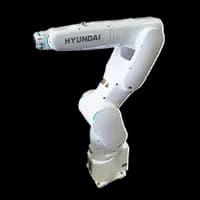
| Robot | Robot: 2 units of Hyundai Robotics HS220; Payload 220kg; Reach 2,666mm; (Note: Based on standard HS220 specs, the payload is typically 220kg. Please verify if "20kg" in your source was a typo for this heavy-duty model.) |
|---|
Workflow
| STEP 1. | Product Transport via Conveyor: Products are moved via conveyor. |
|---|---|
| STEP 2. | Alignment: Products are aligned using an alignment device. |
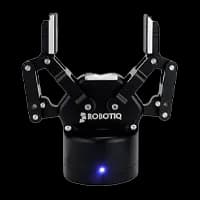
| STEP 3. | Picking: The industrial robot picks the product using a gripper. |
| STEP 4. | Palletizing: Products are stacked on the pallet according to pre-set patterns. |
Features
High Throughput: Integrated with the entire conveyor line to handle high capacities.
Intuitive UX/UI: The OP panel features a user-friendly interface, allowing for flexible responses to various pallet and sack sizes.
Cost-Effective Implementation: Utilizes a product alignment device to implement the solution at an affordable price without the need for expensive vision systems.
Results
| Key Benefits | High Workload: Achieves high output through high-speed repetitive cycles.
Labor Efficiency: Effectively replaces manual labor in repetitive tasks.
|
|---|---|
| Client Feedback | "When workers handled the palletizing manually, it was difficult to increase production capacity even when customer orders piled up. Since implementing the palletizing solution, our operational capacity has increased exponentially, allowing us to handle any volume of orders without issue."
|
Unauthorized copying or reproduction of any content on Marosol may violate the Unfair Competition Prevention Act and Copyright Act.
Recommended Solution

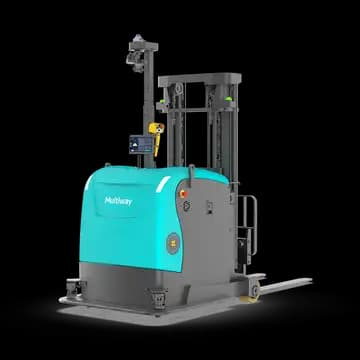
Indoor Logistics Transport and Loading Using VisionNav VNPA15🏗️
Process Overview This case study showcases a logistics automation solution that uses VisionNav's VNPA15 autonomous mobile robot (AMR) to automate the transport and loading/stacking of packaged products in indoor material-handling operations. Built on robust safety functions, the solution minimizes changes to existing workflows while enabling unattended load/unload tasks, and provides effective monitoring and control of real-time operations.

YASKAWA Industrial Robot Hanger-Box Palletizing Automation
Process Overview This deployment uses a YASKAWA GP180 to palletize boxes of hanger products weighing over 20 kg onto pallets. By replacing manual handling in heavy-payload work, it helps prevent musculoskeletal disorders and enables faster, more consistent palletizing performance. Note: Cost may vary depending on the installation environment, robot brand, and payload requirements.

The Omron AMR Logistics Robot Recognizes Different Product Types and Even Handle Automated Retrieval
Project Overview This implementation case is designed to utilize Omron AMR Logistics robots to automatically retrieve and transport individual products weighing approximately 20–30kg. Previously, workers had to manually move heavy items, leading to a high risk of musculoskeletal disorders and decreased logistics efficiency due to misclassification issues arising from repetitive manual labor. The Omron AMR was introduced to solve these problems and is configured to stably transport products of various sizes and shapes. The AMR's top module is equipped with photo sensors to detect the presence of products and includes a distance setting function to ensure the safe and smooth transport of goods. Project Background & Objectives The objective of this project is to reduce the physical burden on workers and improve the accuracy of logistics processes by minimizing misclassifications that occur during repetitive tasks. By introducing automation through AMRs, the primary goals of this project are: ① protecting the health and safety of workers, ② improving the accuracy and speed of logistics flow, and ③ optimizing initial investment costs while reducing maintenance expenses.
Process layout
Project Overview
This implementation case features a sack palletizing solution that integrates a custom-developed OP system with the Hyundai Robotics HS220. The proprietary OP system can be flexibly configured according to pallet sizes and packaging material characteristics for maximum efficiency. Drawing on years of experience in delivering sack production equipment, we have implemented a highly reliable palletizing system that operates stably in industrial environments.
Warranty Period: 1 Year
Execution Year: 2023
Project Duration: Subject to negotiation
Project Background & Objectives
Need for efficient palletizing of products coming off high-speed automation lines.
Requirement for flexible task configuration changes in response to varying product sizes.
Components
| Robot | Robot: 2 units of Hyundai Robotics HS220; Payload 220kg; Reach 2,666mm; (Note: Based on standard HS220 specs, the payload is typically 220kg. Please verify if "20kg" in your source was a typo for this heavy-duty model.) |
|---|
Workflow
| STEP 1. | Product Transport via Conveyor: Products are moved via conveyor. |
|---|---|
| STEP 2. | Alignment: Products are aligned using an alignment device. |
| STEP 3. | Picking: The industrial robot picks the product using a gripper. |
| STEP 4. | Palletizing: Products are stacked on the pallet according to pre-set patterns. |
Features
High Throughput: Integrated with the entire conveyor line to handle high capacities.
Intuitive UX/UI: The OP panel features a user-friendly interface, allowing for flexible responses to various pallet and sack sizes.
Cost-Effective Implementation: Utilizes a product alignment device to implement the solution at an affordable price without the need for expensive vision systems.
Results
| Key Benefits | High Workload: Achieves high output through high-speed repetitive cycles.
Labor Efficiency: Effectively replaces manual labor in repetitive tasks.
|
|---|---|
| Client Feedback | "When workers handled the palletizing manually, it was difficult to increase production capacity even when customer orders piled up. Since implementing the palletizing solution, our operational capacity has increased exponentially, allowing us to handle any volume of orders without issue."
|
Unauthorized copying or reproduction of any content on Marosol may violate the Unfair Competition Prevention Act and Copyright Act.
Recommended Solution
Indoor Logistics Transport and Loading Using VisionNav VNPA15🏗️
Process Overview This case study showcases a logistics automation solution that uses VisionNav's VNPA15 autonomous mobile robot (AMR) to automate the transport and loading/stacking of packaged products in indoor material-handling operations. Built on robust safety functions, the solution minimizes changes to existing workflows while enabling unattended load/unload tasks, and provides effective monitoring and control of real-time operations.
YASKAWA Industrial Robot Hanger-Box Palletizing Automation
Process Overview This deployment uses a YASKAWA GP180 to palletize boxes of hanger products weighing over 20 kg onto pallets. By replacing manual handling in heavy-payload work, it helps prevent musculoskeletal disorders and enables faster, more consistent palletizing performance. Note: Cost may vary depending on the installation environment, robot brand, and payload requirements.
The Omron AMR Logistics Robot Recognizes Different Product Types and Even Handle Automated Retrieval
Project Overview This implementation case is designed to utilize Omron AMR Logistics robots to automatically retrieve and transport individual products weighing approximately 20–30kg. Previously, workers had to manually move heavy items, leading to a high risk of musculoskeletal disorders and decreased logistics efficiency due to misclassification issues arising from repetitive manual labor. The Omron AMR was introduced to solve these problems and is configured to stably transport products of various sizes and shapes. The AMR's top module is equipped with photo sensors to detect the presence of products and includes a distance setting function to ensure the safe and smooth transport of goods. Project Background & Objectives The objective of this project is to reduce the physical burden on workers and improve the accuracy of logistics processes by minimizing misclassifications that occur during repetitive tasks. By introducing automation through AMRs, the primary goals of this project are: ① protecting the health and safety of workers, ② improving the accuracy and speed of logistics flow, and ③ optimizing initial investment costs while reducing maintenance expenses.