




Process layout
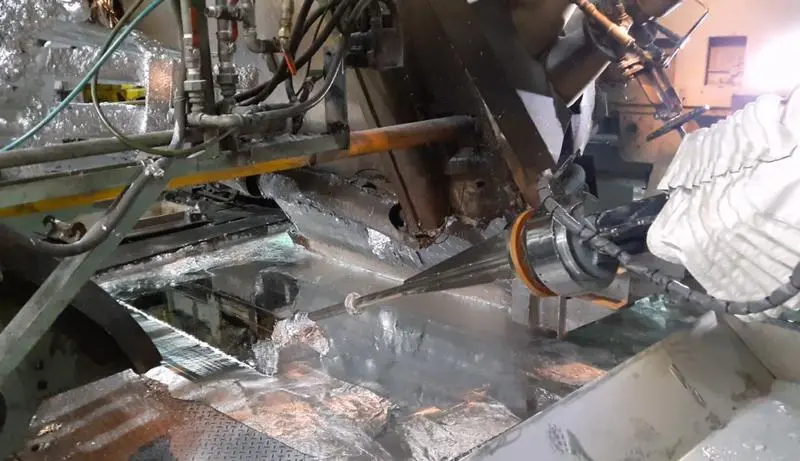
This automation solution utilizes YASKAWA robots to automate the hazardous manual process of handling high-temperature aluminum dross (a byproduct of molten aluminum).
By deploying a robot with high heat resistance, this system replaces human operators in extreme thermal environments, ensuring workplace safety and enabling continuous, non-stop operation. The primary goal of this project was to enhance operational safety and improve the work environment by automating the byproduct treatment following high-heat aluminum processing.
Components
| Robot |
|
|---|
Workflow
| STEP 1. | Skimming: The robot scrapes and collects dross from the surface of the molten metal. |
|---|---|
| STEP 2. | Loading: The collected dross is picked up or scooped by the robot's specialized tooling. |
| STEP 3. | Unloading: The dross is transferred and unloaded into a dedicated discharge bin. |
| STEP 4. | Measurement: The system measures the fill level of the discharge bin. |
| STEP 5. | Discharge: Once the bin reaches full capacity, it is automatically transported to the external outfeed area. |
Features
Maximized Efficiency and Productivity
Human-Mimetic Handling: Optimizes work efficiency by replicating the precise dross loading and unloading motions of a human operator.
Autonomous Bin Management: Minimizes management touchpoints by automatically measuring dross accumulation and automating the discharge process.
Custom Tooling Design: Capability to design and manufacture optimized end-of-arm tools (EOAT) tailored to specific furnace conditions.
Minimized Failure Risk
Simulation-Based Validation: Conducts 3D simulations to perform interference checks and verify work performance before on-site installation.
Extreme Thermal Protection: Utilizes high-performance heat-resistant robots equipped with specialized thermal/fireproof jackets to minimize malfunctions and breakdown rates in molten metal environments.
Reliable Post-Management
Peace of Mind: Includes a 1-year comprehensive warranty for secure and reliable after-sales maintenance.
Results
| Key Benefits | Workplace Improvement: Enhancement of the work environment through the complete unmanned operation of high-risk tasks.
Quality Assurance: Improved aluminum production quality due to the consistent and continuous removal of byproducts (dross).
|
|---|---|
| Client Feedback | By automating this high-risk task, we were able to reassign our workers to other areas, significantly improving the safety and overall work environment for our employees.
|
Unauthorized copying or reproduction of any content on Marosol may violate the Unfair Competition Prevention Act and Copyright Act.
Recommended Solution

Support Ring Machining Assistance for WIA Turning Center using Fanuc Robot
This machine tending automation solution utilizes a Fanuc M-710iC/70 robot mounted on a linear track to automate the machining of heavy support rings across six WIA Turning Centers (LV450). By employing a high-payload industrial robot and a linear track, the system can rapidly perform continuous operations for relatively large and heavy support rings without idle time. The previous manual process, where workers pushed carts to each machine, has been replaced by a centralized input system, significantly improving both logistics flow and space efficiency.

Injection Molding Take-out and Laser Cutting using Yushin Precision Equipment
This laser processing automation solution utilizes the YUSHIN SC-150 take-out robot to automate the process of extracting plastic injection-molded parts and performing (gate) laser cutting. By integrating the tasks from part extraction to gate laser cutting, the system minimizes management points and significantly improves productivity. *The process is implemented after thorough testing based on the specific shape of the product.

Powder Coating of Thin Plate Covers using Doosan M1013
This powder coating automation solution utilizes the Doosan M1013 collaborative robot to automate the powder coating of thin plate covers on a conveyor line. Due to the nature of powder coating, high levels of dust are generated, and the repetitive motions cause significant strain on the wrists, making it a task often avoided by workers. By implementing three robots to perform tasks previously handled by six manual workers, the working environment has been improved, and consistent quality has been secured.
Process layout
This automation solution utilizes YASKAWA robots to automate the hazardous manual process of handling high-temperature aluminum dross (a byproduct of molten aluminum).
By deploying a robot with high heat resistance, this system replaces human operators in extreme thermal environments, ensuring workplace safety and enabling continuous, non-stop operation. The primary goal of this project was to enhance operational safety and improve the work environment by automating the byproduct treatment following high-heat aluminum processing.
Components
| Robot |
|
|---|
Workflow
| STEP 1. | Skimming: The robot scrapes and collects dross from the surface of the molten metal. |
|---|---|
| STEP 2. | Loading: The collected dross is picked up or scooped by the robot's specialized tooling. |
| STEP 3. | Unloading: The dross is transferred and unloaded into a dedicated discharge bin. |
| STEP 4. | Measurement: The system measures the fill level of the discharge bin. |
| STEP 5. | Discharge: Once the bin reaches full capacity, it is automatically transported to the external outfeed area. |
Features
Maximized Efficiency and Productivity
Human-Mimetic Handling: Optimizes work efficiency by replicating the precise dross loading and unloading motions of a human operator.
Autonomous Bin Management: Minimizes management touchpoints by automatically measuring dross accumulation and automating the discharge process.
Custom Tooling Design: Capability to design and manufacture optimized end-of-arm tools (EOAT) tailored to specific furnace conditions.
Minimized Failure Risk
Simulation-Based Validation: Conducts 3D simulations to perform interference checks and verify work performance before on-site installation.
Extreme Thermal Protection: Utilizes high-performance heat-resistant robots equipped with specialized thermal/fireproof jackets to minimize malfunctions and breakdown rates in molten metal environments.
Reliable Post-Management
Peace of Mind: Includes a 1-year comprehensive warranty for secure and reliable after-sales maintenance.
Results
| Key Benefits | Workplace Improvement: Enhancement of the work environment through the complete unmanned operation of high-risk tasks.
Quality Assurance: Improved aluminum production quality due to the consistent and continuous removal of byproducts (dross).
|
|---|---|
| Client Feedback | By automating this high-risk task, we were able to reassign our workers to other areas, significantly improving the safety and overall work environment for our employees.
|
Unauthorized copying or reproduction of any content on Marosol may violate the Unfair Competition Prevention Act and Copyright Act.
Recommended Solution
Support Ring Machining Assistance for WIA Turning Center using Fanuc Robot
This machine tending automation solution utilizes a Fanuc M-710iC/70 robot mounted on a linear track to automate the machining of heavy support rings across six WIA Turning Centers (LV450). By employing a high-payload industrial robot and a linear track, the system can rapidly perform continuous operations for relatively large and heavy support rings without idle time. The previous manual process, where workers pushed carts to each machine, has been replaced by a centralized input system, significantly improving both logistics flow and space efficiency.
Injection Molding Take-out and Laser Cutting using Yushin Precision Equipment
This laser processing automation solution utilizes the YUSHIN SC-150 take-out robot to automate the process of extracting plastic injection-molded parts and performing (gate) laser cutting. By integrating the tasks from part extraction to gate laser cutting, the system minimizes management points and significantly improves productivity. *The process is implemented after thorough testing based on the specific shape of the product.
Powder Coating of Thin Plate Covers using Doosan M1013
This powder coating automation solution utilizes the Doosan M1013 collaborative robot to automate the powder coating of thin plate covers on a conveyor line. Due to the nature of powder coating, high levels of dust are generated, and the repetitive motions cause significant strain on the wrists, making it a task often avoided by workers. By implementing three robots to perform tasks previously handled by six manual workers, the working environment has been improved, and consistent quality has been secured.