



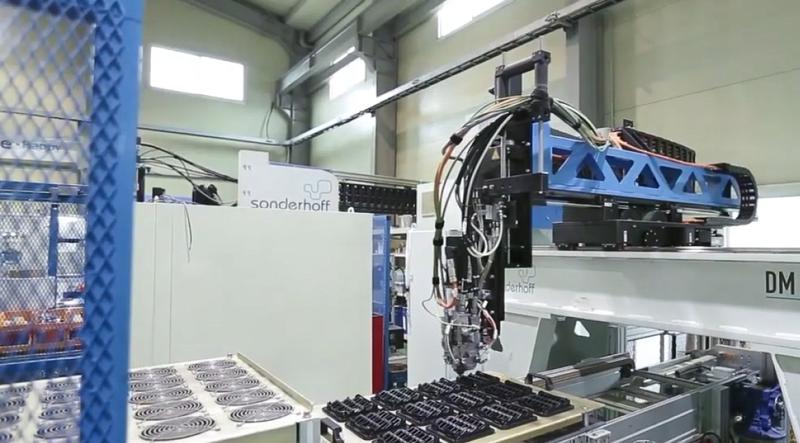
Process layout
Process Overview
This application is a solution that provides immediate foam forming using a Loobee sealing automation system, along with gasket product sealing equipment and raw material supply. It enables stable fixture mounting using gaskets without the need to finish the joint area with adhesive. Reliable adhesion is also possible even on curved surfaces, making it applicable to parts of any shape.
Components
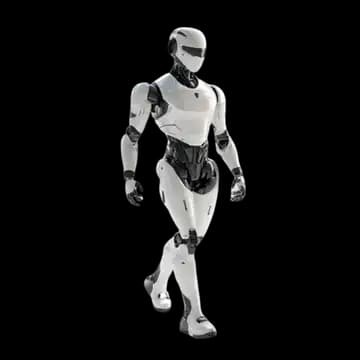
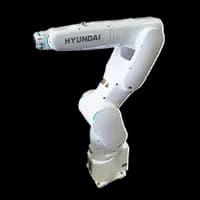
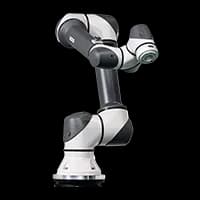
| Robot | 3-axis robot or multi-joint robot |
|---|---|
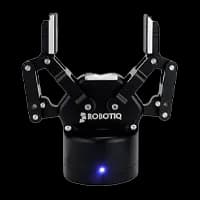
| Peripherals |
|
Workflow
| STEP 1. | Part loading |
|---|---|
| STEP 2. | Pre-treatment (if required: plasma or primer) |
| STEP 3. | Sealing application |
| STEP 4. | Unloading |
| STEP 5. | Foam dispensing |
| STEP 6. | Curing |
Features
Desired gasket shapes can be formed on parts of any geometry, including flat surfaces, curved surfaces, 3D structures, and vertical structures.
Jointless gasket that does not require joint finishing with adhesive.
No leakage caused by poor bonding at joints.
Can be fixed to the fixture without separate adhesive.
Applicable even on rough surfaces.
Various hardness and shape designs can be adjusted through automated sealing machine settings.
Cost-saving benefits for small parts and small-batch production.
Enables consistent product quality even for long-duration repetitive operations due to automation.
Results
| Key Benefits | Unit cost reduction for mass production
End-to-end solution available, including equipment, raw materials, processing, and finished products |
|---|---|
| Client Feedback | Compared to manual production, automated production provides more consistent product quality, and unit cost savings were also achieved in mass production. |
Unauthorized copying or reproduction of any content on Marosol may violate the Unfair Competition Prevention Act and Copyright Act.
Recommended Solution

Deburring Robot Automation: Burr Removal on Ibarri Parts — Seriously This Easy?! 😮
A robotic deburring system that automatically removes burrs (BURR) generated on the machined surfaces of nickel parts applied to Honda Accord vehicles using two robots. Collaboration between a positioning robot and a deburring robot. For areas where the deburring tool cannot access, a dedicated deburring device is configured to fully perform deburring on complex-shaped machined surfaces. Integrated with the machining line to implement full-process automation, including deburring, washing, inspection, rust prevention, and packaging.

Battery Palletizing Automation: Safely Stack Batteries Weighing Over 60kg With the YASKAWA GP225 💪
Standardized over 200 palletizing variables to achieve a consistent cycle time

AI Palletizing + Omron AMR Logistics Robots for End-to-End Warehouse Automation 👏
Process Overview This implementation combines Omron AMR logistics robots with an AI-based palletizing system to achieve logistics automation. The customer showed strong interest in adopting an AI-powered logistics automation system to strengthen future competitiveness and to maximize cost savings and operational efficiency through automated palletizing and material handling. This solution autonomously transports and loads various types of goods, improving efficiency and accuracy in inbound and outbound operations, while reducing physical workload for operators and ensuring workplace safety. Project Background and Objectives The customer aimed to optimize logistics operations and reduce costs by adopting an AI-driven automation solution to enhance future logistics competitiveness. In particular, automation was urgently needed for repetitive and heavy palletizing tasks and material transport operations. The objective of this project is to maximize outbound operation efficiency using AMRs and industrial robots, ensure operator safety, and enable real-time tracking and management of goods. Through this, the customer sought to improve productivity at the logistics site and secure long-term stability and flexibility in future logistics operations.
Process layout
Process Overview
This application is a solution that provides immediate foam forming using a Loobee sealing automation system, along with gasket product sealing equipment and raw material supply. It enables stable fixture mounting using gaskets without the need to finish the joint area with adhesive. Reliable adhesion is also possible even on curved surfaces, making it applicable to parts of any shape.
Components
| Robot | 3-axis robot or multi-joint robot |
|---|---|
| Peripherals |
|
Workflow
| STEP 1. | Part loading |
|---|---|
| STEP 2. | Pre-treatment (if required: plasma or primer) |
| STEP 3. | Sealing application |
| STEP 4. | Unloading |
| STEP 5. | Foam dispensing |
| STEP 6. | Curing |
Features
Desired gasket shapes can be formed on parts of any geometry, including flat surfaces, curved surfaces, 3D structures, and vertical structures.
Jointless gasket that does not require joint finishing with adhesive.
No leakage caused by poor bonding at joints.
Can be fixed to the fixture without separate adhesive.
Applicable even on rough surfaces.
Various hardness and shape designs can be adjusted through automated sealing machine settings.
Cost-saving benefits for small parts and small-batch production.
Enables consistent product quality even for long-duration repetitive operations due to automation.
Results
| Key Benefits | Unit cost reduction for mass production
End-to-end solution available, including equipment, raw materials, processing, and finished products |
|---|---|
| Client Feedback | Compared to manual production, automated production provides more consistent product quality, and unit cost savings were also achieved in mass production. |
Unauthorized copying or reproduction of any content on Marosol may violate the Unfair Competition Prevention Act and Copyright Act.
Recommended Solution
Deburring Robot Automation: Burr Removal on Ibarri Parts — Seriously This Easy?! 😮
A robotic deburring system that automatically removes burrs (BURR) generated on the machined surfaces of nickel parts applied to Honda Accord vehicles using two robots. Collaboration between a positioning robot and a deburring robot. For areas where the deburring tool cannot access, a dedicated deburring device is configured to fully perform deburring on complex-shaped machined surfaces. Integrated with the machining line to implement full-process automation, including deburring, washing, inspection, rust prevention, and packaging.
Battery Palletizing Automation: Safely Stack Batteries Weighing Over 60kg With the YASKAWA GP225 💪
Standardized over 200 palletizing variables to achieve a consistent cycle time
AI Palletizing + Omron AMR Logistics Robots for End-to-End Warehouse Automation 👏
Process Overview This implementation combines Omron AMR logistics robots with an AI-based palletizing system to achieve logistics automation. The customer showed strong interest in adopting an AI-powered logistics automation system to strengthen future competitiveness and to maximize cost savings and operational efficiency through automated palletizing and material handling. This solution autonomously transports and loads various types of goods, improving efficiency and accuracy in inbound and outbound operations, while reducing physical workload for operators and ensuring workplace safety. Project Background and Objectives The customer aimed to optimize logistics operations and reduce costs by adopting an AI-driven automation solution to enhance future logistics competitiveness. In particular, automation was urgently needed for repetitive and heavy palletizing tasks and material transport operations. The objective of this project is to maximize outbound operation efficiency using AMRs and industrial robots, ensure operator safety, and enable real-time tracking and management of goods. Through this, the customer sought to improve productivity at the logistics site and secure long-term stability and flexibility in future logistics operations.