




Process layout
This application case features two YASKAWA AR1440 robots specifically designed for arc welding electrical wiring ducts.
By utilizing two welding robots in coordination with a rotating turntable (positioner), the system rapidly performs precise welding at all required joint locations, ensuring high-speed production and structural integrity.
Components
| Robot |
|
|---|
Workflow
| STEP 1. | Securing the workpiece onto the welding jig. |
|---|---|
| STEP 2. | Initiating the work via the operation button. |
| STEP 3. | Performing the primary arc welding process. |
| STEP 4. | Positioner Rotation: The turntable rotates to expose the opposite side. |
| STEP 5. | Performing the secondary (rear-side) welding process. |
| STEP 6. | Preparation for discharge once welding is complete. |
Features
High Operational Efficiency and Quality
Optimized Human-Robot Collaboration: The robots handle tasks requiring consistent quality and high skill levels, while operators focus on material loading and unloading, improving both efficiency and output quality.
Minimized Cycle Times: Rapid arc welding performance significantly reduces the time required for each workpiece.
Superior Weld Quality: Achieves high-precision weld beads, which drastically reduces the need for—and cost of—post-processing and grinding.
Versatile Positioning: By utilizing 6-axis articulated robots in tandem with a positioner, the system can perform complex welds from various angles and positions that are difficult to reach manually.
Results
| Key Benefits | Significant improvement in overall weld consistency and quality.
Productivity levels matching or exceeding those of highly skilled manual welders.
|
|---|---|
| Client Feedback | We introduced robots due to the difficulty of hiring skilled welders, and we are extremely satisfied with the high-speed operation and the uniform quality we've been able to achieve. |
Unauthorized copying or reproduction of any content on Marosol may violate the Unfair Competition Prevention Act and Copyright Act.
Recommended Solution

Clip Fastening Process using Neuromeka Indy7
This solution is an automated clip fastening process utilizing the Indy7. By automating the fastening process that causes wrist injuries and strain for workers, industrial accidents decreased and quality productivity improved.

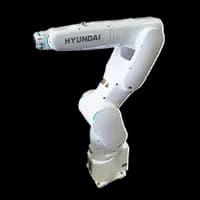
Welding Automation using Hyundai HH020
This application is a solution that implements welding automation using the Hyundai HH020. Before automation, when humans performed this process, there was an issue where the quality of the finished product varied depending on the worker's skill level. Additionally, as a dangerous process, workers were always exposed to the risk of industrial accidents. Furthermore, securing labor was difficult due to the avoidance of 3D (Dirty, Dangerous, and Difficult) industries. By replacing tasks previously performed by humans with robots through this solution, it is possible to prevent industrial accidents and ensure consistent quality.

Removing Protective Sheets for Pharmaceutical Equipment using Zeus Robots
This application case features an automated process for removing protective sheets from pharmaceutical equipment using Zeus ZERO industrial robots. By integrating various automation technologies including robotics, this solution is designed for diverse industries with rigorous quality standards, such as semiconductor and pharmaceutical production environments.
Process layout
This application case features two YASKAWA AR1440 robots specifically designed for arc welding electrical wiring ducts.
By utilizing two welding robots in coordination with a rotating turntable (positioner), the system rapidly performs precise welding at all required joint locations, ensuring high-speed production and structural integrity.
Components
| Robot |
|
|---|
Workflow
| STEP 1. | Securing the workpiece onto the welding jig. |
|---|---|
| STEP 2. | Initiating the work via the operation button. |
| STEP 3. | Performing the primary arc welding process. |
| STEP 4. | Positioner Rotation: The turntable rotates to expose the opposite side. |
| STEP 5. | Performing the secondary (rear-side) welding process. |
| STEP 6. | Preparation for discharge once welding is complete. |
Features
High Operational Efficiency and Quality
Optimized Human-Robot Collaboration: The robots handle tasks requiring consistent quality and high skill levels, while operators focus on material loading and unloading, improving both efficiency and output quality.
Minimized Cycle Times: Rapid arc welding performance significantly reduces the time required for each workpiece.
Superior Weld Quality: Achieves high-precision weld beads, which drastically reduces the need for—and cost of—post-processing and grinding.
Versatile Positioning: By utilizing 6-axis articulated robots in tandem with a positioner, the system can perform complex welds from various angles and positions that are difficult to reach manually.
Results
| Key Benefits | Significant improvement in overall weld consistency and quality.
Productivity levels matching or exceeding those of highly skilled manual welders.
|
|---|---|
| Client Feedback | We introduced robots due to the difficulty of hiring skilled welders, and we are extremely satisfied with the high-speed operation and the uniform quality we've been able to achieve. |
Unauthorized copying or reproduction of any content on Marosol may violate the Unfair Competition Prevention Act and Copyright Act.
Recommended Solution
Clip Fastening Process using Neuromeka Indy7
This solution is an automated clip fastening process utilizing the Indy7. By automating the fastening process that causes wrist injuries and strain for workers, industrial accidents decreased and quality productivity improved.
Welding Automation using Hyundai HH020
This application is a solution that implements welding automation using the Hyundai HH020. Before automation, when humans performed this process, there was an issue where the quality of the finished product varied depending on the worker's skill level. Additionally, as a dangerous process, workers were always exposed to the risk of industrial accidents. Furthermore, securing labor was difficult due to the avoidance of 3D (Dirty, Dangerous, and Difficult) industries. By replacing tasks previously performed by humans with robots through this solution, it is possible to prevent industrial accidents and ensure consistent quality.
Removing Protective Sheets for Pharmaceutical Equipment using Zeus Robots
This application case features an automated process for removing protective sheets from pharmaceutical equipment using Zeus ZERO industrial robots. By integrating various automation technologies including robotics, this solution is designed for diverse industries with rigorous quality standards, such as semiconductor and pharmaceutical production environments.