




Process layout
Process Overview
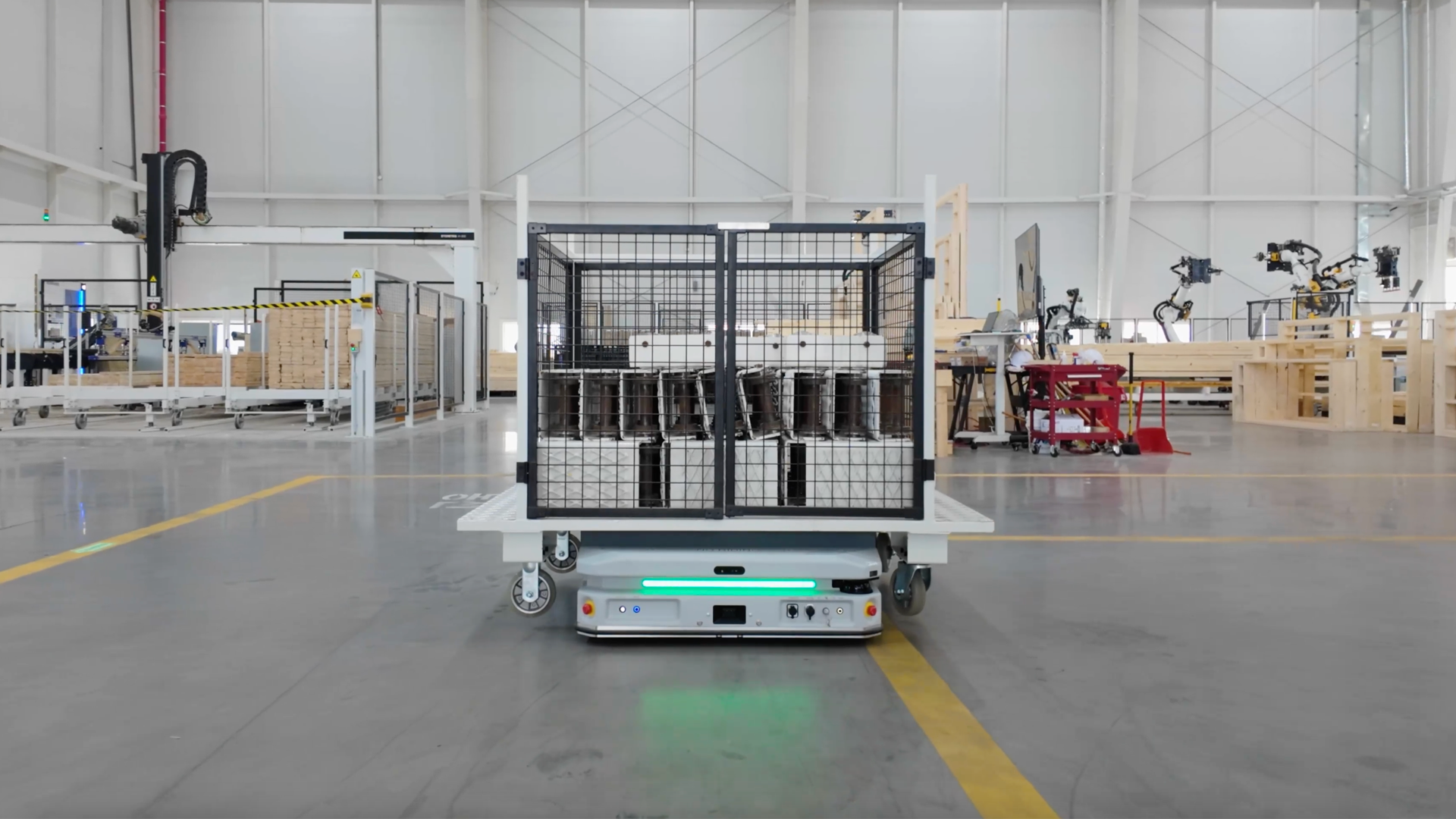
This case study demonstrates the installation of a KUKA KMP 1500P logistics robot at Bigwave Robotics (Marosol) to transport rollers and scrap debris within the space manufacturing facility. The KMP 1500P autonomously handles up to 1 ton of scrap debris over a 1.2 km distance and automatically transports heavy-duty roller modules weighing up to 1 ton. Furthermore, sensors embedded in the KMP 1500P enabled the development of an unmanned system capable of safely transporting heavy-duty materials.
Project Background and Purpose
- Automated unmanned transport using autonomous robots
- Robots perform simple, repetitive tasks
- Safe operation of heavy-duty products using various sensors
- Remote control and monitoring using SOLlink
Components
| Robot | KUKA KMP 1500P *2 |
|---|---|
| Peripherals | 2 automatic robot charging stations; 1 manual robot charging station; 1 hardware PC for KUKA robot server; 1 license for KUKA robot server; 2 SOLlink tablet controllers; 1 SOLlink server; 5 robot transport carts; 10 cart stations |
Workflow
| STEP 1. | Loading of carts in the departure area (loading area) |
|---|---|
| STEP 2. | Work command via SOLlink (tablet) |
| STEP 3. | Loading carts in the departure area using a robot lift |
| STEP 4. | Transporting carts to the destination area |
| STEP 5. | Unloading carts using a robot lift |
| STEP 6. | Setting automatic charging during non-work hours |
| STEP 7. | Charging |
| STEP 8. | Waiting for work after recovering to the preset battery level |
| STEP 9. | When robots cross, give way to the robot with priority and then cross (priority granting criteria: order of work commands) |
Features
Convenience
- Real-time robot monitoring using SOLlink
- Easy robot operation using SOLlink (tablet)
- In-factory Wi-Fi for convenient access without spatial constraints
- Automatic charging function for robot battery maintenance
- Safety using 360-degree lidar and 3D cameras
Safe robot sensor-based transportation
- Equipped with various sensors, including 3D cameras and LiDAR
- Automatic stop upon detection of obstacles or people
- Fall prevention function
Automation of simple tasks
- Improved work efficiency through automated movement
- Maximized work time by utilizing surplus time
Results
| Key Benefits | Automated material handling → Automatically handles over 80 times per day without human intervention, approximately doubling work efficiency.
Safe transport of 1-ton heavy-duty debris → Safety detection and collision avoidance are fully implemented using 3D cameras and LiDAR sensors.
Autonomous driving route optimization → Automatically drives along a set path within a 1.2km section, with priority control when robots intersect to ensure safety.
Improved worker working conditions → Eliminates repetitive heavy-duty transport tasks, reducing worker fatigue and enhancing process focus.
Improved process efficiency and stable operating rates → Automatically recharges and enables continuous unmanned transport, even during nighttime and non-working hours. |
|---|---|
| Client Feedback | Back when heavy debris had to be moved manually, there were many safety concerns and fatigue buildup.
Now, robots are doing the work for us, making it much safer. |
Unauthorized copying or reproduction of any content on Marosol may violate the Unfair Competition Prevention Act and Copyright Act.
Recommended Solution

Cosmetic Container Packaging through COMAU Racer-5
This automated packaging solution utilizes the COMAU Racer-5 to automate the manual process of loading cosmetic containers into boxes. The system picks up containers arriving in a single line and arranges them into organized rows within the box. It also automates the placement of interlayer sheets (dividers) between each layer of products, ensuring maximum productivity while minimizing management touchpoints. By handling both the product and the packaging material, the robot provides a seamless and efficient end-of-line solution.

500kg Heavy-Duty Lift AGV: Automated Logistics Solution
This logistics automation solution utilizes Sammi AGV's 500kg heavy-duty lift-type AGV to transport high-payload materials. Based on highly reliable drive unit design expertise, Sammi AGVs ensure stable driving performance and excellent traction. The system is designed for ease of use, featuring Excel-based programming that allows users to control and modify paths effortlessly. Furthermore, its low-voltage, high-efficiency design minimizes downtime associated with battery charging and replacement, enabling extended operation hours.

Order Picking using Yaskawa and Mech-Mind
This logistics automation solution utilizes Mech-Mind 3D Vision and the Yaskawa GP8 robot to automate the order picking of various unstructured objects. By leveraging a highly cost-effective 3D vision system that recognizes both the position and shape of products, the system can perform picking tasks without additional manual teaching—even when new products are added or existing ones are changed. The project was specifically designed to automate the picking of irregular items in logistics center picking zones.
Process layout
Process Overview
This case study demonstrates the installation of a KUKA KMP 1500P logistics robot at Bigwave Robotics (Marosol) to transport rollers and scrap debris within the space manufacturing facility. The KMP 1500P autonomously handles up to 1 ton of scrap debris over a 1.2 km distance and automatically transports heavy-duty roller modules weighing up to 1 ton. Furthermore, sensors embedded in the KMP 1500P enabled the development of an unmanned system capable of safely transporting heavy-duty materials.
Project Background and Purpose
- Automated unmanned transport using autonomous robots
- Robots perform simple, repetitive tasks
- Safe operation of heavy-duty products using various sensors
- Remote control and monitoring using SOLlink
Components
| Robot | KUKA KMP 1500P *2 |
|---|---|
| Peripherals | 2 automatic robot charging stations; 1 manual robot charging station; 1 hardware PC for KUKA robot server; 1 license for KUKA robot server; 2 SOLlink tablet controllers; 1 SOLlink server; 5 robot transport carts; 10 cart stations |
Workflow
| STEP 1. | Loading of carts in the departure area (loading area) |
|---|---|
| STEP 2. | Work command via SOLlink (tablet) |
| STEP 3. | Loading carts in the departure area using a robot lift |
| STEP 4. | Transporting carts to the destination area |
| STEP 5. | Unloading carts using a robot lift |
| STEP 6. | Setting automatic charging during non-work hours |
| STEP 7. | Charging |
| STEP 8. | Waiting for work after recovering to the preset battery level |
| STEP 9. | When robots cross, give way to the robot with priority and then cross (priority granting criteria: order of work commands) |
Features
Convenience
- Real-time robot monitoring using SOLlink
- Easy robot operation using SOLlink (tablet)
- In-factory Wi-Fi for convenient access without spatial constraints
- Automatic charging function for robot battery maintenance
- Safety using 360-degree lidar and 3D cameras
Safe robot sensor-based transportation
- Equipped with various sensors, including 3D cameras and LiDAR
- Automatic stop upon detection of obstacles or people
- Fall prevention function
Automation of simple tasks
- Improved work efficiency through automated movement
- Maximized work time by utilizing surplus time
Results
| Key Benefits | Automated material handling → Automatically handles over 80 times per day without human intervention, approximately doubling work efficiency.
Safe transport of 1-ton heavy-duty debris → Safety detection and collision avoidance are fully implemented using 3D cameras and LiDAR sensors.
Autonomous driving route optimization → Automatically drives along a set path within a 1.2km section, with priority control when robots intersect to ensure safety.
Improved worker working conditions → Eliminates repetitive heavy-duty transport tasks, reducing worker fatigue and enhancing process focus.
Improved process efficiency and stable operating rates → Automatically recharges and enables continuous unmanned transport, even during nighttime and non-working hours. |
|---|---|
| Client Feedback | Back when heavy debris had to be moved manually, there were many safety concerns and fatigue buildup.
Now, robots are doing the work for us, making it much safer. |
Unauthorized copying or reproduction of any content on Marosol may violate the Unfair Competition Prevention Act and Copyright Act.
Recommended Solution
Cosmetic Container Packaging through COMAU Racer-5
This automated packaging solution utilizes the COMAU Racer-5 to automate the manual process of loading cosmetic containers into boxes. The system picks up containers arriving in a single line and arranges them into organized rows within the box. It also automates the placement of interlayer sheets (dividers) between each layer of products, ensuring maximum productivity while minimizing management touchpoints. By handling both the product and the packaging material, the robot provides a seamless and efficient end-of-line solution.
500kg Heavy-Duty Lift AGV: Automated Logistics Solution
This logistics automation solution utilizes Sammi AGV's 500kg heavy-duty lift-type AGV to transport high-payload materials. Based on highly reliable drive unit design expertise, Sammi AGVs ensure stable driving performance and excellent traction. The system is designed for ease of use, featuring Excel-based programming that allows users to control and modify paths effortlessly. Furthermore, its low-voltage, high-efficiency design minimizes downtime associated with battery charging and replacement, enabling extended operation hours.
Order Picking using Yaskawa and Mech-Mind
This logistics automation solution utilizes Mech-Mind 3D Vision and the Yaskawa GP8 robot to automate the order picking of various unstructured objects. By leveraging a highly cost-effective 3D vision system that recognizes both the position and shape of products, the system can perform picking tasks without additional manual teaching—even when new products are added or existing ones are changed. The project was specifically designed to automate the picking of irregular items in logistics center picking zones.