




Process layout
Process Overview
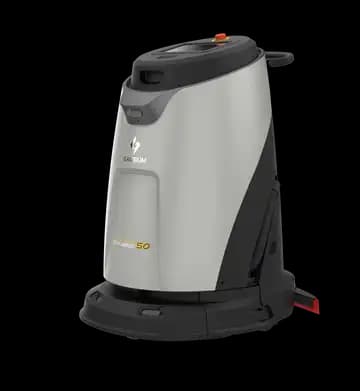
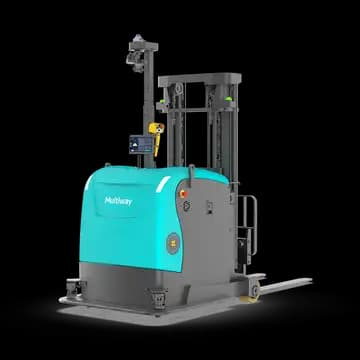
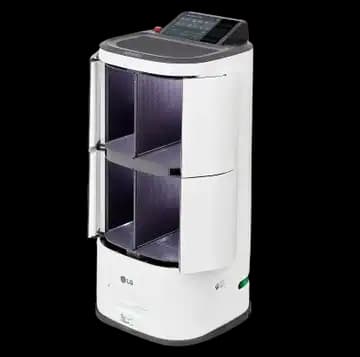
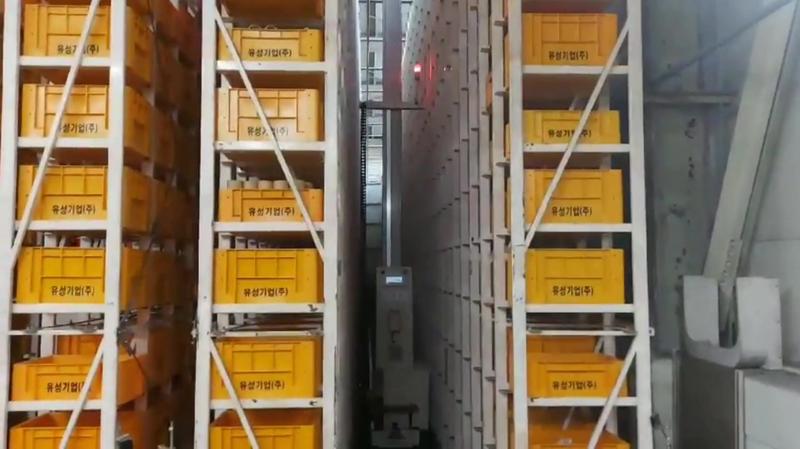
This solution uses a stacker that travels along a line and automatically transfers boxes using a conveyor system.
By transferring boxes to a higher position with a stacker, it enables faster box handling compared to conventional methods, improving productivity. It also reduces the risk of safety accidents by separating operators from the work area. In addition, the stacker’s travel section is configured with PLC control, making maintenance convenient.
Components
| Robot |
|
|---|
Workflow
| STEP 1. | Outbound: Select the location of the box to be shipped via PC |
|---|---|
| STEP 2. | The stacker moves along the line to the box location |
| STEP 3. | The stacker moves along the line to the conveyor position |
| STEP 4. | Load the box onto the conveyor |
| STEP 5. | Outbound |
| STEP 6. | Repeat the above process |
| STEP 7. | Inbound: Select the location of the box to be received via PC |
| STEP 8. | Load the box onto the stacker |
| STEP 9. | Move along the line to the inbound location |
| STEP 10. | Store the box at the designated position |
| STEP 11. | Return to the original position |
| STEP 12. | Repeat the above process |
Features
Fast operations in narrow and high-space environments
Can quickly move to the work location by traveling along the line carrying the load
Enables stacking loads at elevated positions
Multiple lines can operate independently
Can store up to 3,360 boxes (based on this solution configuration)
Improved safety and productivity
Transfers loads in place of operators
Enables fast and accurate transport
Results
| Key Benefits | Prevention of workplace safety accidents Increased productivity in logistics operations |
|---|---|
| Client Feedback | By implementing the automated warehouse system, operators can be separated from hazardous tasks to prevent safety accidents, and boxes can be stored faster than before. |
Unauthorized copying or reproduction of any content on Marosol may violate the Unfair Competition Prevention Act and Copyright Act.
Recommended Solution

AI Palletizing + Omron AMR Logistics Robots for End-to-End Warehouse Automation 👏
Process Overview This implementation combines Omron AMR logistics robots with an AI-based palletizing system to achieve logistics automation. The customer showed strong interest in adopting an AI-powered logistics automation system to strengthen future competitiveness and to maximize cost savings and operational efficiency through automated palletizing and material handling. This solution autonomously transports and loads various types of goods, improving efficiency and accuracy in inbound and outbound operations, while reducing physical workload for operators and ensuring workplace safety. Project Background and Objectives The customer aimed to optimize logistics operations and reduce costs by adopting an AI-driven automation solution to enhance future logistics competitiveness. In particular, automation was urgently needed for repetitive and heavy palletizing tasks and material transport operations. The objective of this project is to maximize outbound operation efficiency using AMRs and industrial robots, ensure operator safety, and enable real-time tracking and management of goods. Through this, the customer sought to improve productivity at the logistics site and secure long-term stability and flexibility in future logistics operations.

Full Automation of Injection Molding Line Logistics with AMR Logistics Robots
Process Overview This case study demonstrates an inline logistics solution that utilizes the Yujin Robot GoCart180 and an upper conveyor module to automatically transport plastic injection products from the injection molding machine to the shipping facility. By developing a conveyor module tailored to the customer's production line, we automated product loading and unloading, achieving complete automation throughout the entire inline transport process without operator intervention. Warranty Period 1 Year Performance Year 2023 Project Duration Need for consultation Project Background and Objectives Injection molding manufacturing in-line labor shortage Factory operations are disrupted due to difficulties securing workers Workers avoid work due to the risk of musculoskeletal disorders and industrial accidents
.jpeg&w=3840&q=75)
Japanese Fashion Retailer’s Warehouse Automation Success Story 😎 (Case Study: Deployment of 181 HIK AMR Logistics Robots)
A leading Japanese fashion company introduced an HIK robotics solution to optimize apparel logistics operations in a large-scale warehouse spanning over 11,000 m². The STP (Shelf-to-Person) system—integrating a fleet of 181 AMRs (Autonomous Mobile Robots) with 26 workstations—has transformed the facility into a smart fulfillment center, delivering productivity aligned with the latest trends in the apparel logistics industry.
Process layout
Process Overview
This solution uses a stacker that travels along a line and automatically transfers boxes using a conveyor system.
By transferring boxes to a higher position with a stacker, it enables faster box handling compared to conventional methods, improving productivity. It also reduces the risk of safety accidents by separating operators from the work area. In addition, the stacker’s travel section is configured with PLC control, making maintenance convenient.
Components
| Robot |
|
|---|
Workflow
| STEP 1. | Outbound: Select the location of the box to be shipped via PC |
|---|---|
| STEP 2. | The stacker moves along the line to the box location |
| STEP 3. | The stacker moves along the line to the conveyor position |
| STEP 4. | Load the box onto the conveyor |
| STEP 5. | Outbound |
| STEP 6. | Repeat the above process |
| STEP 7. | Inbound: Select the location of the box to be received via PC |
| STEP 8. | Load the box onto the stacker |
| STEP 9. | Move along the line to the inbound location |
| STEP 10. | Store the box at the designated position |
| STEP 11. | Return to the original position |
| STEP 12. | Repeat the above process |
Features
Fast operations in narrow and high-space environments
Can quickly move to the work location by traveling along the line carrying the load
Enables stacking loads at elevated positions
Multiple lines can operate independently
Can store up to 3,360 boxes (based on this solution configuration)
Improved safety and productivity
Transfers loads in place of operators
Enables fast and accurate transport
Results
| Key Benefits | Prevention of workplace safety accidents Increased productivity in logistics operations |
|---|---|
| Client Feedback | By implementing the automated warehouse system, operators can be separated from hazardous tasks to prevent safety accidents, and boxes can be stored faster than before. |
Unauthorized copying or reproduction of any content on Marosol may violate the Unfair Competition Prevention Act and Copyright Act.
Recommended Solution
AI Palletizing + Omron AMR Logistics Robots for End-to-End Warehouse Automation 👏
Process Overview This implementation combines Omron AMR logistics robots with an AI-based palletizing system to achieve logistics automation. The customer showed strong interest in adopting an AI-powered logistics automation system to strengthen future competitiveness and to maximize cost savings and operational efficiency through automated palletizing and material handling. This solution autonomously transports and loads various types of goods, improving efficiency and accuracy in inbound and outbound operations, while reducing physical workload for operators and ensuring workplace safety. Project Background and Objectives The customer aimed to optimize logistics operations and reduce costs by adopting an AI-driven automation solution to enhance future logistics competitiveness. In particular, automation was urgently needed for repetitive and heavy palletizing tasks and material transport operations. The objective of this project is to maximize outbound operation efficiency using AMRs and industrial robots, ensure operator safety, and enable real-time tracking and management of goods. Through this, the customer sought to improve productivity at the logistics site and secure long-term stability and flexibility in future logistics operations.
Full Automation of Injection Molding Line Logistics with AMR Logistics Robots
Process Overview This case study demonstrates an inline logistics solution that utilizes the Yujin Robot GoCart180 and an upper conveyor module to automatically transport plastic injection products from the injection molding machine to the shipping facility. By developing a conveyor module tailored to the customer's production line, we automated product loading and unloading, achieving complete automation throughout the entire inline transport process without operator intervention. Warranty Period 1 Year Performance Year 2023 Project Duration Need for consultation Project Background and Objectives Injection molding manufacturing in-line labor shortage Factory operations are disrupted due to difficulties securing workers Workers avoid work due to the risk of musculoskeletal disorders and industrial accidents
Japanese Fashion Retailer’s Warehouse Automation Success Story 😎 (Case Study: Deployment of 181 HIK AMR Logistics Robots)
A leading Japanese fashion company introduced an HIK robotics solution to optimize apparel logistics operations in a large-scale warehouse spanning over 11,000 m². The STP (Shelf-to-Person) system—integrating a fleet of 181 AMRs (Autonomous Mobile Robots) with 26 workstations—has transformed the facility into a smart fulfillment center, delivering productivity aligned with the latest trends in the apparel logistics industry.