




Process layout
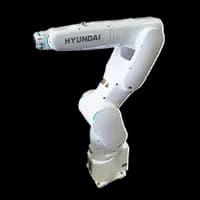
This solution utilizes the KAWASAKI RS020N robot to safely transfer copper-plated plates, which are highly susceptible to surface damage.
By automating the transfer of finished copper foil products to the post-processing stage, this system ensures product integrity and operational consistency. It includes a specialized thickness detection step to identify contaminants or overlapping sheets, preventing downstream equipment damage and quality issues.
Components
| Robot |
|
|---|
Workflow
| STEP 1. | Loading of the copper foil stacking jig. |
|---|---|
| STEP 2. | High-precision picking of the copper foil product. |
| STEP 3. | Thickness & Contaminant Detection: Verification of foil thickness to ensure no foreign objects or multiple sheets are picked. |
| STEP 4. | Unloading the product onto the clamping device for post-processing. |
Features
Safe and High-Speed Operation
Delicate Handling: Engineered to perform delicate tasks at high speeds while prioritizing the prevention of product damage.
Minimized Cycle Times: Optimized motion planning ensures swift transitions between the loading jig and post-processing units.
Quality Assurance via Contaminant Detection
Thickness Sensing: Integrated sensors measure plate thickness in real-time to prevent the entry of foreign objects or overlapping sheets (double-picking) into the production line.
Proactive Defect Prevention: Identifies anomalies before they reach the clamping stage, protecting downstream equipment.
Versatile Product Handling
Adaptive Gripper System: Utilizes a specialized vacuum suction gripper designed to handle various plate sizes and shapes with consistent stability.
Flexible Scaling: Easily programmable to accommodate different product lineups without mechanical overhauls.
Results
| Key Benefits | Significant increase in operational speed by minimizing idle time.
Enhanced pre-process quality control through integrated sensing.
|
|---|---|
| Client Feedback | The system doesn't just move parts it performs quality inspections by detecting contaminants and thickness variations. Its ability to handle a wide range of product sizes provides excellent operational coverage for our facility. |
Unauthorized copying or reproduction of any content on Marosol may violate the Unfair Competition Prevention Act and Copyright Act.
Recommended Solution

Power Cable Bin Picking using UR5e, Deep Learning, and Reinforcement Learning
This solution automates product sorting, assembly, and packing by utilizing 3D Vision, Deep Learning (Instance Segmentation), Reinforcement Learning (RL), and Motion Planning (OMPL) algorithms. By using 3D vision to recognize product types, product locations, and box positions in real-time, the system can automatically compensate for changes in positioning. The integration of deep learning and reinforcement learning for object identification allows the solution to be applied even to irregularly shaped objects. Because the system calibrates itself through continuous learning—even when conditions change, such as vision/robot misalignment or switching to different products—it ensures easy operation, simplified maintenance, and minimized downtime.

Robot Automation and Automatic Temperature Control System for Hot Bolt Forging
This application is a solution that realizes robot automation through position control and constructs an automatic temperature control system in the hot bolt forging process using the Kawasaki RS050. By automating the friction press hot forging process during bolt manufacturing and implementing an automatic temperature control system, it has achieved Korea's first automation of press robots.

SCHMALZ Layer Vacuum Gripping System (SPZ)
This application case features a solution for gripping and transferring workpieces using Schmalz's Layer Vacuum Gripping System (SPZ). The Schmalz SPZ is an optimized solution for wide-range palletizing tasks. It is ideally suited for transporting large workpieces, making it easy to implement in environments such as logistics warehouses. As an innovative gripper concept designed to support processes requiring high weight or high flow, it enables more stable and reliable palletizing.
Process layout
This solution utilizes the KAWASAKI RS020N robot to safely transfer copper-plated plates, which are highly susceptible to surface damage.
By automating the transfer of finished copper foil products to the post-processing stage, this system ensures product integrity and operational consistency. It includes a specialized thickness detection step to identify contaminants or overlapping sheets, preventing downstream equipment damage and quality issues.
Components
| Robot |
|
|---|
Workflow
| STEP 1. | Loading of the copper foil stacking jig. |
|---|---|
| STEP 2. | High-precision picking of the copper foil product. |
| STEP 3. | Thickness & Contaminant Detection: Verification of foil thickness to ensure no foreign objects or multiple sheets are picked. |
| STEP 4. | Unloading the product onto the clamping device for post-processing. |
Features
Safe and High-Speed Operation
Delicate Handling: Engineered to perform delicate tasks at high speeds while prioritizing the prevention of product damage.
Minimized Cycle Times: Optimized motion planning ensures swift transitions between the loading jig and post-processing units.
Quality Assurance via Contaminant Detection
Thickness Sensing: Integrated sensors measure plate thickness in real-time to prevent the entry of foreign objects or overlapping sheets (double-picking) into the production line.
Proactive Defect Prevention: Identifies anomalies before they reach the clamping stage, protecting downstream equipment.
Versatile Product Handling
Adaptive Gripper System: Utilizes a specialized vacuum suction gripper designed to handle various plate sizes and shapes with consistent stability.
Flexible Scaling: Easily programmable to accommodate different product lineups without mechanical overhauls.
Results
| Key Benefits | Significant increase in operational speed by minimizing idle time.
Enhanced pre-process quality control through integrated sensing.
|
|---|---|
| Client Feedback | The system doesn't just move parts it performs quality inspections by detecting contaminants and thickness variations. Its ability to handle a wide range of product sizes provides excellent operational coverage for our facility. |
Unauthorized copying or reproduction of any content on Marosol may violate the Unfair Competition Prevention Act and Copyright Act.
Recommended Solution
Power Cable Bin Picking using UR5e, Deep Learning, and Reinforcement Learning
This solution automates product sorting, assembly, and packing by utilizing 3D Vision, Deep Learning (Instance Segmentation), Reinforcement Learning (RL), and Motion Planning (OMPL) algorithms. By using 3D vision to recognize product types, product locations, and box positions in real-time, the system can automatically compensate for changes in positioning. The integration of deep learning and reinforcement learning for object identification allows the solution to be applied even to irregularly shaped objects. Because the system calibrates itself through continuous learning—even when conditions change, such as vision/robot misalignment or switching to different products—it ensures easy operation, simplified maintenance, and minimized downtime.
Robot Automation and Automatic Temperature Control System for Hot Bolt Forging
This application is a solution that realizes robot automation through position control and constructs an automatic temperature control system in the hot bolt forging process using the Kawasaki RS050. By automating the friction press hot forging process during bolt manufacturing and implementing an automatic temperature control system, it has achieved Korea's first automation of press robots.
SCHMALZ Layer Vacuum Gripping System (SPZ)
This application case features a solution for gripping and transferring workpieces using Schmalz's Layer Vacuum Gripping System (SPZ). The Schmalz SPZ is an optimized solution for wide-range palletizing tasks. It is ideally suited for transporting large workpieces, making it easy to implement in environments such as logistics warehouses. As an innovative gripper concept designed to support processes requiring high weight or high flow, it enables more stable and reliable palletizing.