





Process layout
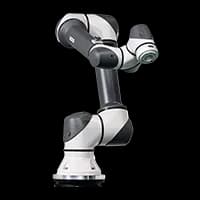
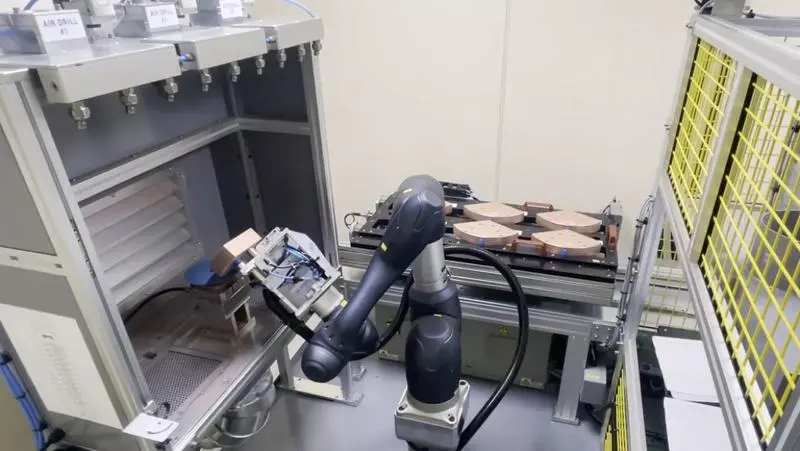
This machine tending solution utilizes the Doosan M1509 collaborative robot to automate the hazardous and physically demanding task of polishing the surfaces of heavy semiconductor materials. The project was initiated to improve operational efficiency by reassigning workers to higher-value tasks and to enhance customer trust through consistent schedule and quality management.
Previously, manual polishing caused significant strain on workers' wrists and exposed them to high levels of dust, leading to high turnover and a lack of specialized expertise. This inconsistency in the workforce often resulted in fluctuating product quality. By implementing this automation, the robot performs the entire polishing cycle—including the mandatory replacement of one-time-use polishing pads—ensuring uniform quality while allowing operators to simply load raw materials and collect finished goods.
Components
| Robot |
|
|---|
Workflow
| STEP 1. | Infeed: Raw materials are fed into the system. |
|---|---|
| STEP 2. | Picking: The M1509 picks up the heavy semiconductor material. |
| STEP 3. | Transit: Moves the material to the polishing station. |
| STEP 4. | Polishing: Executes the primary surface polishing. |
| STEP 5. | Multi-axis Polishing: Changes orientation to polish the top, bottom, and side surfaces. |
| STEP 6. | Outfeed: Places the finished product on the discharge table. |
| STEP 7. | Pad Replacement: Automatically replaces the one-time-use polishing pad. |
| STEP 8. | Cycle Repeat: Returns to Step 1 for the next workpiece. |
Features
Improved Work Environment for Avoided Tasks
Ergonomic Relief: Eliminates wrist-related musculoskeletal disorders caused by repetitive, high-reaction-force polishing motions.
Health & Safety: Removes human operators from hazardous environments filled with fine process dust.
Guaranteed Operational Safety & Quality
High-Sensitivity Sensing: Equipped with 6-axis torque sensors featuring a 0.2Nm resolution, allowing the robot to detect and react to subtle collisions from any direction for maximum safety.
Precision Force Control: Maintains the optimal reaction force according to external load conditions, ensuring uniform polishing quality across the workpiece.
High-Payload Capability: Utilizes a 15kg high-payload cobot to handle heavy semiconductor materials and high-torque polishing tools effortlessly.
Consistent Quality: Minimizes quality fluctuations caused by high personnel turnover, ensuring professional-grade results through standardized automation.
Compact Installation
Space Efficiency: The streamlined design of the collaborative robot minimizes the footprint required for installation, allowing it to fit into existing production lines without major layout changes.
Results
| Key Benefits | Increased job satisfaction through the strategic reassignment of workers to higher-value tasks.
Reduced worker fatigue by eliminating simple, repetitive manual labor.
Boosted productivity through continuous 24/7 production and stabilized quality.
|
|---|---|
| Client Feedback | Polishing was the task our workers avoided most due to the poor environment. Replacing it with a robot has significantly increased overall employee satisfaction.
|
Unauthorized copying or reproduction of any content on Marosol may violate the Unfair Competition Prevention Act and Copyright Act.
Recommended Solution

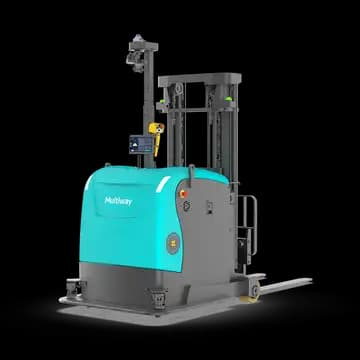
Indoor Logistics Transport using VisionNav VNP15
Indoor Logistics Transport using VisionNav VNP15 This application case is an automated loading and unloading solution that utilizes VisionNav's VNP15 to automate the process of transporting and stacking packed products. Based on strict safety features, it minimizes changes to existing processes, enables unmanned loading/unloading tasks, and allows for effective monitoring and control of the work status.

Robot Palletizing Solution for Ice Cup Boxes
This application case features the KAWASAKI CX210L robot, which automates the palletizing of ice cup boxes by picking up two units at a time. By performing fast, uniform, and stable stacking, this solution has significantly increased production efficiency. Automating the palletizing process not only accelerates work speeds but also protects workers from musculoskeletal disorders caused by repetitive heavy lifting in chilled environments.

Robot Safety Fencing for Surgical Mask Production Systems
This solution features the implementation of safety fencing within a robot cell to meet the surging demand for surgical masks while establishing a secure working environment that complies with international safety standards. To fulfill high-volume production contracts under tight deadlines, the safety enclosure was designed for rapid installation. Its user-friendly layout ensures that the entire robotic cell can be efficiently managed by a single operator.
Process layout
This machine tending solution utilizes the Doosan M1509 collaborative robot to automate the hazardous and physically demanding task of polishing the surfaces of heavy semiconductor materials. The project was initiated to improve operational efficiency by reassigning workers to higher-value tasks and to enhance customer trust through consistent schedule and quality management.
Previously, manual polishing caused significant strain on workers' wrists and exposed them to high levels of dust, leading to high turnover and a lack of specialized expertise. This inconsistency in the workforce often resulted in fluctuating product quality. By implementing this automation, the robot performs the entire polishing cycle—including the mandatory replacement of one-time-use polishing pads—ensuring uniform quality while allowing operators to simply load raw materials and collect finished goods.
Components
| Robot |
|
|---|
Workflow
| STEP 1. | Infeed: Raw materials are fed into the system. |
|---|---|
| STEP 2. | Picking: The M1509 picks up the heavy semiconductor material. |
| STEP 3. | Transit: Moves the material to the polishing station. |
| STEP 4. | Polishing: Executes the primary surface polishing. |
| STEP 5. | Multi-axis Polishing: Changes orientation to polish the top, bottom, and side surfaces. |
| STEP 6. | Outfeed: Places the finished product on the discharge table. |
| STEP 7. | Pad Replacement: Automatically replaces the one-time-use polishing pad. |
| STEP 8. | Cycle Repeat: Returns to Step 1 for the next workpiece. |
Features
Improved Work Environment for Avoided Tasks
Ergonomic Relief: Eliminates wrist-related musculoskeletal disorders caused by repetitive, high-reaction-force polishing motions.
Health & Safety: Removes human operators from hazardous environments filled with fine process dust.
Guaranteed Operational Safety & Quality
High-Sensitivity Sensing: Equipped with 6-axis torque sensors featuring a 0.2Nm resolution, allowing the robot to detect and react to subtle collisions from any direction for maximum safety.
Precision Force Control: Maintains the optimal reaction force according to external load conditions, ensuring uniform polishing quality across the workpiece.
High-Payload Capability: Utilizes a 15kg high-payload cobot to handle heavy semiconductor materials and high-torque polishing tools effortlessly.
Consistent Quality: Minimizes quality fluctuations caused by high personnel turnover, ensuring professional-grade results through standardized automation.
Compact Installation
Space Efficiency: The streamlined design of the collaborative robot minimizes the footprint required for installation, allowing it to fit into existing production lines without major layout changes.
Results
| Key Benefits | Increased job satisfaction through the strategic reassignment of workers to higher-value tasks.
Reduced worker fatigue by eliminating simple, repetitive manual labor.
Boosted productivity through continuous 24/7 production and stabilized quality.
|
|---|---|
| Client Feedback | Polishing was the task our workers avoided most due to the poor environment. Replacing it with a robot has significantly increased overall employee satisfaction.
|
Unauthorized copying or reproduction of any content on Marosol may violate the Unfair Competition Prevention Act and Copyright Act.
Recommended Solution
Indoor Logistics Transport using VisionNav VNP15
Indoor Logistics Transport using VisionNav VNP15 This application case is an automated loading and unloading solution that utilizes VisionNav's VNP15 to automate the process of transporting and stacking packed products. Based on strict safety features, it minimizes changes to existing processes, enables unmanned loading/unloading tasks, and allows for effective monitoring and control of the work status.
Robot Palletizing Solution for Ice Cup Boxes
This application case features the KAWASAKI CX210L robot, which automates the palletizing of ice cup boxes by picking up two units at a time. By performing fast, uniform, and stable stacking, this solution has significantly increased production efficiency. Automating the palletizing process not only accelerates work speeds but also protects workers from musculoskeletal disorders caused by repetitive heavy lifting in chilled environments.
Robot Safety Fencing for Surgical Mask Production Systems
This solution features the implementation of safety fencing within a robot cell to meet the surging demand for surgical masks while establishing a secure working environment that complies with international safety standards. To fulfill high-volume production contracts under tight deadlines, the safety enclosure was designed for rapid installation. Its user-friendly layout ensures that the entire robotic cell can be efficiently managed by a single operator.