

Process layout
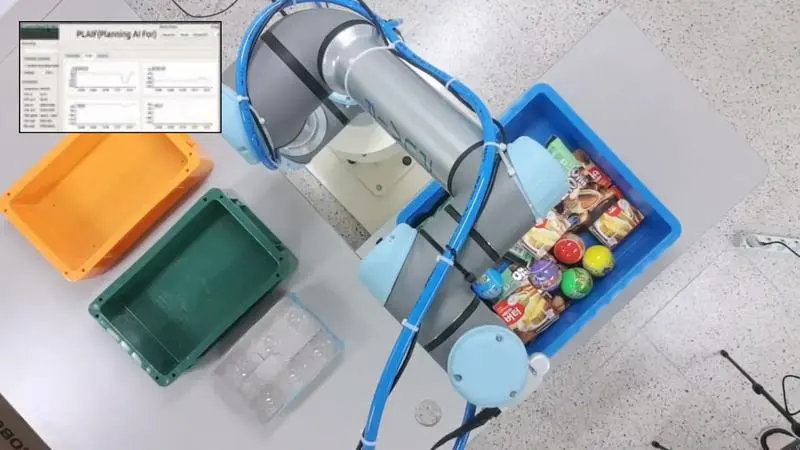
This next-generation sorting solution leverages 3D Vision, Deep Learning (Instance Segmentation), Reinforcement Learning, and Motion Planning (OMPL) to automate complex tasks such as product classification, assembly, and packing.
By utilizing cost-effective 3D vision, the system recognizes the type and location of products and bins in real-time. This allows the robot to automatically compensate for shifts in the position of items or boxes without manual intervention. The integration of Motion Planning drastically reduces human teaching time, while Reinforcement Learning optimizes movements to minimize overall cycle times.
Components
| Robot |
|
|---|
Workflow
| STEP 1. | Recognition: The system identifies and classifies individual items from a "random bin" containing various mixed products. |
|---|---|
| STEP 2. | Sorting & Stacking: The robot picks the recognized item and places it into the designated discharge box in a precise position. |
| STEP 3. | Continuous Operation: The robot repeats the task until all items in the input box are sorted. (The vision system automatically tracks and updates Pick & Place coordinates even if the boxes are moved during operation.) |
Features
Simple & Effortless Setup
Automated Robot Teaching: Deep learning-based vision calibration and automated teaching significantly reduce initial setup time.
Calibration-Free Operation: No need for manual re-calibration or re-teaching even when work conditions or environmental factors change.
Advanced 3D Object Recognition: Superior recognition capabilities for diverse objects using deep learning-based 3D vision.
Self-Learning Pick Optimization: The system automatically learns the optimal picking coordinates based on the specific shape and orientation of each product.
Infrastructure Minimalism: Eliminates the need for fixed-position jigs or custom feeders, as the system dynamically recognizes input and discharge boxes.
Seamless Integration: The robot can be installed directly into existing manual workspaces without extensive line modifications.
Rapid ROI (Return on Investment)
Operational Optimization: Continuous learning algorithms optimize robot postures and movement paths to consistently shorten cycle times.
Low Maintenance Costs: Automated compensation ensures stable operation even if the layout shifts or the robot experiences mechanical wear over time.
Maximum Productivity: Ensures steady production output by minimizing downtime through robust AI-driven self-correction.
Unauthorized copying or reproduction of any content on Marosol may violate the Unfair Competition Prevention Act and Copyright Act.
Recommended Solution

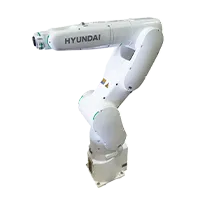
Position and Orientation Compensation using Hyundai HH7 and Conveyor Tracking
This logistics automation solution utilizes the Hyundai HH7 robot, the HRVision 3D vision system, and conveyor tracking technology to automate the manual task of recognizing text on boxes and aligning them according to the text orientation. By leveraging the high-speed processing of HRVision, the system can identify product images while in motion. Combined with conveyor tracking, the robot can pick and align moving objects without stopping the belt, ensuring a seamless and highly efficient workflow.

Box Handling Solution using Hyundai HH020 and HRVision
This sorting automation solution utilizes the Hyundai HH020 robot and the HRVision 3D vision solution to automate the manual task of recognizing text on the tops of boxes and transferring them to a conveyor in a specific sequence. By leveraging the high-speed recognition capabilities of HRVision, the system can capture and process product images even while the objects are in motion, ensuring seamless and continuous operation.

AI Palletizing using Hyundai YS140 and Mech-Mind
This automation solution utilizes Mech-Mind 3D Vision and the Hyundai YS140 industrial robot to automatically sort and stack boxes onto pallets by size, as well as transfer them to conveyors. By employing two sets of highly cost-effective 3D vision sensors, the system can stably perform both palletizing and depalletizing tasks even when various product boxes are mixed together (Mixed-Case Palletizing). The project was implemented to improve worker health and safety by automating tasks known to cause musculoskeletal disorders.
Process layout
This next-generation sorting solution leverages 3D Vision, Deep Learning (Instance Segmentation), Reinforcement Learning, and Motion Planning (OMPL) to automate complex tasks such as product classification, assembly, and packing.
By utilizing cost-effective 3D vision, the system recognizes the type and location of products and bins in real-time. This allows the robot to automatically compensate for shifts in the position of items or boxes without manual intervention. The integration of Motion Planning drastically reduces human teaching time, while Reinforcement Learning optimizes movements to minimize overall cycle times.
Components
| Robot |
|
|---|
Workflow
| STEP 1. | Recognition: The system identifies and classifies individual items from a "random bin" containing various mixed products. |
|---|---|
| STEP 2. | Sorting & Stacking: The robot picks the recognized item and places it into the designated discharge box in a precise position. |
| STEP 3. | Continuous Operation: The robot repeats the task until all items in the input box are sorted. (The vision system automatically tracks and updates Pick & Place coordinates even if the boxes are moved during operation.) |
Features
Simple & Effortless Setup
Automated Robot Teaching: Deep learning-based vision calibration and automated teaching significantly reduce initial setup time.
Calibration-Free Operation: No need for manual re-calibration or re-teaching even when work conditions or environmental factors change.
Advanced 3D Object Recognition: Superior recognition capabilities for diverse objects using deep learning-based 3D vision.
Self-Learning Pick Optimization: The system automatically learns the optimal picking coordinates based on the specific shape and orientation of each product.
Infrastructure Minimalism: Eliminates the need for fixed-position jigs or custom feeders, as the system dynamically recognizes input and discharge boxes.
Seamless Integration: The robot can be installed directly into existing manual workspaces without extensive line modifications.
Rapid ROI (Return on Investment)
Operational Optimization: Continuous learning algorithms optimize robot postures and movement paths to consistently shorten cycle times.
Low Maintenance Costs: Automated compensation ensures stable operation even if the layout shifts or the robot experiences mechanical wear over time.
Maximum Productivity: Ensures steady production output by minimizing downtime through robust AI-driven self-correction.
Unauthorized copying or reproduction of any content on Marosol may violate the Unfair Competition Prevention Act and Copyright Act.
Recommended Solution
Position and Orientation Compensation using Hyundai HH7 and Conveyor Tracking
This logistics automation solution utilizes the Hyundai HH7 robot, the HRVision 3D vision system, and conveyor tracking technology to automate the manual task of recognizing text on boxes and aligning them according to the text orientation. By leveraging the high-speed processing of HRVision, the system can identify product images while in motion. Combined with conveyor tracking, the robot can pick and align moving objects without stopping the belt, ensuring a seamless and highly efficient workflow.
Box Handling Solution using Hyundai HH020 and HRVision
This sorting automation solution utilizes the Hyundai HH020 robot and the HRVision 3D vision solution to automate the manual task of recognizing text on the tops of boxes and transferring them to a conveyor in a specific sequence. By leveraging the high-speed recognition capabilities of HRVision, the system can capture and process product images even while the objects are in motion, ensuring seamless and continuous operation.
AI Palletizing using Hyundai YS140 and Mech-Mind
This automation solution utilizes Mech-Mind 3D Vision and the Hyundai YS140 industrial robot to automatically sort and stack boxes onto pallets by size, as well as transfer them to conveyors. By employing two sets of highly cost-effective 3D vision sensors, the system can stably perform both palletizing and depalletizing tasks even when various product boxes are mixed together (Mixed-Case Palletizing). The project was implemented to improve worker health and safety by automating tasks known to cause musculoskeletal disorders.