



Process layout
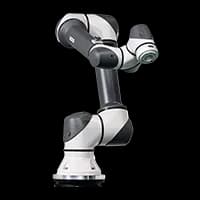
This is an injection molding and assembly automation solution that utilizes three Hanwha HCR-5 collaborative robots to manufacture plastic containers.
When a human operator inputs the container components, the cobots take over to combine the parts and perform quality testing. This system eliminates idle time typically caused by manual task switching, thereby maximizing productivity. Furthermore, the integration of 100% automated testing ensures superior product quality and consistency.
Components
| Robot |
|
|---|
Workflow
| STEP 1. | Picking: The robots pick up the top and bottom sections of the container. |
|---|---|
| STEP 2. | Bottom Loading: Inserts the bottom section into the assembly jig. |
| STEP 3. | Top Loading: Places the top section onto the bottom part. |
| STEP 4. | Heating & Compression: Performs the thermal bonding and pressing process. |
| STEP 5. | Pressure Testing: Moves the assembled unit into the pressure test device for leak checks. |
| STEP 6. | Cleaning: Inserts the product into a device to remove any remaining debris or foreign substances. |
| STEP 7. | Discharge: Places the finished, verified product onto the outfeed conveyor. |
Features
Improved Production Efficiency & Enhanced Quality
Minimized Idle Time: Maximizes throughput by optimizing the collaboration between human workers and robots, eliminating gaps in the workflow.
Zero-Defect Quality: Performs 100% automated inspection and pressure testing on every unit to ensure perfect reliability and minimize defect rates.
Compact & Safe Installation
Space Optimization: The compact footprint of the Hanwha HCR-5 cobot allows for installation in tight spaces without requiring extensive floor reconfiguration.
Fence-Free Safety: Built-in collision detection sensors minimize the risk of accidents, allowing the robot to operate safely alongside humans without bulky safety cages.
Intuitive & Easy Teaching
Direct Teaching: Operators can program the robot by simply moving the robot arm by hand to the desired positions, making it accessible even for non-experts.
Flexible Deployment: The system can be quickly adapted and reprogrammed to handle different product types or process changes with ease.
Results
| Key Benefits | Significant boost in overall productivity.
Superior quality assurance through 100% automated testing.
|
|---|---|
| Client Feedback | Through Nau Technics' solution, we minimized idle time during task transitions, which greatly improved our production efficiency. The integrated 100% testing has also remarkably enhanced our final product quality. |
Unauthorized copying or reproduction of any content on Marosol may violate the Unfair Competition Prevention Act and Copyright Act.
Recommended Solution

Petri Dish (Challe) Packaging through Cartesian Robots
This is an automated packaging solution that replaces the manual process of stacking and bagging Petri dishes with a system powered by three Cartesian (Gantry) robots. By utilizing a combination of three Cartesian robots, the system performs continuous operations at high speeds. The linear design of these robots allows for a compact installation, making it ideal for facilities with limited floor space while maintaining high throughput.

Inspection & Palletizing of Insert Molded Parts through YASKAWA GP8
This automation solution streamlines the post-molding process for insert molded parts through the YASKAWA Motoman-GP8. It automates the entire sequence—from appearance inspection to the selection and palletizing of products—leveraging a high-precision vision system. The system performs simultaneous inspection of two products, executing individual discharge or palletizing based on the specific results for each. By replacing manual visual checks with 100% automated vision inspection, the solution has significantly improved detection rates and overall product quality.

Solenoid Valve Coil Winding Automation with NACHI MZ07L
This industrial robot solution utilizes the NACHI MZ07L to automate the coil winding process for solenoid valves. By using a single robot to manage two winding machines simultaneously, the system minimizes idle time and maximizes production throughput through continuous operation.
Process layout
This is an injection molding and assembly automation solution that utilizes three Hanwha HCR-5 collaborative robots to manufacture plastic containers.
When a human operator inputs the container components, the cobots take over to combine the parts and perform quality testing. This system eliminates idle time typically caused by manual task switching, thereby maximizing productivity. Furthermore, the integration of 100% automated testing ensures superior product quality and consistency.
Components
| Robot |
|
|---|
Workflow
| STEP 1. | Picking: The robots pick up the top and bottom sections of the container. |
|---|---|
| STEP 2. | Bottom Loading: Inserts the bottom section into the assembly jig. |
| STEP 3. | Top Loading: Places the top section onto the bottom part. |
| STEP 4. | Heating & Compression: Performs the thermal bonding and pressing process. |
| STEP 5. | Pressure Testing: Moves the assembled unit into the pressure test device for leak checks. |
| STEP 6. | Cleaning: Inserts the product into a device to remove any remaining debris or foreign substances. |
| STEP 7. | Discharge: Places the finished, verified product onto the outfeed conveyor. |
Features
Improved Production Efficiency & Enhanced Quality
Minimized Idle Time: Maximizes throughput by optimizing the collaboration between human workers and robots, eliminating gaps in the workflow.
Zero-Defect Quality: Performs 100% automated inspection and pressure testing on every unit to ensure perfect reliability and minimize defect rates.
Compact & Safe Installation
Space Optimization: The compact footprint of the Hanwha HCR-5 cobot allows for installation in tight spaces without requiring extensive floor reconfiguration.
Fence-Free Safety: Built-in collision detection sensors minimize the risk of accidents, allowing the robot to operate safely alongside humans without bulky safety cages.
Intuitive & Easy Teaching
Direct Teaching: Operators can program the robot by simply moving the robot arm by hand to the desired positions, making it accessible even for non-experts.
Flexible Deployment: The system can be quickly adapted and reprogrammed to handle different product types or process changes with ease.
Results
| Key Benefits | Significant boost in overall productivity.
Superior quality assurance through 100% automated testing.
|
|---|---|
| Client Feedback | Through Nau Technics' solution, we minimized idle time during task transitions, which greatly improved our production efficiency. The integrated 100% testing has also remarkably enhanced our final product quality. |
Unauthorized copying or reproduction of any content on Marosol may violate the Unfair Competition Prevention Act and Copyright Act.
Recommended Solution
Petri Dish (Challe) Packaging through Cartesian Robots
This is an automated packaging solution that replaces the manual process of stacking and bagging Petri dishes with a system powered by three Cartesian (Gantry) robots. By utilizing a combination of three Cartesian robots, the system performs continuous operations at high speeds. The linear design of these robots allows for a compact installation, making it ideal for facilities with limited floor space while maintaining high throughput.
Inspection & Palletizing of Insert Molded Parts through YASKAWA GP8
This automation solution streamlines the post-molding process for insert molded parts through the YASKAWA Motoman-GP8. It automates the entire sequence—from appearance inspection to the selection and palletizing of products—leveraging a high-precision vision system. The system performs simultaneous inspection of two products, executing individual discharge or palletizing based on the specific results for each. By replacing manual visual checks with 100% automated vision inspection, the solution has significantly improved detection rates and overall product quality.
Solenoid Valve Coil Winding Automation with NACHI MZ07L
This industrial robot solution utilizes the NACHI MZ07L to automate the coil winding process for solenoid valves. By using a single robot to manage two winding machines simultaneously, the system minimizes idle time and maximizes production throughput through continuous operation.