
Automating Everything from Serving to Cleaning Dishes?! Revealing a Real-life Review of the Korea Employment Agency for the Disabled's Serving Robot Introduction 😎
Curious about the robots deployed?
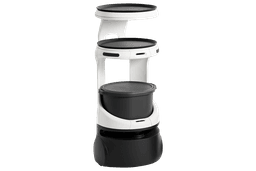
This is an example of Big Wave Robotics (Marosol) installing the Serving robot Servi+ at the cafeteria of the Korea Employment Agency for the Disabled Gyeonggi Southern Vocational Training Center to serve food to wheelchair users.
Meal service for people with disabilities with limited mobility → (Social problem solved) We were able to allocate the resources of staff needed for meal service assistance to closely care for more people with disabilities, and we created a barrier-free environment to enable people with disabilities with limited mobility to have smooth meals.
Project Background and Objective
Unmanned serving utilizing autonomous driving, cameras, sensors, etc.
Serving robots that serve at designated locations
Reduces employee resources by having serving robots serving.
Remote control using SOLlink (possible but not actually used)
Components
| Robot | Bear Robotics Serving robot |
|---|
Workflow
| STEP 1. | Press the call bell at the table |
|---|---|
| STEP 2. | The nutritionist checks the table number and serves food on a tray |
| STEP 3. | Place the served tray on the Serving robot and move it |
| STEP 4. | Take the tray down from the serving robot that has arrived at the table and serve the food |
| STEP 5. | Press the dish return bell at the table |
| STEP 6. | The robot moves to the table |
| STEP 7. | Place the empty tray on the Serving robot |
| STEP 8. | The serving robot moves to the dish return area |
※ The content provided by Bigwave Robotics is protected under U.S. and Canadian copyright and intellectual property laws. Unauthorized reproduction, distribution, or use of this content is strictly prohibited.
Recommended Use Cases

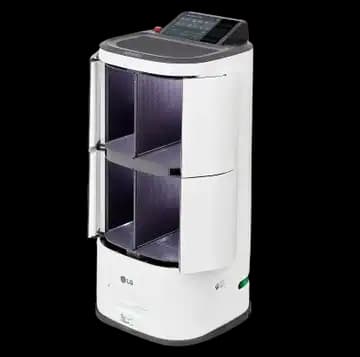
The Application of LG CLOi Serving Robot (Shelf Type) at SFAW Exhibition
This application demonstrates the use of the LG CLOi ServeBot (Tray type), developed by LG Electronics, to place pamphlets and drive along a designated route in cruise mode. The LG CLOi ServeBot (Tray type) is divided into an entry-level Serving robot (T1) suitable for small stores and a standard Serving robot (T2) capable of self-service. It autonomously travels from the kitchen to the customer's table and automatically detects when a customer removes food from the shelf to move to the next destination. It also provides an escort function to Guide customers from the store entrance to their seats.

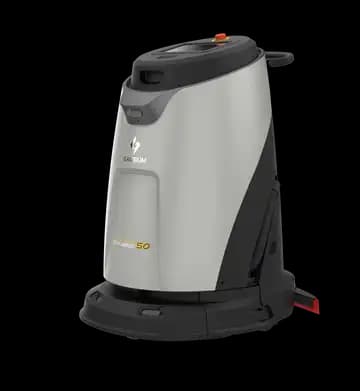
Industrial Cleaning Robots Now Cover Incheon Airport. Gausium's SC75 Industrial Cleaning Robot, Unveiled at Incheon Airport 🙌
Process Overview Two cleaning robots in Terminal 1 and six in Terminal 2, operating in each area of Incheon Airport, were verified for operational stability. Based on the verification of operational stability, the goal is to expand the introduction of cleaning robots across all areas of Incheon Airport. Warranty Period 1 Year Performance Year 2024 Project Duration 30 days Project Background and Objectives Disadvantages of Previous Robots The robot does not have an automatic water supply and drainage system, so personnel must manually carry and dispose of the water. When full, the robot can weigh hundreds of pounds, making it difficult to manage because of the heavy load. Proposed water supply and drainage options include workstation and SOLlink remote control. The Gausium cleaning robot supports automatic charging and features automatic water supply and drainage through the workstation. If the water supply and drainage functions are unavailable due to insufficient facility coordination, the kitchenette can be set as a maintenance point via SOLlink, allowing the robot to be remotely moved to that location for easier management.

Barista Robot Using UR5e (Robot Star)
This application is a solution that implements a robot Barista Robot using the UR5e. Unlike the vending machine-style coffee automation commonly found on the market, this solution replaces all human tasks with robots, making it suitable for operating a cafe with a minimal workforce. By having the robot extract the beans, it is possible to maintain a consistent quantity and always produce coffee with the same taste.
This is an example of Big Wave Robotics (Marosol) installing the Serving robot Servi+ at the cafeteria of the Korea Employment Agency for the Disabled Gyeonggi Southern Vocational Training Center to serve food to wheelchair users.
Meal service for people with disabilities with limited mobility → (Social problem solved) We were able to allocate the resources of staff needed for meal service assistance to closely care for more people with disabilities, and we created a barrier-free environment to enable people with disabilities with limited mobility to have smooth meals.
Project Background and Objective
Unmanned serving utilizing autonomous driving, cameras, sensors, etc.
Serving robots that serve at designated locations
Reduces employee resources by having serving robots serving.
Remote control using SOLlink (possible but not actually used)
Components
| Robot | Bear Robotics Serving robot |
|---|
Workflow
| STEP 1. | Press the call bell at the table |
|---|---|
| STEP 2. | The nutritionist checks the table number and serves food on a tray |
| STEP 3. | Place the served tray on the Serving robot and move it |
| STEP 4. | Take the tray down from the serving robot that has arrived at the table and serve the food |
| STEP 5. | Press the dish return bell at the table |
| STEP 6. | The robot moves to the table |
| STEP 7. | Place the empty tray on the Serving robot |
| STEP 8. | The serving robot moves to the dish return area |
※ The content provided by Bigwave Robotics is protected under U.S. and Canadian copyright and intellectual property laws. Unauthorized reproduction, distribution, or use of this content is strictly prohibited.
Automating Everything from Serving to Cleaning Dishes?! Revealing a Real-life Review of the Korea Employment Agency for the Disabled's Serving Robot Introduction 😎
Curious about the robots deployed?
Related Use Cases
The Application of LG CLOi Serving Robot (Shelf Type) at SFAW Exhibition
Industrial Cleaning Robots Now Cover Incheon Airport. Gausium's SC75 Industrial Cleaning Robot, Unveiled at Incheon Airport 🙌