
.jpg)
Process layout
Process Overview
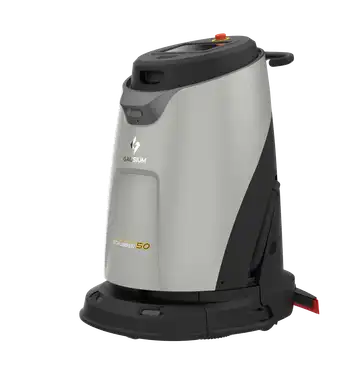
This is an example of Big Wave Robotics installing the industrial cleaning robot OMNIE, Workstation, and Mobile Watertank at KORAIL Tech's Gyeongju KTX Station.
With the outstanding cleaning performance and state-of-the-art sensor detection capabilities of the wet industrial cleaning robot OMNIE, along with the introduction of a workstation and a mobile water tank, we have implemented a system that enables the robot to operate smoothly even in environments with large areas and high foot traffic, such as KTX stations.
Project Background and Objective
Automation of KTX station floor cleaning through the introduction of wet autonomous cleaning robots
Implementing automatic water supply and drainage even at sites where plumbing work is difficult through the combination of a workstation and a mobile water tank.
By assigning large floor areas exclusively to cleaning robots, cleaning staff can focus on cleaning that requires human intervention, thereby improving the overall quality of cleanliness.
Reduction of workload and increase in job satisfaction for cleaning staff
Components
| Robot | Industrial Wet Cleaning Robot Gausium OMNIE |
|---|---|
| Peripherals | Workstation |
Workflow
| STEP 1. | Schedule cleaning times according to your desired time slot (day/night) |
|---|---|
| STEP 2. | The robot automatically starts cleaning when the set time arrives |
| STEP 3. | It automatically returns to the workstation when conditions such as low battery, insufficient purified water, or a full wastewater tank are detected |
| STEP 4. | It returns to the stopping point to resume cleaning after charging, replenishing purified water, or emptying wastewater |
| STEP 5. | It automatically returns and charges even after the job is completed |
Features
Special Features
Schedule Cleaning Robot
Apply scheduling function to desired cleaning times on-site
Industrial cleaning robots automatically come out and clean when the designated time comes.
Coverage of all day and night time slots
It is possible to operate not only during nighttime hours when customer traffic is low, but also during daytime hours when customer traffic is high.
Omni's superior sensor system (3D Lidar + front, back, left, and right camera sensors) enables it to respond to real-time changing environments, allowing for smooth cleaning without colliding with moving customers or facilities.
Water supply and drainage automation through workstation integration
Automatically return to the workstation when battery runs low, water supply runs low, or wastewater fills up during operation.
After battery charging, water purification, and wastewater discharge, return to the stop location and resume operation.
After the task is completely finished, return to workstation and charge
Increased convenience through integration with a mobile water tank
In the case of construction sites built a long time ago, a situation arises where the facility's water lines cannot be used.
For such sites, combining a mobile water tank with a capacity of 90L for purified water and 75L for wastewater can produce the same effect as connecting the on-site water lines.
Remote management through SOLlink S/W integration
Real-time operation status check and control possible
Check job completion history
Provides immediate notification to the person in charge in the event of an error, enabling quick action.
Results
| Key Benefits | Floor condition before and after cleaning
Sensor recognition performance (obstacle and human movement recognition and avoidance)
Increased job sustainability through improved working conditions and reduced fatigue |
|---|---|
| Client Feedback | It is said that it is good because robots have been introduced that can maintain the performance of walking equipment used on-site, allowing floor cleaning to be left to the robots.
They say it is good because they can receive the feedback with specific figures in reports through the dedicated app.
It is said that the ability to handle problems remotely and immediately check the robot's status (battery, current location, water/waste tank, error occurrence, etc.) is a good feature.
|
Unauthorized copying or reproduction of any content on Marosol may violate the Unfair Competition Prevention Act and Copyright Act.
Curious about the robots used?
![[신제품] 가우시움 AI 산업용 청소로봇 Omnie 옴니](/_next/image?url=https%3A%2F%2Fd1fchzsdhim61l.cloudfront.net%2FStore%2Fthumbnail%2FE0moX54CQvhsQ8WSzr4W%2F9d58ed69-b28b-4be8-ac12-8d634bc93efa%2F1767595044288E0moX54CQvhsQ8WSzr4W.png&w=256&q=75)
Recommended Solution

What Is the Identity of the Industrial Cleaning Robot Responsible for the Cleanliness of the Arisu Water Purification Center? 😮
The purpose is to replace the Cleaning Robot process, which currently involves cleaning personnel wearing ozone masks due to ozone exposure, with industrial cleaning robots. Although existing cleaning staff wear masks, health concerns are constantly raised.

Industrial Cleaning Robots Now Cover Incheon Airport. Gausium's SC75 Industrial Cleaning Robot, Unveiled at Incheon Airport 🙌
Process Overview Two cleaning robots in Terminal 1 and six in Terminal 2, operating in each area of Incheon Airport, were verified for operational stability. Based on the verification of operational stability, the goal is to expand the introduction of cleaning robots across all areas of Incheon Airport. Warranty Period 1 Year Performance Year 2024 Project Duration 30 days Project Background and Objectives Disadvantages of Previous Robots The robot does not have an automatic water supply and drainage system, so personnel must manually carry and dispose of the water. When full, the robot can weigh hundreds of pounds, making it difficult to manage because of the heavy load. Proposed water supply and drainage options include workstation and SOLlink remote control. The Gausium cleaning robot supports automatic charging and features automatic water supply and drainage through the workstation. If the water supply and drainage functions are unavailable due to insufficient facility coordination, the kitchenette can be set as a maintenance point via SOLlink, allowing the robot to be remotely moved to that location for easier management.

1,000 Pyeong Cleaning Without Staff? A Review of the Gwacheon Science Museum's SC75 Industrial Cleaning Robot Introduction 😎
This is a case where the Cleaning Robot robot Fantas was installed by Big Wave Robotics (Marosol) to manage floor Cleaning Robot for a total area of approximately 1,000 pyeong (one floor) at the Gwacheon Science Museum. By utilizing Fantas, automated cleaning management was implemented for the 1,000 Cleaning Robot floors (lobby, entrance, etc.), and a fully automated cleaning system was established through automatic water supply and drainage and automatic charging via the SC75's excellent Cleaning Robot performance and workstation.