


Process layout
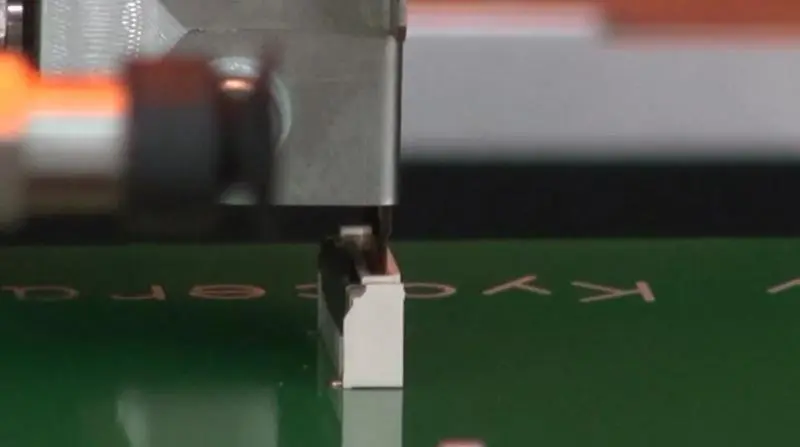
This assembly automation solution utilizes the Epson N2 robot and FT (Force-Torque) sensors to automate the highly difficult process of inserting Flex Cables into PCB connectors.
It is the optimal solution for performing high-precision assembly tasks while minimizing cycle times within confined workspaces. This project was initiated to automate the Flex Cable insertion process, which previously relied entirely on manual labor.
Components
| Robot |
|
|---|
Workflow
| STEP 1. | Loading: The robot picks the PCB and places it into a fixed assembly jig. |
|---|---|
| STEP 2. | Preparation: The robot opens the Flex Cable connector clip on the PCB. |
| STEP 3. | Pre-alignment: The Flex Cable is picked and placed onto an alignment jig. |
| STEP 4. | Precise Insertion: The aligned Flex Cable is re-picked and carefully inserted into the PCB connector using force feedback. |
| STEP 5. | Locking: The robot closes the connector clip and proceeds to the next cable. |
| STEP 6. | Unloading: Once all cable insertions are complete, the PCB is moved to the finished goods rack. |
Features
High-Precision Insertion Performance
Micro-Force Sensing: Utilizes an FT sensor capable of detecting forces as small as 0.1N / 0.003Nm to verify successful cable insertion and perform delicate tasks.
Smart Error Correction: Automatically detects and compensates for socket position errors, tilts, or misalignments by sensing the direction of applied force.
Reliable Connector Entry: Leverages high repeatability to insert thin Flex Cables into ultra-narrow connector housings without failure.
Damage Prevention: Precise force monitoring prevents mechanical stress, protecting both the fragile connectors and the flexible cables from breakage.
Tolerance Management: Accommodates geometric variations between parts by dynamically adjusting the insertion force in real-time.
Ultra-Compact Installation
Ceiling-Mount Configuration: Minimizes the floor footprint required for robot installation.
Folding-Arm Structure: The unique N2 "folding" design significantly reduces the workspace volume needed during operation compared to standard 6-axis robots.
Minimized Cycle Time through Speed & Efficiency
High-Speed Articulation: Rapid joint speeds of up to 360°/s ensure high-throughput performance.
Optimized Paths: The folding-arm design allows the robot to move via the shortest possible path even in confined spaces, slashing overall cycle times.
Reliable Quality Assurance
Worry-Free Operation: Includes a 1-year comprehensive warranty for peace of mind.
Results
| Key Benefits | Quality: Drastic reduction in cable connection defect rates.
Labor: Significant reduction in manual labor required for tedious cable assembly.
|
|---|---|
| Client Feedback | We initially believed that automating Flex Cable insertion would be nearly impossible. However, through this solution, we successfully automated a process that was previously 100% manual. This stands as Korea’s first successful case of automating the FPCB insertion process.
|
Unauthorized copying or reproduction of any content on Marosol may violate the Unfair Competition Prevention Act and Copyright Act.
Recommended Solution

Press Machine Tending for Thin Plate Sheets using Yaskawa Robots
This automation solution utilizes YASKAWA robots equipped with vacuum grippers to handle thin plates, automating the workpiece feeding process and significantly enhancing the safety of press operations. Due to the nature of press processes—characterized by extremely short cycle times and high-risk environments—industrial accidents involving human operators are frequent. By employing robot automation, particularly with vacuum grippers which are far more effective at handling thin plates than manual labor, this solution simultaneously improves production throughput and workplace safety.

Faucet Assembly using Five Doosan M0609 Units
This assembly automation solution utilizes five Doosan M0609 collaborative robots to fully automate the end-to-end assembly process of faucets. Previously, this process required a large number of workers to manually assemble each unit. By integrating collaborative robots with a conveyor system, continuous production across the entire process has been achieved. The transition from a manual line (where 5 workers produced 1,000 units per day) to an automated line (where 2 workers produce 1,200 units per day) has resulted in a significant improvement in productivity.

Shrink-Fit Tool Exchange Automation using Doosan M1013
This machine tending automation solution utilizes the Doosan M1013 collaborative robot to automate the hazardous task of exchanging tools in shrink-fit chucks. In industrial settings, shrink-fit chucks are used to enhance machining precision and create compact tool assemblies. However, because the process involves repeated cycles of rapid heating and cooling, operators were previously exposed to high risks of safety accidents, such as thermal burns. By implementing Doosan's collaborative robot, the risk of safety accidents has been eliminated, and productivity has increased through continuous, uninterrupted operation.
Process layout
This assembly automation solution utilizes the Epson N2 robot and FT (Force-Torque) sensors to automate the highly difficult process of inserting Flex Cables into PCB connectors.
It is the optimal solution for performing high-precision assembly tasks while minimizing cycle times within confined workspaces. This project was initiated to automate the Flex Cable insertion process, which previously relied entirely on manual labor.
Components
| Robot |
|
|---|
Workflow
| STEP 1. | Loading: The robot picks the PCB and places it into a fixed assembly jig. |
|---|---|
| STEP 2. | Preparation: The robot opens the Flex Cable connector clip on the PCB. |
| STEP 3. | Pre-alignment: The Flex Cable is picked and placed onto an alignment jig. |
| STEP 4. | Precise Insertion: The aligned Flex Cable is re-picked and carefully inserted into the PCB connector using force feedback. |
| STEP 5. | Locking: The robot closes the connector clip and proceeds to the next cable. |
| STEP 6. | Unloading: Once all cable insertions are complete, the PCB is moved to the finished goods rack. |
Features
High-Precision Insertion Performance
Micro-Force Sensing: Utilizes an FT sensor capable of detecting forces as small as 0.1N / 0.003Nm to verify successful cable insertion and perform delicate tasks.
Smart Error Correction: Automatically detects and compensates for socket position errors, tilts, or misalignments by sensing the direction of applied force.
Reliable Connector Entry: Leverages high repeatability to insert thin Flex Cables into ultra-narrow connector housings without failure.
Damage Prevention: Precise force monitoring prevents mechanical stress, protecting both the fragile connectors and the flexible cables from breakage.
Tolerance Management: Accommodates geometric variations between parts by dynamically adjusting the insertion force in real-time.
Ultra-Compact Installation
Ceiling-Mount Configuration: Minimizes the floor footprint required for robot installation.
Folding-Arm Structure: The unique N2 "folding" design significantly reduces the workspace volume needed during operation compared to standard 6-axis robots.
Minimized Cycle Time through Speed & Efficiency
High-Speed Articulation: Rapid joint speeds of up to 360°/s ensure high-throughput performance.
Optimized Paths: The folding-arm design allows the robot to move via the shortest possible path even in confined spaces, slashing overall cycle times.
Reliable Quality Assurance
Worry-Free Operation: Includes a 1-year comprehensive warranty for peace of mind.
Results
| Key Benefits | Quality: Drastic reduction in cable connection defect rates.
Labor: Significant reduction in manual labor required for tedious cable assembly.
|
|---|---|
| Client Feedback | We initially believed that automating Flex Cable insertion would be nearly impossible. However, through this solution, we successfully automated a process that was previously 100% manual. This stands as Korea’s first successful case of automating the FPCB insertion process.
|
Unauthorized copying or reproduction of any content on Marosol may violate the Unfair Competition Prevention Act and Copyright Act.
Recommended Solution
Press Machine Tending for Thin Plate Sheets using Yaskawa Robots
This automation solution utilizes YASKAWA robots equipped with vacuum grippers to handle thin plates, automating the workpiece feeding process and significantly enhancing the safety of press operations. Due to the nature of press processes—characterized by extremely short cycle times and high-risk environments—industrial accidents involving human operators are frequent. By employing robot automation, particularly with vacuum grippers which are far more effective at handling thin plates than manual labor, this solution simultaneously improves production throughput and workplace safety.
Faucet Assembly using Five Doosan M0609 Units
This assembly automation solution utilizes five Doosan M0609 collaborative robots to fully automate the end-to-end assembly process of faucets. Previously, this process required a large number of workers to manually assemble each unit. By integrating collaborative robots with a conveyor system, continuous production across the entire process has been achieved. The transition from a manual line (where 5 workers produced 1,000 units per day) to an automated line (where 2 workers produce 1,200 units per day) has resulted in a significant improvement in productivity.
Shrink-Fit Tool Exchange Automation using Doosan M1013
This machine tending automation solution utilizes the Doosan M1013 collaborative robot to automate the hazardous task of exchanging tools in shrink-fit chucks. In industrial settings, shrink-fit chucks are used to enhance machining precision and create compact tool assemblies. However, because the process involves repeated cycles of rapid heating and cooling, operators were previously exposed to high risks of safety accidents, such as thermal burns. By implementing Doosan's collaborative robot, the risk of safety accidents has been eliminated, and productivity has increased through continuous, uninterrupted operation.