





Process layout
This machine tending automation solution utilizes a YASKAWA industrial robot to automate the loading and unloading of metal workpieces for three WIA MCT (F410D) units.
In the traditional process, operators had to stand by the machines constantly to manually feed workpieces. By delegating the loading and unloading tasks to the robot, operators can now focus on overall equipment management and system operation, significantly increasing operational efficiency.
Furthermore, by having a single robot service three machining centers, productivity is maximized across the entire production cell.
Components
| Robot |
|
|---|
Workflow
| STEP 1. | Picking: The robot picks up two workpieces from the input conveyor. |
|---|---|
| STEP 2. | Alignment: The workpieces are placed on a jig for re-alignment to ensure precision. |
| STEP 3. | Cleaning: The robot performs an air-blow on the machining jig inside the CNC machine to remove debris. |
| STEP 4. | Loading: The workpieces are loaded, and the machining cycle begins. |
| STEP 5. | Multi-tending: During the machining cycle, the robot moves to service the other machines. |
| STEP 6. | Pre-extraction Cleaning: Once machining is complete, the robot performs an air-blow on the finished parts before picking. |
| STEP 7. | Unloading: The robot picks up the two finished workpieces. |
| STEP 8. | Secondary Cleaning: The finished parts undergo a second air-blow at a dedicated cleaning station. |
| STEP 9. | Discharge: The completed workpieces are unloaded onto the discharge conveyor. |
Features
Improved Productivity and Operational Efficiency
Minimized Cycle Time: Utilizes high-speed, high-precision industrial robots to optimize throughput.
1-to-3 Multi-Tending: A single robot services three CNC machines, synchronizing with machining cycles to minimize idle time.
Continuous Production: Integration of input/output conveyors minimizes management touchpoints and enables seamless, non-stop operation.
Custom Design and Pre-Verification
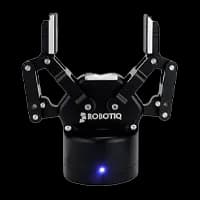
Optimized Tooling: Custom end-of-arm tooling (EOAT) is designed and manufactured based on specific work conditions and performance requirements.
Simulation-Based Validation: Pre-production interference checks and performance benchmarks are conducted via 3D simulation to ensure flawless field integration.
Results
| Key Benefits | Minimization of labor required for machine loading/unloading.
Increased productivity by eliminating idle standby time during machining cycles.
|
|---|---|
| Client Feedback | We successfully boosted productivity by minimizing the workforce required for the process and drastically reducing equipment idle time. |
Unauthorized copying or reproduction of any content on Marosol may violate the Unfair Competition Prevention Act and Copyright Act.
Recommended Solution

Support Ring Machining Assistance for WIA Turning Center using Fanuc Robot
This machine tending automation solution utilizes a Fanuc M-710iC/70 robot mounted on a linear track to automate the machining of heavy support rings across six WIA Turning Centers (LV450). By employing a high-payload industrial robot and a linear track, the system can rapidly perform continuous operations for relatively large and heavy support rings without idle time. The previous manual process, where workers pushed carts to each machine, has been replaced by a centralized input system, significantly improving both logistics flow and space efficiency.

Hydraulic Fitting Machining Assistance for WIA Turning Center (KIT450) using Hyundai HH7
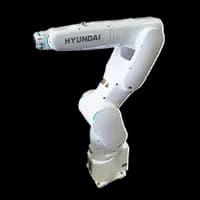
This machine tending automation solution utilizes two Hyundai HH7 robots mounted on an overhead linear track to automate the machining of hydraulic fittings for WIA KIT450 machine tools. To maximize space efficiency, the robots are installed on a linear track above the machine tools. This overhead configuration allows for a highly efficient, continuous automated process. Because the front of the machine remains unobstructed, operators can easily access the equipment for tool changes and routine maintenance. Additionally, this solution prevents musculoskeletal disorders in workers by automating the loading and unloading of heavy workpieces.

Casting Operations through ABB IRB 6700 Foundry Plus
This is a machine tending automation solution that utilizes the ABB IRB 6700 Foundry Plus 2 to transport castings and automate the loading and unloading of workpieces. The process involves transferring and handling molten metal at extremely high temperatures—a task that poses significant safety risks and results in slow production speeds when performed manually. By implementing ABB's specialized foundry robot, the facility has successfully secured workplace safety and drastically increased production throughput.
Process layout
This machine tending automation solution utilizes a YASKAWA industrial robot to automate the loading and unloading of metal workpieces for three WIA MCT (F410D) units.
In the traditional process, operators had to stand by the machines constantly to manually feed workpieces. By delegating the loading and unloading tasks to the robot, operators can now focus on overall equipment management and system operation, significantly increasing operational efficiency.
Furthermore, by having a single robot service three machining centers, productivity is maximized across the entire production cell.
Components
| Robot |
|
|---|
Workflow
| STEP 1. | Picking: The robot picks up two workpieces from the input conveyor. |
|---|---|
| STEP 2. | Alignment: The workpieces are placed on a jig for re-alignment to ensure precision. |
| STEP 3. | Cleaning: The robot performs an air-blow on the machining jig inside the CNC machine to remove debris. |
| STEP 4. | Loading: The workpieces are loaded, and the machining cycle begins. |
| STEP 5. | Multi-tending: During the machining cycle, the robot moves to service the other machines. |
| STEP 6. | Pre-extraction Cleaning: Once machining is complete, the robot performs an air-blow on the finished parts before picking. |
| STEP 7. | Unloading: The robot picks up the two finished workpieces. |
| STEP 8. | Secondary Cleaning: The finished parts undergo a second air-blow at a dedicated cleaning station. |
| STEP 9. | Discharge: The completed workpieces are unloaded onto the discharge conveyor. |
Features
Improved Productivity and Operational Efficiency
Minimized Cycle Time: Utilizes high-speed, high-precision industrial robots to optimize throughput.
1-to-3 Multi-Tending: A single robot services three CNC machines, synchronizing with machining cycles to minimize idle time.
Continuous Production: Integration of input/output conveyors minimizes management touchpoints and enables seamless, non-stop operation.
Custom Design and Pre-Verification
Optimized Tooling: Custom end-of-arm tooling (EOAT) is designed and manufactured based on specific work conditions and performance requirements.
Simulation-Based Validation: Pre-production interference checks and performance benchmarks are conducted via 3D simulation to ensure flawless field integration.
Results
| Key Benefits | Minimization of labor required for machine loading/unloading.
Increased productivity by eliminating idle standby time during machining cycles.
|
|---|---|
| Client Feedback | We successfully boosted productivity by minimizing the workforce required for the process and drastically reducing equipment idle time. |
Unauthorized copying or reproduction of any content on Marosol may violate the Unfair Competition Prevention Act and Copyright Act.
Recommended Solution
Support Ring Machining Assistance for WIA Turning Center using Fanuc Robot
This machine tending automation solution utilizes a Fanuc M-710iC/70 robot mounted on a linear track to automate the machining of heavy support rings across six WIA Turning Centers (LV450). By employing a high-payload industrial robot and a linear track, the system can rapidly perform continuous operations for relatively large and heavy support rings without idle time. The previous manual process, where workers pushed carts to each machine, has been replaced by a centralized input system, significantly improving both logistics flow and space efficiency.
Hydraulic Fitting Machining Assistance for WIA Turning Center (KIT450) using Hyundai HH7
This machine tending automation solution utilizes two Hyundai HH7 robots mounted on an overhead linear track to automate the machining of hydraulic fittings for WIA KIT450 machine tools. To maximize space efficiency, the robots are installed on a linear track above the machine tools. This overhead configuration allows for a highly efficient, continuous automated process. Because the front of the machine remains unobstructed, operators can easily access the equipment for tool changes and routine maintenance. Additionally, this solution prevents musculoskeletal disorders in workers by automating the loading and unloading of heavy workpieces.
Casting Operations through ABB IRB 6700 Foundry Plus
This is a machine tending automation solution that utilizes the ABB IRB 6700 Foundry Plus 2 to transport castings and automate the loading and unloading of workpieces. The process involves transferring and handling molten metal at extremely high temperatures—a task that poses significant safety risks and results in slow production speeds when performed manually. By implementing ABB's specialized foundry robot, the facility has successfully secured workplace safety and drastically increased production throughput.