





Process layout
Process Overview
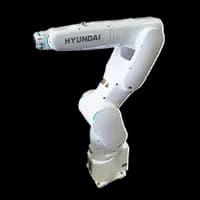
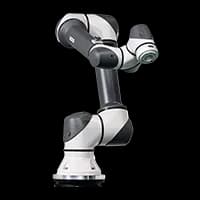
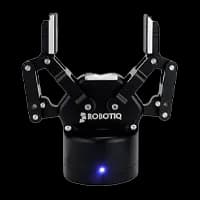
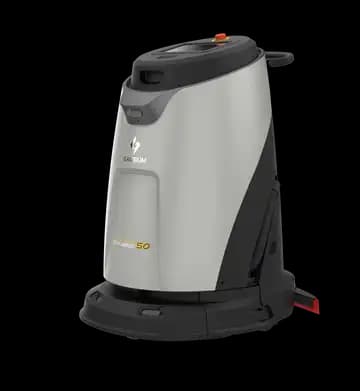
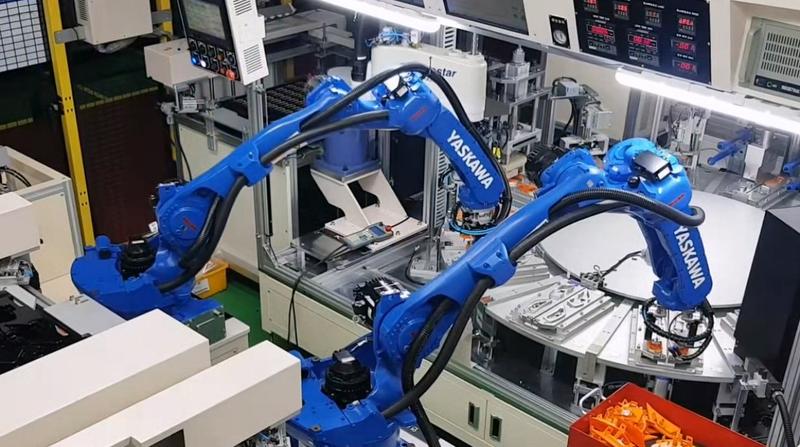
This assembly automation solution automates automotive lamp assembly and inspection processes using Yaskawa GP12 and Robostar RPA80-4B robots.
By utilizing two Yaskawa (vertical articulated) robots and two Robostar (horizontal articulated, SCARA) robots, the entire process is divided based on takt time, enabling continuous operations to be completed within a short cycle time. In addition, the solution performs inspection processes and QR code labeling after assembly, achieving end-to-end process automation and minimizing defect rates.
Components
| Robot |
|
|---|---|
| Peripherals |
|
Workflow
| STEP 1. | Product picking |
|---|---|
| STEP 2. | Air blowing |
| STEP 3. | Load product onto turntable |
| STEP 4. | Insert internal assembly parts |
| STEP 5. | Internal heating |
| STEP 6. | Internal compression |
| STEP 7. | Front cover assembly |
| STEP 8. | External compression |
| STEP 9. | Product cooling |
| STEP 10. | External compression |
| STEP 11. | Lamp performance test |
| STEP 12. | QR code labeling |
| STEP 13. | QR code inspection |
| STEP 14. | Defective/NG product discharge |
| STEP 15. | Discharge pallet stacking |
Features
Improved Production Efficiency and Enhanced Quality
Improves production efficiency through continuous operation by minimizing idle time
Minimizes defect rates by performing 100% inspection and testing processes
Reduces cycle time by optimizing work distribution based on LOB (Line of Balance)
Optimizes the process flow based on product manufacturing characteristics
Reduces the number of operators by minimizing management points
Results
| Key Benefits | Improved productivity
Improved quality through 100% inspection and testing |
|---|---|
| Client Feedback | We required continuous operation due to a short takt time, and through Nautechnics’ solution, we were able to redistribute the process and improve both productivity and quality. |

Unauthorized copying or reproduction of any content on Marosol may violate the Unfair Competition Prevention Act and Copyright Act.
Recommended Solution

Automotive Harness Component Assembly with a Vibratory Feeder and EPSON C4L
Process Overview This solution assembles automotive harness components using a vibratory feeder combined with an Epson C4L robot and a vision system. Bulk-fed parts are separated by the vibratory feeder, and the separated parts are located through vision for picking. By quickly separating, detecting, and picking parts in line with production speed, productivity can be improved.

Automated Electric Vehicle Console Assembly with EPSON SCARA Robots! 🦾
Process Overview Bigwave Robotics (Marosol) established an automated assembly line for console parts for Kia Motors' newly launched SUV-type electric vehicle. The existing console assembly line is a large-scale assembly line, requiring an average of 40-60 workers to assemble manually. The lack of automation experience presented challenges in securing space and recruiting assembly workers. Frequent staff turnover and resulting skill level issues hindered productivity. To address this, the company replaced some workers with robots, addressing the labor shortage and consistently ensuring productivity by adapting to the changing workforce. Warranty Period 1 Year Performance Year 2024 Project Duration 4 Months Project Background and Objectives Building a multi-product automated production line and reducing labor costs through robotic automation Preventing mis-assembly and mis-assembly using a lot-of-lot system and ensuring traceability Remote control and integrated management using SOLlink

Gear Tooth Profile Inspection using NACHI MZ07 + QRS Vision
Process Overview This solution automates gear tooth profile inspection and sorting by combining QRS 2D/3D vision inspection with the NACHI MZ07 robot. It detects the position of randomly stacked gears, performs shape inspection, and classifies parts into OK/NG automatically. Since the vision system is developed by QRS, it can be tuned and customized to match on-site requirements, enabling accurate inspection across various product shapes.
Process layout
Process Overview
This assembly automation solution automates automotive lamp assembly and inspection processes using Yaskawa GP12 and Robostar RPA80-4B robots.
By utilizing two Yaskawa (vertical articulated) robots and two Robostar (horizontal articulated, SCARA) robots, the entire process is divided based on takt time, enabling continuous operations to be completed within a short cycle time. In addition, the solution performs inspection processes and QR code labeling after assembly, achieving end-to-end process automation and minimizing defect rates.
Components
| Robot |
|
|---|---|
| Peripherals |
|
Workflow
| STEP 1. | Product picking |
|---|---|
| STEP 2. | Air blowing |
| STEP 3. | Load product onto turntable |
| STEP 4. | Insert internal assembly parts |
| STEP 5. | Internal heating |
| STEP 6. | Internal compression |
| STEP 7. | Front cover assembly |
| STEP 8. | External compression |
| STEP 9. | Product cooling |
| STEP 10. | External compression |
| STEP 11. | Lamp performance test |
| STEP 12. | QR code labeling |
| STEP 13. | QR code inspection |
| STEP 14. | Defective/NG product discharge |
| STEP 15. | Discharge pallet stacking |
Features
Improved Production Efficiency and Enhanced Quality
Improves production efficiency through continuous operation by minimizing idle time
Minimizes defect rates by performing 100% inspection and testing processes
Reduces cycle time by optimizing work distribution based on LOB (Line of Balance)
Optimizes the process flow based on product manufacturing characteristics
Reduces the number of operators by minimizing management points
Results
| Key Benefits | Improved productivity
Improved quality through 100% inspection and testing |
|---|---|
| Client Feedback | We required continuous operation due to a short takt time, and through Nautechnics’ solution, we were able to redistribute the process and improve both productivity and quality. |
Unauthorized copying or reproduction of any content on Marosol may violate the Unfair Competition Prevention Act and Copyright Act.
Recommended Solution
Automotive Harness Component Assembly with a Vibratory Feeder and EPSON C4L
Process Overview This solution assembles automotive harness components using a vibratory feeder combined with an Epson C4L robot and a vision system. Bulk-fed parts are separated by the vibratory feeder, and the separated parts are located through vision for picking. By quickly separating, detecting, and picking parts in line with production speed, productivity can be improved.
Automated Electric Vehicle Console Assembly with EPSON SCARA Robots! 🦾
Process Overview Bigwave Robotics (Marosol) established an automated assembly line for console parts for Kia Motors' newly launched SUV-type electric vehicle. The existing console assembly line is a large-scale assembly line, requiring an average of 40-60 workers to assemble manually. The lack of automation experience presented challenges in securing space and recruiting assembly workers. Frequent staff turnover and resulting skill level issues hindered productivity. To address this, the company replaced some workers with robots, addressing the labor shortage and consistently ensuring productivity by adapting to the changing workforce. Warranty Period 1 Year Performance Year 2024 Project Duration 4 Months Project Background and Objectives Building a multi-product automated production line and reducing labor costs through robotic automation Preventing mis-assembly and mis-assembly using a lot-of-lot system and ensuring traceability Remote control and integrated management using SOLlink
Gear Tooth Profile Inspection using NACHI MZ07 + QRS Vision
Process Overview This solution automates gear tooth profile inspection and sorting by combining QRS 2D/3D vision inspection with the NACHI MZ07 robot. It detects the position of randomly stacked gears, performs shape inspection, and classifies parts into OK/NG automatically. Since the vision system is developed by QRS, it can be tuned and customized to match on-site requirements, enabling accurate inspection across various product shapes.