





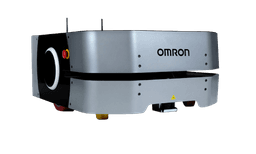
Process layout
[Process Overview]
This case study features the automation of heavy product transport using OMRON AMR (Autonomous Mobile Robot) logistics robots. To reduce the inefficiency and physical strain caused by repetitive, heavy lifting, the client implemented an automated logistics system. The primary goal was to maximize logistics efficiency and reduce costs through automated palletizing and transport. By automating the movement and stacking of products, this solution increased dispatch accuracy and improved both worker safety and overall productivity.
[Project Background & Objective]
The client identified a critical need for automation in heavy cart handling and lead tab transport. By introducing AMRs, they aimed to streamline logistics operations and realize significant cost savings.
Automate lead tab transport and cart handling.
Enhance worker productivity and ensure operational safety.
Strengthen the efficiency and flexibility of the logistics site.
Components
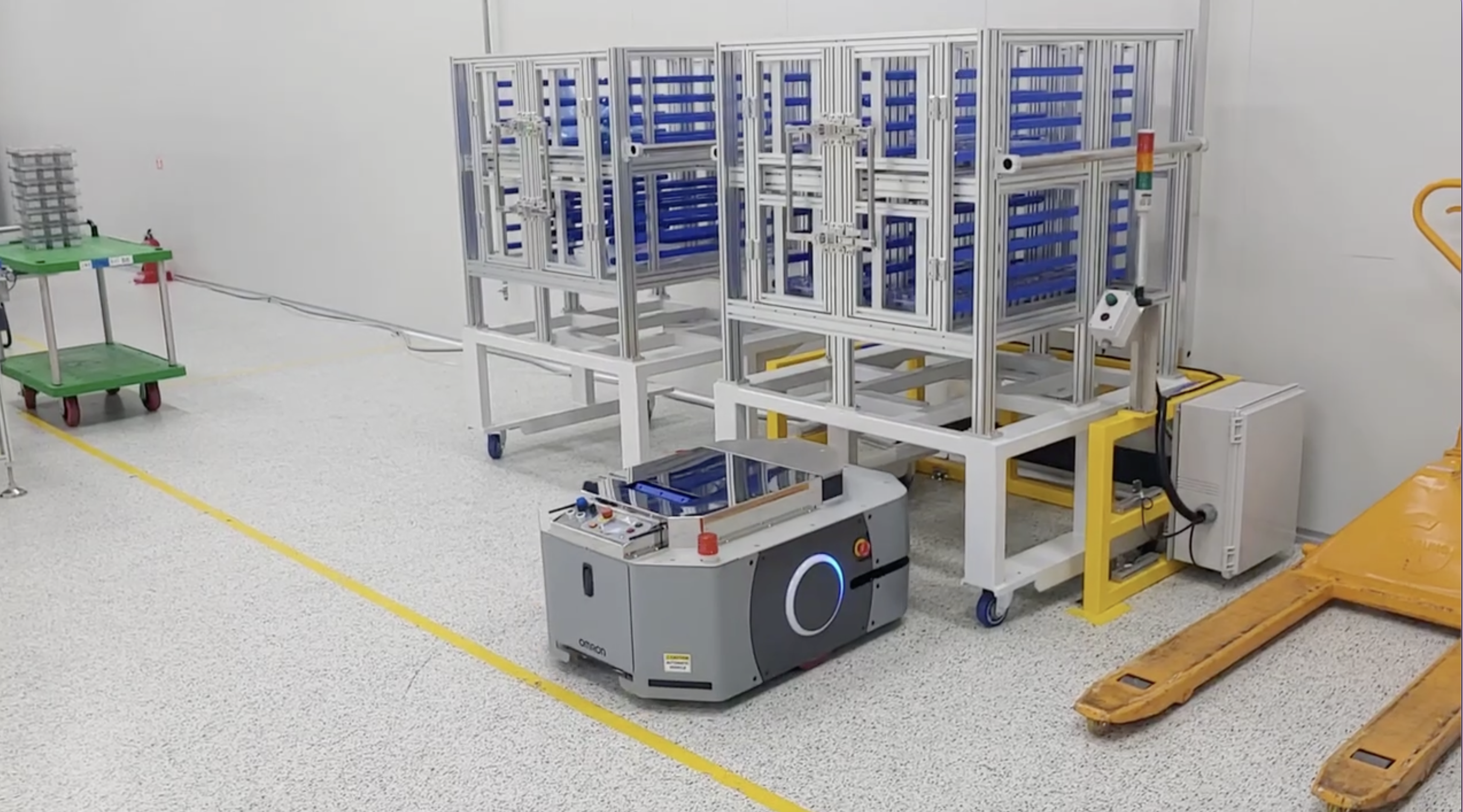
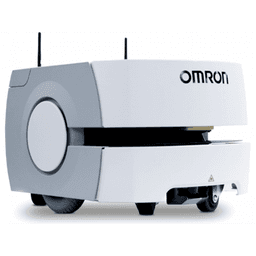
| Robot | OMRON AMR LD-90: Navigates autonomously while avoiding obstacles. Equipped with a dual-row conveyor, it can load and transport up to 6 lead tab trays.OMRON AMR LD-250: Equipped with a lift module to transport up to 64 lead tab trays via cart coupling. It automatically recognizes carts and moves autonomously to the destination. |
|---|---|
| Peripherals | Top Modules: Customizable attachments that automate repetitive tasks to boost productivity.Robot Station: A dedicated area for loading carts to be transported, supporting stable logistics flow.Combined Inspector: Inspects the trays delivered by the robot and automatically detects defects.Buffer Conveyor: Holds trays post-inspection, acting as a buffer to assist workers in loading carts.Tray Cart: Capable of holding up to 64 trays, designed for transport by the LD-250. |
Workflow
| STEP 1. | An operator clicks a button → The LD-90 receives the move command → The robot navigates autonomously to the designated location |
|---|---|
| STEP 2. | Trays are manually loaded onto the LD-90 conveyor → The robot transports them to the combined inspector |
| STEP 3. | The robot docks with the inspector → Trays are inspected → Post-inspection trays are loaded onto the buffer conveyor |
| STEP 4. | An operator manually transfers the trays from the buffer conveyor to the tray cart |
| STEP 5. | The LD-250 is called → It automatically recognizes the cart and transports it to the destination |
| STEP 6. | Upon completing the task, the robots automatically return to their standby locations |
Features
Solution Features
24-hour process response available Even in sites operating on a day and night shift system, robots can be charged alternately to enable uninterrupted Logistics transportation.
Bogie and AMR can be separated Fully loaded bogies can be stored at the station, allowing the AMR to perform additional tasks.
space-efficient system It is possible to share the workspace with the operator by utilizing various safety sensors mounted on the AMR, and the AMR can be stopped via the emergency stop button in emergency situations.
Easy operation A worker can call the robot by pressing a button installed on the production line or station without complex operations, and the robot automatically performs subsequent actions, making it easy for anyone to operate.
Introduction effect
Increased production efficiency Robots handle return operations, reducing the time production line workers spend away from the line and increasing production efficiency.
Cost reduction We reduced labor costs by automating the Logistics process, saving up to 8 personnel for day and night shifts.
Improved safety The autonomous driving function automatically avoids dangerous situations, and the emergency stop function minimizes the risk of accidents during operation.
Logistics tracking management optimization Through the real-time Logistics tracking system, we are now able to efficiently manage the status and location of product shipments.
Results
| Key Benefits | This LeadTab AMR automated return solution demonstrated notable improvements in operational efficiency, safety, and workforce management.
First, previously, 2 to 3 workers had to manually transport trays for each return process, but after the introduction of the automation solution, it became possible to operate with just one worker intermittently monitoring the robot, resulting in a labor cost reduction of over 50%.
In addition, the efficiency of the production line was increased by reducing return work time by approximately 30% compared to the existing system, and the time workers spent away from the production line was reduced by more than 80%, creating an environment where they can focus on their core duties.
Above all, work safety during the process of transporting heavy trays has been significantly improved. Thanks to the obstacle avoidance and emergency stop functions of the autonomous robot, there have been zero related accidents since its introduction. |
|---|---|
| Client Feedback | The client said, “The introduction of AMR robots has not only reduced the need for human workers but has also significantly improved Logistics safety. In particular, the well-equipped automation system has created an environment where workers can easily operate the robots and focus on their tasks.” |
Unauthorized copying or reproduction of any content on Marosol may violate the Unfair Competition Prevention Act and Copyright Act.
Recommended Solution

Processed Parts Transfer using Potenit Mobile Manipulator & 5G Integration
This logistics automation solution utilizes a Mobile Manipulator integrated with 5G technology to transfer workpieces between distant processing stages. Potenit's AMR solution can be deployed easily without the need for additional infrastructure (like floor markers or rails) and offers high flexibility when layouts or work positions change. Through Potenit's proprietary MOS (Multi Robot Operating System), operators can monitor and direct tasks in real-time via mobile devices. By syncing equipment data with the AMR, the system automates the necessary tasks between pre- and post-processing stages. It is an ideal solution for 24/7 operations that require high productivity without human intervention. *This specific solution involved Potenit supplying the AMR and Doosan Robotics arm to ETRI (Electronics and Telecommunications Research Institute), followed by 5G integration. Detailed tool fabrication and task-specific teaching/tuning were conducted internally by ETRI.

Part Transfer using Autonomous Lift-Conveyor
This logistics robot solution utilizes an autonomous lift-conveyor to perform material transport tasks between manufacturing processes. By using vision technology to recognize workpiece information, the system can stack items in matching locations based on their category. Conversely, when a work command is received, it can retrieve necessary items from storage racks and move them to the discharge position. The integration of a linear track allows the robot to cover a wide operational area, enabling comprehensive inbound/outbound inventory management.

Plastic Injection Molded Part Transport using Twinny NarGo 100
This logistics automation solution utilizes the Twinny NarGo 100 AMR to automate the transport of large plastic injection molded products to subsequent process stages. Equipped with triple safety sensors and advanced autonomous driving technology, Twinny's NarGo 100 performs tasks safely even in factories with complex layouts and high worker traffic. Previously, transporting heavy workpieces weighing around 100kg to a distant finished goods warehouse was time-consuming, causing idle time in processing and reducing productivity due to worker fatigue. Since implementing the autonomous robot, continuous processing has become possible, and worker fatigue has been significantly reduced, leading to an overall boost in productivity.
Process layout
[Process Overview]
This case study features the automation of heavy product transport using OMRON AMR (Autonomous Mobile Robot) logistics robots. To reduce the inefficiency and physical strain caused by repetitive, heavy lifting, the client implemented an automated logistics system. The primary goal was to maximize logistics efficiency and reduce costs through automated palletizing and transport. By automating the movement and stacking of products, this solution increased dispatch accuracy and improved both worker safety and overall productivity.
[Project Background & Objective]
The client identified a critical need for automation in heavy cart handling and lead tab transport. By introducing AMRs, they aimed to streamline logistics operations and realize significant cost savings.
Automate lead tab transport and cart handling.
Enhance worker productivity and ensure operational safety.
Strengthen the efficiency and flexibility of the logistics site.
Components
| Robot | OMRON AMR LD-90: Navigates autonomously while avoiding obstacles. Equipped with a dual-row conveyor, it can load and transport up to 6 lead tab trays.OMRON AMR LD-250: Equipped with a lift module to transport up to 64 lead tab trays via cart coupling. It automatically recognizes carts and moves autonomously to the destination. |
|---|---|
| Peripherals | Top Modules: Customizable attachments that automate repetitive tasks to boost productivity.Robot Station: A dedicated area for loading carts to be transported, supporting stable logistics flow.Combined Inspector: Inspects the trays delivered by the robot and automatically detects defects.Buffer Conveyor: Holds trays post-inspection, acting as a buffer to assist workers in loading carts.Tray Cart: Capable of holding up to 64 trays, designed for transport by the LD-250. |
Workflow
| STEP 1. | An operator clicks a button → The LD-90 receives the move command → The robot navigates autonomously to the designated location |
|---|---|
| STEP 2. | Trays are manually loaded onto the LD-90 conveyor → The robot transports them to the combined inspector |
| STEP 3. | The robot docks with the inspector → Trays are inspected → Post-inspection trays are loaded onto the buffer conveyor |
| STEP 4. | An operator manually transfers the trays from the buffer conveyor to the tray cart |
| STEP 5. | The LD-250 is called → It automatically recognizes the cart and transports it to the destination |
| STEP 6. | Upon completing the task, the robots automatically return to their standby locations |
Features
Solution Features
24-hour process response available Even in sites operating on a day and night shift system, robots can be charged alternately to enable uninterrupted Logistics transportation.
Bogie and AMR can be separated Fully loaded bogies can be stored at the station, allowing the AMR to perform additional tasks.
space-efficient system It is possible to share the workspace with the operator by utilizing various safety sensors mounted on the AMR, and the AMR can be stopped via the emergency stop button in emergency situations.
Easy operation A worker can call the robot by pressing a button installed on the production line or station without complex operations, and the robot automatically performs subsequent actions, making it easy for anyone to operate.
Introduction effect
Increased production efficiency Robots handle return operations, reducing the time production line workers spend away from the line and increasing production efficiency.
Cost reduction We reduced labor costs by automating the Logistics process, saving up to 8 personnel for day and night shifts.
Improved safety The autonomous driving function automatically avoids dangerous situations, and the emergency stop function minimizes the risk of accidents during operation.
Logistics tracking management optimization Through the real-time Logistics tracking system, we are now able to efficiently manage the status and location of product shipments.
Results
| Key Benefits | This LeadTab AMR automated return solution demonstrated notable improvements in operational efficiency, safety, and workforce management.
First, previously, 2 to 3 workers had to manually transport trays for each return process, but after the introduction of the automation solution, it became possible to operate with just one worker intermittently monitoring the robot, resulting in a labor cost reduction of over 50%.
In addition, the efficiency of the production line was increased by reducing return work time by approximately 30% compared to the existing system, and the time workers spent away from the production line was reduced by more than 80%, creating an environment where they can focus on their core duties.
Above all, work safety during the process of transporting heavy trays has been significantly improved. Thanks to the obstacle avoidance and emergency stop functions of the autonomous robot, there have been zero related accidents since its introduction. |
|---|---|
| Client Feedback | The client said, “The introduction of AMR robots has not only reduced the need for human workers but has also significantly improved Logistics safety. In particular, the well-equipped automation system has created an environment where workers can easily operate the robots and focus on their tasks.” |
Unauthorized copying or reproduction of any content on Marosol may violate the Unfair Competition Prevention Act and Copyright Act.
Recommended Solution
Processed Parts Transfer using Potenit Mobile Manipulator & 5G Integration
This logistics automation solution utilizes a Mobile Manipulator integrated with 5G technology to transfer workpieces between distant processing stages. Potenit's AMR solution can be deployed easily without the need for additional infrastructure (like floor markers or rails) and offers high flexibility when layouts or work positions change. Through Potenit's proprietary MOS (Multi Robot Operating System), operators can monitor and direct tasks in real-time via mobile devices. By syncing equipment data with the AMR, the system automates the necessary tasks between pre- and post-processing stages. It is an ideal solution for 24/7 operations that require high productivity without human intervention. *This specific solution involved Potenit supplying the AMR and Doosan Robotics arm to ETRI (Electronics and Telecommunications Research Institute), followed by 5G integration. Detailed tool fabrication and task-specific teaching/tuning were conducted internally by ETRI.
Part Transfer using Autonomous Lift-Conveyor
This logistics robot solution utilizes an autonomous lift-conveyor to perform material transport tasks between manufacturing processes. By using vision technology to recognize workpiece information, the system can stack items in matching locations based on their category. Conversely, when a work command is received, it can retrieve necessary items from storage racks and move them to the discharge position. The integration of a linear track allows the robot to cover a wide operational area, enabling comprehensive inbound/outbound inventory management.
Plastic Injection Molded Part Transport using Twinny NarGo 100
This logistics automation solution utilizes the Twinny NarGo 100 AMR to automate the transport of large plastic injection molded products to subsequent process stages. Equipped with triple safety sensors and advanced autonomous driving technology, Twinny's NarGo 100 performs tasks safely even in factories with complex layouts and high worker traffic. Previously, transporting heavy workpieces weighing around 100kg to a distant finished goods warehouse was time-consuming, causing idle time in processing and reducing productivity due to worker fatigue. Since implementing the autonomous robot, continuous processing has become possible, and worker fatigue has been significantly reduced, leading to an overall boost in productivity.