





Process layout
Process Overview
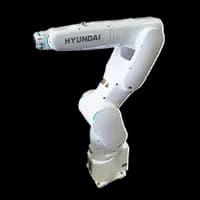
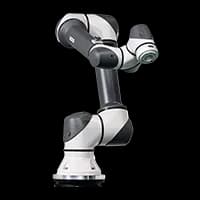
Philliper had been handling the process of inserting nuts into the machine tool manually. Due to the repetitive nature of the work and insufficient precision, this led to reduced productivity and quality issues. To resolve this, they implemented an automation solution using four Hyundai robots and two Doosan robots.
Project Background and Objectives
Background
Philliper was experiencing work inefficiency and inconsistent quality in the existing nut-loading operation due to a manual process.
Key issues
Speed loss and quality variation occurring during manual operations
Increased operator fatigue and reduced productivity
Operator burden caused by repetitive tasks in the nut insertion process
Objectives
Improve production efficiency by automating repetitive tasks through robot deployment
Secure consistent quality and reduce defect rates through accurate insertion
Improve the work environment by reducing operator fatigue and strengthening safety
Components
| Robot | Hyundai Robotics (HH020-03) Doosan Robotics (H2017) |
|---|
Workflow
| STEP 1. | Pick nuts from the feeder |
|---|---|
| STEP 2. | Insert nuts into the product hole inside the machine tool |
| STEP 3. | After receiving the machine-complete signal, unload the product |
| STEP 4. | Load the product onto the conveyor |
| STEP 5. | Repeat the same sequence with alternating operation. |
Features
Maximized Efficiency
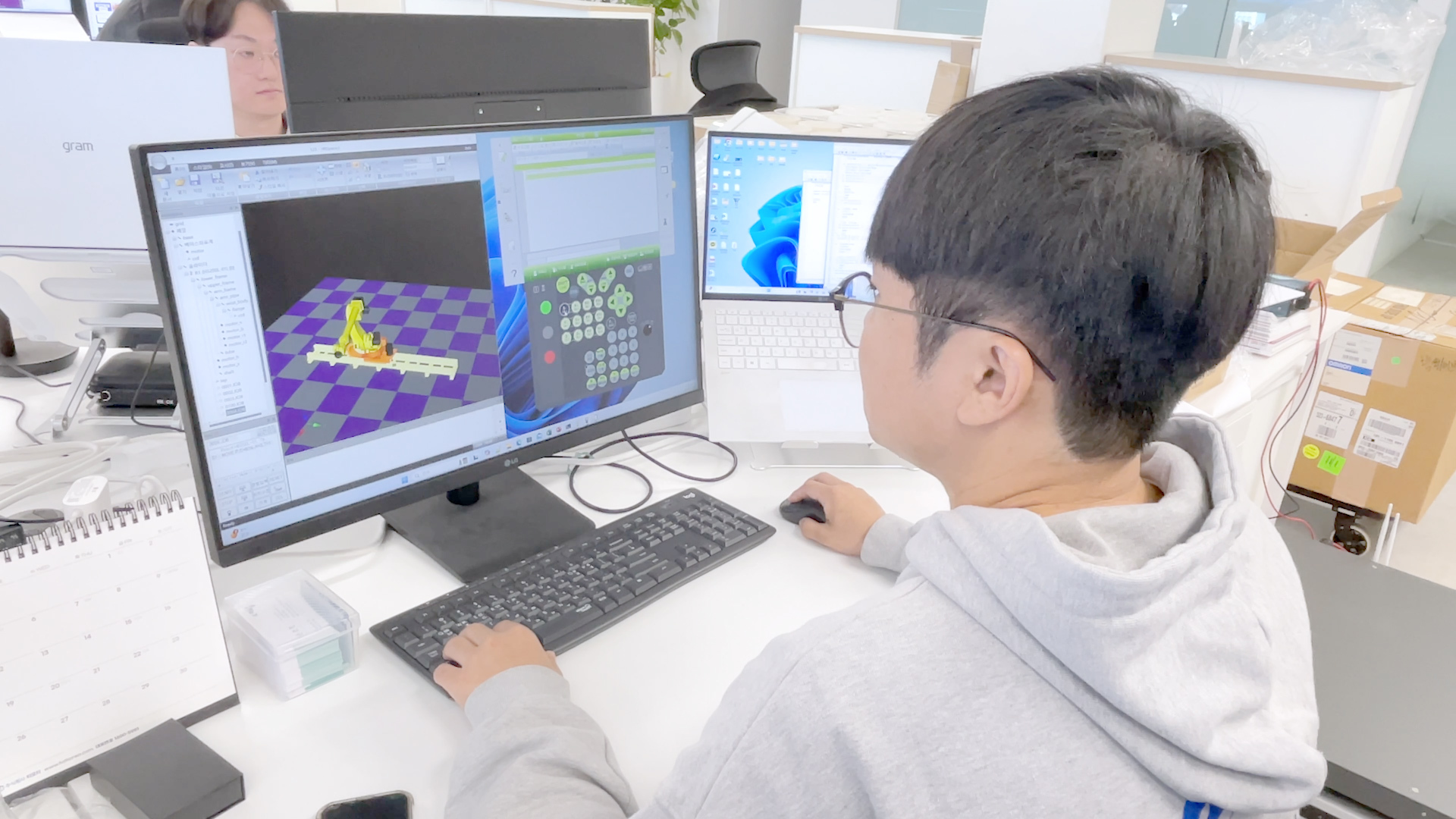
Using robot OLP, pre-validated programs can be uploaded immediately, reducing on-site setup and commissioning time.
Two robots are deployed on a single process for parallel operation, increasing cycle speed and throughput.
Improved Quality
Accurate insertion reduces defect rates.
A vision system is used for final quality inspection.
Flexible Production Environment
Integration of the robot and feeder supports handling multiple nut sizes.
With dedicated robot teaching support, the job can be completed in less time than expected.
Results
| Key Benefits | Productivity improvement: Parallel operation increased process speed by 20%, and continuous robot operation increased output volume. Quality consistency: Precision robot operation reduced defect rates by 15%, and integration with a vision system improved inspection accuracy. Improved work environment: Reduced operator fatigue and injury risk, and helped prevent musculoskeletal disorders caused by repetitive tasks. Lower operating cost: Higher efficiency compared to manual labor reduced overall operating cost. Faster project completion: By using pre-simulation and robot OLP, the project timeline was shortened (completed 20% faster than originally estimated). |
|---|---|
| Client Feedback | The customer stated, “After introducing robots, nut insertion inside the machine tool is now performed faster and more accurately. As a result, we achieved improvements in both process speed and quality. In addition, Marosol’s specialists provided direct teaching support, making on-site deployment very smooth. We were especially impressed with the thorough upfront preparation using OLP.” |
Unauthorized copying or reproduction of any content on Marosol may violate the Unfair Competition Prevention Act and Copyright Act.
Recommended Solution

Processed Parts Transfer using Potenit Mobile Manipulator & 5G Integration
This logistics automation solution utilizes a Mobile Manipulator integrated with 5G technology to transfer workpieces between distant processing stages. Potenit's AMR solution can be deployed easily without the need for additional infrastructure (like floor markers or rails) and offers high flexibility when layouts or work positions change. Through Potenit's proprietary MOS (Multi Robot Operating System), operators can monitor and direct tasks in real-time via mobile devices. By syncing equipment data with the AMR, the system automates the necessary tasks between pre- and post-processing stages. It is an ideal solution for 24/7 operations that require high productivity without human intervention. *This specific solution involved Potenit supplying the AMR and Doosan Robotics arm to ETRI (Electronics and Telecommunications Research Institute), followed by 5G integration. Detailed tool fabrication and task-specific teaching/tuning were conducted internally by ETRI.

Smart Machine Tool Assistant "G-AiD" using Collaborative Robots
This machine tending solution automates the loading and unloading of parts by integrating three G-AiD small-precision (4-axis) machine tools with a Universal Robots UR10e. By arranging multiple machine tools in a compact space, a single robot can manage the entire workflow, significantly boosting operational efficiency and productivity. G-AiD features an Automatic Tool Changer (ATC) and tool wear sensing, enabling efficient task management. Furthermore, its seamless data integration with external systems makes it an ideal candidate for Smart Factory government support projects, helping to reduce initial investment costs. The project was implemented to resolve labor shortages in part machining, reduce personnel costs, and enable real-time quality monitoring and improvement through smart factory integration.

Defect Inspection of Cutting Tools using Doosan Cobots and Keyence Equipment
This vision inspection solution utilizes the Doosan M0609 collaborative robot and the Keyence Image Dimension Measurement System (IM Series) to automate the dimensional inspection and defect sorting of cutting tools. Previously, operators had to manually measure each part and perform visual inspections, which often led to human error in sorting and required a high amount of labor for simple, repetitive tasks. By implementing robot automation, inspections are now performed continuously without idle time. This has increased the precision of defect detection, simultaneously improving both productivity and product quality.
Process layout
Process Overview
Philliper had been handling the process of inserting nuts into the machine tool manually. Due to the repetitive nature of the work and insufficient precision, this led to reduced productivity and quality issues. To resolve this, they implemented an automation solution using four Hyundai robots and two Doosan robots.
Project Background and Objectives
Background
Philliper was experiencing work inefficiency and inconsistent quality in the existing nut-loading operation due to a manual process.
Key issues
Speed loss and quality variation occurring during manual operations
Increased operator fatigue and reduced productivity
Operator burden caused by repetitive tasks in the nut insertion process
Objectives
Improve production efficiency by automating repetitive tasks through robot deployment
Secure consistent quality and reduce defect rates through accurate insertion
Improve the work environment by reducing operator fatigue and strengthening safety
Components
| Robot | Hyundai Robotics (HH020-03) Doosan Robotics (H2017) |
|---|
Workflow
| STEP 1. | Pick nuts from the feeder |
|---|---|
| STEP 2. | Insert nuts into the product hole inside the machine tool |
| STEP 3. | After receiving the machine-complete signal, unload the product |
| STEP 4. | Load the product onto the conveyor |
| STEP 5. | Repeat the same sequence with alternating operation. |
Features
Maximized Efficiency
Using robot OLP, pre-validated programs can be uploaded immediately, reducing on-site setup and commissioning time.
Two robots are deployed on a single process for parallel operation, increasing cycle speed and throughput.
Improved Quality
Accurate insertion reduces defect rates.
A vision system is used for final quality inspection.
Flexible Production Environment
Integration of the robot and feeder supports handling multiple nut sizes.
With dedicated robot teaching support, the job can be completed in less time than expected.
Results
| Key Benefits | Productivity improvement: Parallel operation increased process speed by 20%, and continuous robot operation increased output volume. Quality consistency: Precision robot operation reduced defect rates by 15%, and integration with a vision system improved inspection accuracy. Improved work environment: Reduced operator fatigue and injury risk, and helped prevent musculoskeletal disorders caused by repetitive tasks. Lower operating cost: Higher efficiency compared to manual labor reduced overall operating cost. Faster project completion: By using pre-simulation and robot OLP, the project timeline was shortened (completed 20% faster than originally estimated). |
|---|---|
| Client Feedback | The customer stated, “After introducing robots, nut insertion inside the machine tool is now performed faster and more accurately. As a result, we achieved improvements in both process speed and quality. In addition, Marosol’s specialists provided direct teaching support, making on-site deployment very smooth. We were especially impressed with the thorough upfront preparation using OLP.” |
Unauthorized copying or reproduction of any content on Marosol may violate the Unfair Competition Prevention Act and Copyright Act.
Recommended Solution
Processed Parts Transfer using Potenit Mobile Manipulator & 5G Integration
This logistics automation solution utilizes a Mobile Manipulator integrated with 5G technology to transfer workpieces between distant processing stages. Potenit's AMR solution can be deployed easily without the need for additional infrastructure (like floor markers or rails) and offers high flexibility when layouts or work positions change. Through Potenit's proprietary MOS (Multi Robot Operating System), operators can monitor and direct tasks in real-time via mobile devices. By syncing equipment data with the AMR, the system automates the necessary tasks between pre- and post-processing stages. It is an ideal solution for 24/7 operations that require high productivity without human intervention. *This specific solution involved Potenit supplying the AMR and Doosan Robotics arm to ETRI (Electronics and Telecommunications Research Institute), followed by 5G integration. Detailed tool fabrication and task-specific teaching/tuning were conducted internally by ETRI.
Smart Machine Tool Assistant "G-AiD" using Collaborative Robots
This machine tending solution automates the loading and unloading of parts by integrating three G-AiD small-precision (4-axis) machine tools with a Universal Robots UR10e. By arranging multiple machine tools in a compact space, a single robot can manage the entire workflow, significantly boosting operational efficiency and productivity. G-AiD features an Automatic Tool Changer (ATC) and tool wear sensing, enabling efficient task management. Furthermore, its seamless data integration with external systems makes it an ideal candidate for Smart Factory government support projects, helping to reduce initial investment costs. The project was implemented to resolve labor shortages in part machining, reduce personnel costs, and enable real-time quality monitoring and improvement through smart factory integration.
Defect Inspection of Cutting Tools using Doosan Cobots and Keyence Equipment
This vision inspection solution utilizes the Doosan M0609 collaborative robot and the Keyence Image Dimension Measurement System (IM Series) to automate the dimensional inspection and defect sorting of cutting tools. Previously, operators had to manually measure each part and perform visual inspections, which often led to human error in sorting and required a high amount of labor for simple, repetitive tasks. By implementing robot automation, inspections are now performed continuously without idle time. This has increased the precision of defect detection, simultaneously improving both productivity and product quality.