
Process layout
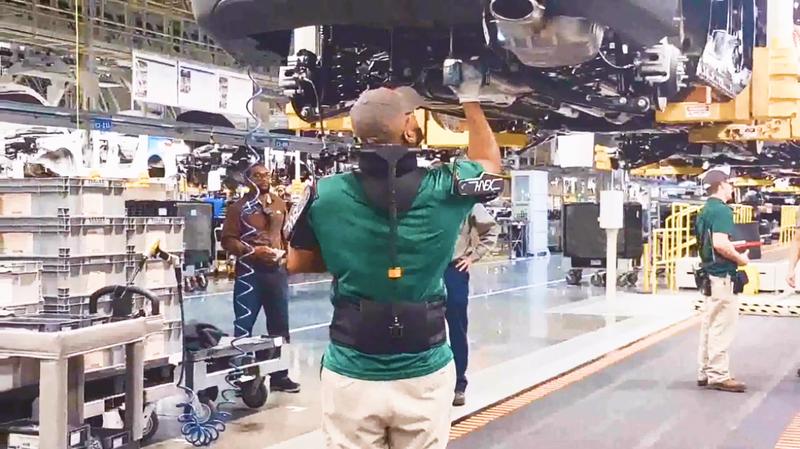
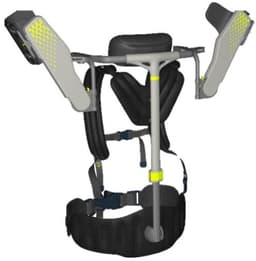
Hyundai Rotem’s wearable robot VEX helps prevent musculoskeletal disorders by reducing muscle fatigue in the shoulders and arms when performing upward-looking tasks in industrial settings.
It operates naturally according to the worker's arm movements and supports the weight of the arm and tool, so it significantly reduces shoulder pain and fatigue even when working upwards for a long time.
Components
| Robot | Hyundai Rotem VEX |
|---|
Features
Lightweight and comfortable to wear
Shoulder width, back length, and waist/body can be adjusted to fit the user's body shape
With a lightweight structure weighing 2.8kg, it is easy to wear and can be used according to the worker's skill level/ability
Excellent workload distribution and fatigue reduction
Shoulder/Arm load distribution and support Structures
Load assistance of up to 5.6 kgf
Reduce work load by using neck rests and armrests when working overhead
Prevention of musculoskeletal disorders
Wide working range utilizing multi-axis multi-link
Supports the same range of motion as human joints
Muscle support angle adjustable according to working range (3 levels)
Gravity assist support angle 100~130 degrees
Excellent maintainability
Utilizing non-powered gravity-compensated robotics, it requires no separate maintenance, enabling long-term use
Excellent environmental resistance with an eco-friendly, waterproof, dustproof, and robust structure
Excellent price competitiveness
As a non-powered model, its compact design ensures high price competitiveness compared to competing models
Investment cost burden can be reduced through rental operation
Results
| Key Benefits | Increased Industry safety through reduced worker fatigue
Reducing labor losses by preventing musculoskeletal disorders for workers |
|---|---|
| Client Feedback | When workers on automotive conveyor lines worked for long periods while looking upward, fatigue increased, leading to decreased productivity. However, after the application of Hyundai Rotem's wearable robots, worker fatigue decreased even during long working hours, reducing idle time and increasing productivity. Additionally, worker job satisfaction also increased. |
Unauthorized copying or reproduction of any content on Marosol may violate the Unfair Competition Prevention Act and Copyright Act.
Curious about the robots used?
Recommended Solution

Hyundai Rotem Wearable Robot H-FrameP (Motor-powered Type)
H-FrameP, a wearable robot developed by Hyundai Rotem, is a solution that minimizes worker fatigue by significantly reducing the workload through assistive power utilizing motors. Shoulder height, waist length, and arm length can be adjusted to suit the user, allowing anyone, regardless of age or gender, to wear and use it.

Construction Site Window Frame Assembly using Hyundai Rotem Wearable VEX
Hyundai Rotem’s wearable robot VEX reduces muscle fatigue in the shoulders and arms when performing upward-looking tasks in Industry settings. Because it operates naturally in accordance with the worker’s arm movements and supports the weight of the arms and tools, it significantly alleviates shoulder pain and fatigue even during long periods of upward work.

IFCC WorldLab Seoul 2022 CLOi Guidebot
This application utilizes the LG CLOi GuideBot, developed by LG Electronics, to patrol an exhibition booth and use its front and rear-mounted body displays to promote the company and explain events. The LG CLOi GuideBot can operate guidance and advertising using the two body displays mounted on the robot. The robot can autonomously navigate to guide visitors to amenities within the facility or conduct patrols at night. As an option, a docent function can be used to guide visitors and explain exhibits at museums or exhibitions.