
Process layout
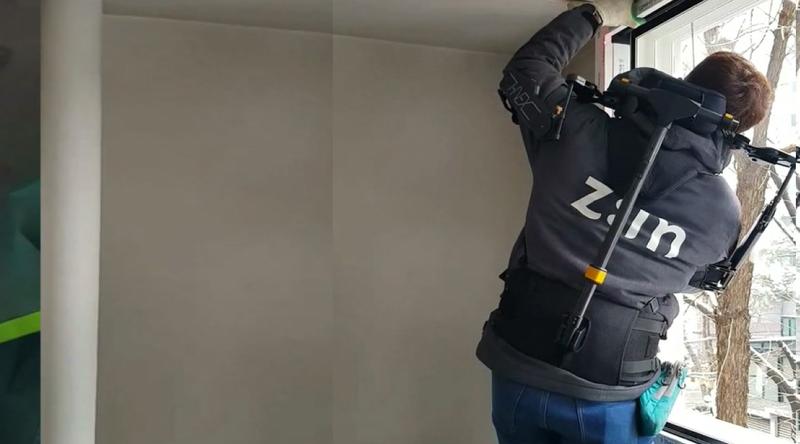
Hyundai Rotem's wearable robot VEX reduces muscle fatigue in the shoulders and arms when performing upward-looking tasks in Industry settings.
It operates naturally according to the worker's arm movements and supports the weight of the arm and tool, so it significantly reduces shoulder pain and fatigue even when working upwards for a long time.
Components
| Robot | Hyundai Rotem VEX |
|---|
Features
Lightweight and comfortable to wear
Shoulder width, back length, and waist/body can be adjusted to fit the user's body shape
With a lightweight structure weighing 2.8kg, it is easy to wear and can be used according to the worker's skill level/ability
Excellent workload distribution and fatigue reduction
Shoulder/Arm load distribution and support structure
Load assistance of up to 5.6 kgf
Reduce work load by using neck rests and armrests when working overhead
Prevention of musculoskeletal disorders
Wide working range utilizing multi-axis multi-link
Supports the same range of motion as human joints
Muscle support angle adjustable according to working range (3 levels)
Gravity assist support angle 100~130 degrees
Excellent maintainability
Utilizing non-powered gravity-compensated robotics, it requires no separate maintenance, enabling long-term use
Excellent environmental resistance with an eco-friendly, waterproof, dustproof, and robust structure
Excellent price competitiveness
As a non-powered model, its compact design ensures high price competitiveness compared to competing models
Investment cost burden can be reduced through rental operation
Results
| Key Benefits | Increased Industry safety through reduced worker fatigue (reduction of muscle fatigue by over 30%)
Reducing labor losses by preventing musculoskeletal disorders for workers |
|---|---|
| Client Feedback | After assembling the structure, repetitive overhead work was required for fixing, which caused significant worker fatigue and made long-term operations difficult. By implementing Hyundai Rotem’s wearable robot (VEX), the company successfully improved the working environment and increased productivity with minimal investment. |
Unauthorized copying or reproduction of any content on Marosol may violate the Unfair Competition Prevention Act and Copyright Act.
Curious about the robots used?
Recommended Solution

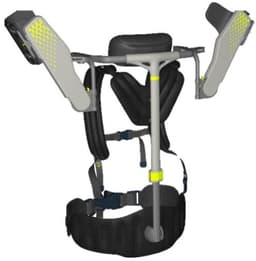
Hyundai Rotem's Wearable Robot H-FrameX (Non-powered Type)
H-FrameX, a non-powered wearable robot developed by Hyundai Rotem, is an automation solution that minimizes worker fatigue by distributing the workload when lifting heavy workpieces. It reduces the strain on the wrists and arm muscles by distributing the force to the shoulders during workpiece transfer. Shoulder height, waist length, and arm length can be adjusted to suit the user, making it suitable for anyone regardless of age or gender.

Hyundai Rotem's Wearable Robot H-FrameX (Non-powered Type) Applications at the SFAW Exhibition
This application aims to allow exhibition visitors to experience the work assistance capabilities of the H-FrameX wearable robot developed by Hyundai Rotem by having them personally carry a 20kg load. The H-FrameX, developed by Hyundai Rotem, helps minimize worker fatigue by distributing the workload when lifting heavy objects. It reduces the strain on the wrists and arm muscles by distributing force to the shoulders during workpiece transfer. Since the shoulder height, waist length, and arm length can be adjusted to suit the user, anyone, regardless of age or gender, can wear and use it.

Nighttime Cleaning at COEX using T7AMR
Cleantech’s premier autonomous floor scrubber, the T7AMR, operates consistently along pre-programmed routes. Its AI actively avoids obstacles to provide flawless, accident-free results. Equipped with a water recycling system and a high-efficiency lithium battery, it ensures seamless, long-duration autonomous cleaning—even during overnight operations. This solution creates a synergy of collaborative hygiene: while humans focus on more efficient and safer "high-touch point" sanitization, the autonomous equipment handles repetitive, wide-area floor maintenance. Together, they ensure total cleanliness—even in the areas usually left unseen.