




Process layout
Process Overview
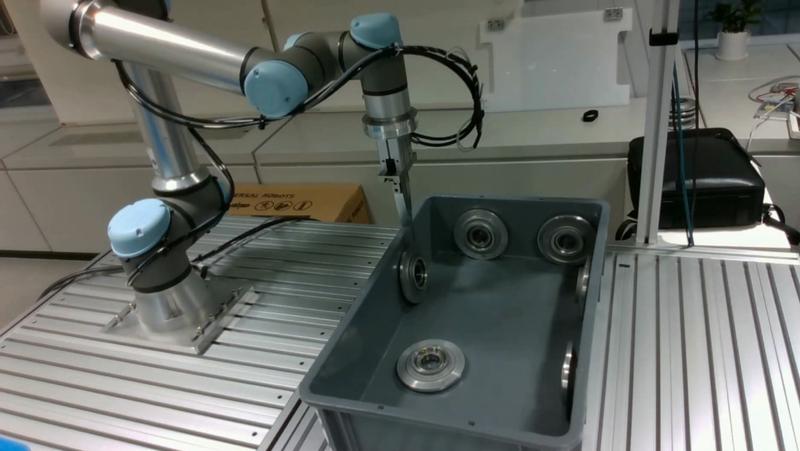
This solution automates product sorting, assembly, and packing by utilizing 3D vision, deep learning algorithms (instance segmentation), reinforcement learning, and motion planning (OMPL) algorithms.
Since it performs tasks by recognizing the real-time product position and type as well as the box location using 3D vision, it can automatically compensate and operate even when the product position or box position changes.
Even if vision/robot/work jigs become worn or conditions change, the system is corrected through learning, making operation and maintenance easier and minimizing downtime.
Components
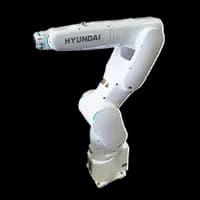
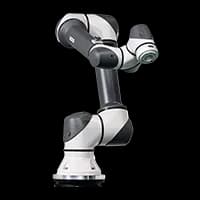
| Robot |
|
|---|---|
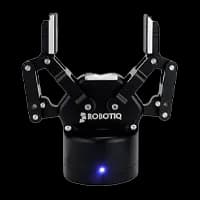
| Peripherals |
|
Workflow
| STEP 1. | Workpiece input |
|---|---|
| STEP 2. | Optimized picking plan |
| STEP 3. | Picking and alignment |
| STEP 4. | Aligned and loaded into the discharge box |
Features
Smooth robot teaching
Vision calibration and teaching time reduced through deep learning
No need for recalibration or re-teaching even when work conditions change
Excellent recognition capability for various objects based on deep learning–based 3D object recognition
Learns optimal pick positions according to product shape
Reduced training time by leveraging simulation data
Performs picking by sweeping or moving the product when it is not suitable for gripping
Fast product pose estimation within 0.2 seconds (6D pose estimation)
Compact and simple installation
No need to fix the input box in place, eliminating the need for a separate custom feeder
Enables automation by adding a robot to the operator’s existing workspace
Fast ROI – optimized operation and reduced maintenance cost
Shorter cycle time through continuous learning and optimization of picking pose and path
Automatic compensation and task execution even if the layout shifts or the robot becomes worn over time
Stable production by minimizing downtime
Unauthorized copying or reproduction of any content on Marosol may violate the Unfair Competition Prevention Act and Copyright Act.
Recommended Solution

Automated Workpiece Loading & Unloading System for Automotive Parts Machining Lines
Process Overview This solution enables automatic loading of workpieces into machining equipment, including irregular, non-standard workpieces generated from hot forging, by using a specially designed gripping tool in the automotive parts machining load/unload process. Developed through the company's in-house R&D, this automation system uses a custom-made gripper to automatically load hot-forged workpieces, even those with inconsistent shapes, into the machining area.

AI Vision + Industrial Robot for 2D Picking Automation 🦾 (CTR 2D Picking System Case)
Process Overview A robot vision picking system using robots and AI vision for industrial pick-and-place operations. A smart conveyor provides flexible part feeding, while AI-based vision inspects parts and captures key information such as position. This enables fast and accurate robot-integrated pick-and-place automation. Company Introduction Company name: CTR Robotics Established: April 2, 2012 Location: 21, 333beon-gil, Gwahangsan-dong, Gangseo-gu, Busan, Korea Competitiveness Total solution capabilities for automation equipment manufacturing Extensive experience and skilled workforce in custom system design, control, and installation Robotics automation solutions aligned with leading industry trends Mass-production deployment experience for intelligent equipment using robot vision Advanced development capabilities and standardization expertise through PoC projects In-house R&D team dedicated to advanced technology development

Yuhan-Kimberly's Choice! Fully Automated Depalletizing and String Cutting 📦
Process Overview This implementation case, implemented at Yuhan-Kimberly's Chungju factory , combines a Yaskawa industrial robot with a string cutting workstation to achieve automated depalletizing and string cutting. The client introduced the depalletizing system to reduce labor costs and work fatigue, and expressed strong interest in automating rope cutting and discharge to maximize cost savings and efficiency. This solution sorts and cuts boxes of various sizes before feeding them to the case packer, improving the efficiency of the box feeding and rope cutting processes, while also reducing the physical burden on workers and ensuring safety. Project Background and Objectives At Yuhan-Kimberly's Chungju factory , the process of dismantling palletized boxes and loading them into case packers individually was entirely manual. This process was highly repetitive and presented a constant risk of safety accidents due to the use of knives during the removal of the twine. The goal of this project was to automate the entire process, from depalletizing to loading into the case packer, minimizing human dependence. Furthermore, by unmanning the twine cutting process, we aimed to ensure worker safety, reduce fatigue and on-site personnel burden, and ensure stable plant operations.
Process layout
Process Overview
This solution automates product sorting, assembly, and packing by utilizing 3D vision, deep learning algorithms (instance segmentation), reinforcement learning, and motion planning (OMPL) algorithms.
Since it performs tasks by recognizing the real-time product position and type as well as the box location using 3D vision, it can automatically compensate and operate even when the product position or box position changes.
Even if vision/robot/work jigs become worn or conditions change, the system is corrected through learning, making operation and maintenance easier and minimizing downtime.
Components
| Robot |
|
|---|---|
| Peripherals |
|
Workflow
| STEP 1. | Workpiece input |
|---|---|
| STEP 2. | Optimized picking plan |
| STEP 3. | Picking and alignment |
| STEP 4. | Aligned and loaded into the discharge box |
Features
Smooth robot teaching
Vision calibration and teaching time reduced through deep learning
No need for recalibration or re-teaching even when work conditions change
Excellent recognition capability for various objects based on deep learning–based 3D object recognition
Learns optimal pick positions according to product shape
Reduced training time by leveraging simulation data
Performs picking by sweeping or moving the product when it is not suitable for gripping
Fast product pose estimation within 0.2 seconds (6D pose estimation)
Compact and simple installation
No need to fix the input box in place, eliminating the need for a separate custom feeder
Enables automation by adding a robot to the operator’s existing workspace
Fast ROI – optimized operation and reduced maintenance cost
Shorter cycle time through continuous learning and optimization of picking pose and path
Automatic compensation and task execution even if the layout shifts or the robot becomes worn over time
Stable production by minimizing downtime
Unauthorized copying or reproduction of any content on Marosol may violate the Unfair Competition Prevention Act and Copyright Act.
Recommended Solution
Automated Workpiece Loading & Unloading System for Automotive Parts Machining Lines
Process Overview This solution enables automatic loading of workpieces into machining equipment, including irregular, non-standard workpieces generated from hot forging, by using a specially designed gripping tool in the automotive parts machining load/unload process. Developed through the company's in-house R&D, this automation system uses a custom-made gripper to automatically load hot-forged workpieces, even those with inconsistent shapes, into the machining area.
AI Vision + Industrial Robot for 2D Picking Automation 🦾 (CTR 2D Picking System Case)
Process Overview A robot vision picking system using robots and AI vision for industrial pick-and-place operations. A smart conveyor provides flexible part feeding, while AI-based vision inspects parts and captures key information such as position. This enables fast and accurate robot-integrated pick-and-place automation. Company Introduction Company name: CTR Robotics Established: April 2, 2012 Location: 21, 333beon-gil, Gwahangsan-dong, Gangseo-gu, Busan, Korea Competitiveness Total solution capabilities for automation equipment manufacturing Extensive experience and skilled workforce in custom system design, control, and installation Robotics automation solutions aligned with leading industry trends Mass-production deployment experience for intelligent equipment using robot vision Advanced development capabilities and standardization expertise through PoC projects In-house R&D team dedicated to advanced technology development
Yuhan-Kimberly's Choice! Fully Automated Depalletizing and String Cutting 📦
Process Overview This implementation case, implemented at Yuhan-Kimberly's Chungju factory , combines a Yaskawa industrial robot with a string cutting workstation to achieve automated depalletizing and string cutting. The client introduced the depalletizing system to reduce labor costs and work fatigue, and expressed strong interest in automating rope cutting and discharge to maximize cost savings and efficiency. This solution sorts and cuts boxes of various sizes before feeding them to the case packer, improving the efficiency of the box feeding and rope cutting processes, while also reducing the physical burden on workers and ensuring safety. Project Background and Objectives At Yuhan-Kimberly's Chungju factory , the process of dismantling palletized boxes and loading them into case packers individually was entirely manual. This process was highly repetitive and presented a constant risk of safety accidents due to the use of knives during the removal of the twine. The goal of this project was to automate the entire process, from depalletizing to loading into the case packer, minimizing human dependence. Furthermore, by unmanning the twine cutting process, we aimed to ensure worker safety, reduce fatigue and on-site personnel burden, and ensure stable plant operations.