






Process layout
Process Overview
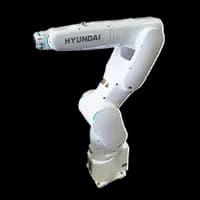
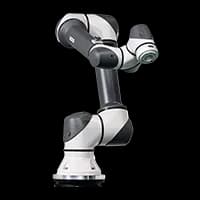
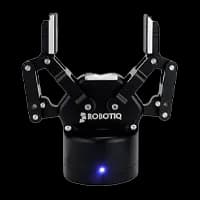
This solution is an automated sorting system that combines QRS 2D/3D vision inspection with a DENSO VS robot to pick randomly placed gears, inspect gear tooth geometry, and separate OK parts from NG parts.
With QRS’s in-house vision technology, the system can be tuned and customized to match specific site conditions, enabling precise inspection across various gear shapes and models.
This project was implemented to automate the inspection process after bin picking.
Components
| Robot |
|
|---|---|
| Peripherals |
|
Workflow
| STEP 1. | Detect the target gear in a randomly stacked bin using 3D vision |
|---|---|
| STEP 2. | pick the detected gear and perform OK/NG inspection using 2D vision |
| STEP 3. | unload and sort to designated locations based on the inspection result |
Features
Fast and accurate sorting performance
High-speed robot handling (max tool speed up to 9 m/s) for improved throughput
Reduced cycle time by performing vision recognition in sync with robot motion
Robust 3D recognition for complex-shaped parts (position & pose)
Micron-level dimensional inspection capability using 2D vision
Vision solution build by dedicated vision specialists
Strong customization and tuning flexibility with in-house vision development capability
1-year warranty coverage for stable operation
Results
| Key Benefits | Reduced manpower for quality inspection and sorting
Lower defect-related cost and improved customer-perceived quality |
|---|---|
| Client Feedback | Under varying product and environmental conditions, inspection errors occurred frequently and it was difficult to respond quickly when new products were added. With QRS’s on-site-tailored support backed by dedicated vision expertise, responsiveness improved significantly and satisfaction with the outcomes was high. |
Unauthorized copying or reproduction of any content on Marosol may violate the Unfair Competition Prevention Act and Copyright Act.
Recommended Solution

Automotive Body Frame Bin Picking using Hyundai HS210E and Pickit 3D Vision
Process Overview This bin picking automation solution uses Hyundai HS210E and Pickit 3D vision inspection to automate bin picking for automotive body frames. Using a gripper, the robot can pick various product shapes and transfer multiple required parts at once. Even for various product shapes, 3D vision enables accurate recognition and picking, overcoming the limitations of conventional robot automation that only repeated fixed tasks under restricted conditions. With this solution, flexible execution across diverse process conditions is possible.

Sand Blasting Automation for Sputter Carrier Handling using Two Yaskawa Robots
Process Overview This automation solution uses two Yaskawa robots with pneumatic grippers to handle semiconductor sputter carriers and automate the sand blasting process. Due to the long shape and heavy weight of the workpiece, the handling task previously required two operators, and the workplace environment was harsh due to dust generated during the sanding process. By automating the entire workflow from handling to sanding through robotic automation, the solution unmanned the key process and significantly improved the operator working environment.

Turbocharger Leak Inspection Automation with Epson VT6L
Process Overview This solution automates turbocharger leak inspection for automotive components using the Epson VT6L. With a compact controller-integrated robot, it can be easily installed and operated, while automating precise visual inspection to improve quality.
Process layout
Process Overview
This solution is an automated sorting system that combines QRS 2D/3D vision inspection with a DENSO VS robot to pick randomly placed gears, inspect gear tooth geometry, and separate OK parts from NG parts.
With QRS’s in-house vision technology, the system can be tuned and customized to match specific site conditions, enabling precise inspection across various gear shapes and models.
This project was implemented to automate the inspection process after bin picking.
Components
| Robot |
|
|---|---|
| Peripherals |
|
Workflow
| STEP 1. | Detect the target gear in a randomly stacked bin using 3D vision |
|---|---|
| STEP 2. | pick the detected gear and perform OK/NG inspection using 2D vision |
| STEP 3. | unload and sort to designated locations based on the inspection result |
Features
Fast and accurate sorting performance
High-speed robot handling (max tool speed up to 9 m/s) for improved throughput
Reduced cycle time by performing vision recognition in sync with robot motion
Robust 3D recognition for complex-shaped parts (position & pose)
Micron-level dimensional inspection capability using 2D vision
Vision solution build by dedicated vision specialists
Strong customization and tuning flexibility with in-house vision development capability
1-year warranty coverage for stable operation
Results
| Key Benefits | Reduced manpower for quality inspection and sorting
Lower defect-related cost and improved customer-perceived quality |
|---|---|
| Client Feedback | Under varying product and environmental conditions, inspection errors occurred frequently and it was difficult to respond quickly when new products were added. With QRS’s on-site-tailored support backed by dedicated vision expertise, responsiveness improved significantly and satisfaction with the outcomes was high. |
Unauthorized copying or reproduction of any content on Marosol may violate the Unfair Competition Prevention Act and Copyright Act.
Recommended Solution
Automotive Body Frame Bin Picking using Hyundai HS210E and Pickit 3D Vision
Process Overview This bin picking automation solution uses Hyundai HS210E and Pickit 3D vision inspection to automate bin picking for automotive body frames. Using a gripper, the robot can pick various product shapes and transfer multiple required parts at once. Even for various product shapes, 3D vision enables accurate recognition and picking, overcoming the limitations of conventional robot automation that only repeated fixed tasks under restricted conditions. With this solution, flexible execution across diverse process conditions is possible.
Sand Blasting Automation for Sputter Carrier Handling using Two Yaskawa Robots
Process Overview This automation solution uses two Yaskawa robots with pneumatic grippers to handle semiconductor sputter carriers and automate the sand blasting process. Due to the long shape and heavy weight of the workpiece, the handling task previously required two operators, and the workplace environment was harsh due to dust generated during the sanding process. By automating the entire workflow from handling to sanding through robotic automation, the solution unmanned the key process and significantly improved the operator working environment.
Turbocharger Leak Inspection Automation with Epson VT6L
Process Overview This solution automates turbocharger leak inspection for automotive components using the Epson VT6L. With a compact controller-integrated robot, it can be easily installed and operated, while automating precise visual inspection to improve quality.