

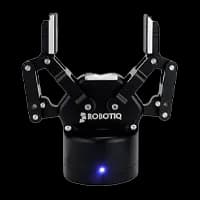
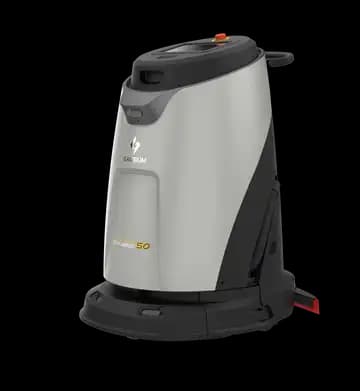
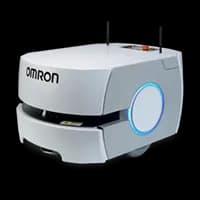
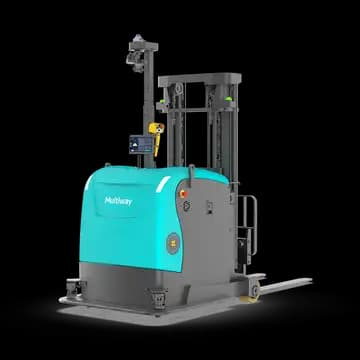
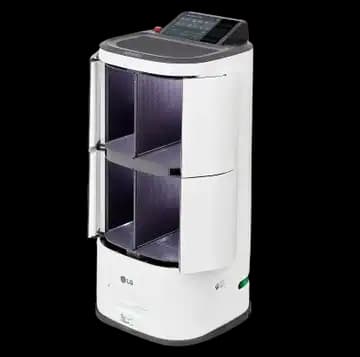
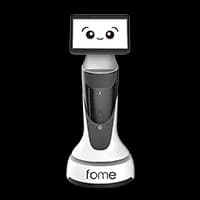

Curious about the robots used?
![[비전카메라] keyence 키엔스 AI × 광학 줌 탑재 비전 시스템 VS series](/_next/image?url=https%3A%2F%2Fd1fchzsdhim61l.cloudfront.net%2FStore%2Fthumbnail%2F6dpzSQnAeUAlMTys1i1n%2F608c95f0-2ba7-42e5-9e6c-7333a76f145f%2Fkeyence%20vs.png&w=256&q=75)
Process layout
This solution is a Vision+Robot-based Smart Factory Automation system that integrates manufacturing inspection and robotic control into a single workflow using the Keyence VS Series, an AI-powered vision system with optical zoom. Designed with an All-in-One structure (Camera, Controller, and Lens), it eliminates the need for complex peripheral setups. With 19 built-in lenses, it offers versatile zoom capabilities and autofocus, allowing for a flexible response to diverse production environments.
At the AW 2026 exhibition, this process demonstrated more than just simple vision inspection. The system first performs tray position and posture detection, providing data for the robot to execute real-time pose correction before continuing with individual product inspections. This ensures that even if trays are misaligned or placed with errors, the robot operates at the precise coordinates, simultaneously securing inspection accuracy and handling stability.
Furthermore, the system integrates standard functions—such as position, appearance, OCR/BCR, presence, counting, and dimensioning—with advanced capabilities like AI OCR, variety sorting, and segmentation. This comprehensive coverage, from standardized repetitive inspections to irregular defect detection, makes it the ideal solution for achieving the high-speed, high-precision inspection required in modern manufacturing.
The Keyence AI Vision available on the Marosol Store is not just a reading device, but a core automation component that enables robots to move more accurately and processes to operate more stably. It is highly applicable in sites that simultaneously require multi-product production, management of tray alignment deviations, variety sorting, character recognition, and visual defect detection.
Components
| Peripherals | Keyence AI × Optical Zoom Vision System VS Series : A camera-controller-lens integrated vision system that combines the camera, control functions, and lens configuration into one, simplifying Inspection setups and enhancing field applicability. |
|---|
Workflow
| STEP 1. | When a tray enters the inspection zone, Keyence’s all-in-one smart vision captures the full field of view to quickly recognize product placement and targets. Its integrated camera, controller, and lens structure allow for a stable inspection environment without complex peripheral devices |
|---|---|
| STEP 2. | Utilizing 19 built-in lenses, the system captures clear images of the tray and products to precisely analyze their position and arrangement. This enables detailed viewing of specific areas while maintaining the ability to perceive the entire process at once |
| STEP 3. | Once the vision system detects the tray's position and posture, the robot performs real-time pose correction based on that data. Even if the tray is slightly tilted or misaligned, the robot adjusts to the corrected coordinates for stable inspection and handling |
| STEP 4. | Based on the corrected location data, inspections for position, appearance, OCR/BCR, presence, counting, and dimensions are carried out sequentially. Presence, placement, defects, codes, quantities, and measurements are all processed within a single integrated system |
| STEP 5. | Complex tasks are handled via AI OCR, variety sorting, visual inspection, and segmentation. For example, AI OCR is used for irregular text, variety sorting for mixed products, and AI segmentation for microscopic or non-linear defects to maximize precision |
| STEP 6. | Final inspection results are stored as process data for quality control and productivity analysis. This establishes a high-speed, high-precision automated process, enabling vision-robot based smart factory automation that improves both line stability and production efficiency |
Features
Simplified Configuration with an All-in-One Smart Vision System
The Keyence vision system simplifies equipment setups through its integrated structure. By combining the camera, controller, and lens into a single platform, it reduces the burden of installation and setup while performing diverse inspection functions required on the manufacturing floor.
Flexible Response with 19 Built-in Lenses
The 19 built-in lenses allow the system to adapt flexibly to varying field-of-view requirements. It can seamlessly transition between wide-area monitoring and high-precision detail inspection, making it ideal for continuous workflows involving both tray-level and individual product inspections.
Integrated Position, Appearance, OCR/BCR, Presence, Counting, and Dimension Inspection
This solution offers high utility by performing essential inspections—position, appearance, OCR/BCR, presence/absence, counting, and dimensioning—within a single system. Consolidating these into one platform simplifies the process and enhances maintenance efficiency compared to deploying multiple separate devices.
Enhanced Precision via AI OCR, Variety Sorting, Visual Inspection, and Segmentation
Going beyond rule-based inspection, the system utilizes AI OCR, variety sorting, visual inspection, and segmentation to identify irregular patterns and micro-defects that are difficult for traditional systems to detect. This ensures a flexible response even in environments with inconsistent text formats or mixed product types.
Synergy Between Tray Detection and Real-time Robot Pose Correction The core of this solution is the direct link between vision data and robot control. Based on the tray position and posture detection data, the system performs real-time robot pose correction. This allows for precise inspection and stable handling even when there are alignment errors or tray placement deviations.
Realization of High-Speed, High-Precision Inspection
Accuracy is as critical as speed on the production line. Keyence AI Vision combines various inspection functions with AI-based analysis to enable high-speed, high-precision inspections, elevating the overall level of quality control automation.
Results
| Key Benefits | Quality Stabilization via High-Speed/Precision Inspection: By combining standard inspections (position, appearance, OCR, etc.) with AI-driven analysis, sites can establish a more stable and accurate inspection system, directly reducing defect rates and downstream risks.
Expanded AI Inspection Scope: Features like AI OCR and variety sorting allow automation to cover complex areas previously requiring manual labor, such as mixed-variety sorting and irregular character recognition.
|
|---|---|
| Client Feedback | We previously struggled with maintaining accuracy due to tray positioning errors and varying product conditions. After implementing Keyence AI Vision, we can now handle everything from position recognition to visual inspection and OCR in one go. The fact that the vision system detects the tray’s posture and corrects the robot's movement accordingly has significantly increased both inspection reliability and operational stability. It is an excellent solution for raising the bar for quality management and automation.
|
Unauthorized copying or reproduction of any content on Marosol may violate the Unfair Competition Prevention Act and Copyright Act.
Recommended Solution

TIG Welding using the Rainbow Robotics RB3
This welding automation solution utilizes the Rainbow Robotics RB-3 collaborative robot combined with a TIG welder to weld the bended sections of metal plates. It is characterized by fast teaching capabilities and high space efficiency. In manual welding, quality varies significantly based on the operator's skill level. Additionally, due to the harsh working conditions, securing skilled welders is becoming increasingly difficult. With this solution, even unskilled workers can manage the loading and unloading of workpieces, while the robot handles the critical welding tasks. This ensures consistent, high-quality production regardless of human fatigue or skill level.

PCB Inspection Automation using Universal Robots UR5
This vision inspection automation solution is designed for 100% PCB inspection, where the robot loads PCBs into the testing equipment and sorts them into "Pass" or "Fail" categories based on the results. By replacing the repetitive manual task of constantly loading and unloading PCBs, companies can reassign operators to higher-value tasks, significantly improving labor efficiency. Furthermore, this solution allows manufacturers to transition from manual sampling to total inspection (100%), drastically enhancing the quality standards delivered to customers.

Processed Parts Transfer using Potenit Mobile Manipulator & 5G Integration
This logistics automation solution utilizes a Mobile Manipulator integrated with 5G technology to transfer workpieces between distant processing stages. Potenit's AMR solution can be deployed easily without the need for additional infrastructure (like floor markers or rails) and offers high flexibility when layouts or work positions change. Through Potenit's proprietary MOS (Multi Robot Operating System), operators can monitor and direct tasks in real-time via mobile devices. By syncing equipment data with the AMR, the system automates the necessary tasks between pre- and post-processing stages. It is an ideal solution for 24/7 operations that require high productivity without human intervention. *This specific solution involved Potenit supplying the AMR and Doosan Robotics arm to ETRI (Electronics and Telecommunications Research Institute), followed by 5G integration. Detailed tool fabrication and task-specific teaching/tuning were conducted internally by ETRI.
Process layout
This solution is a Vision+Robot-based Smart Factory Automation system that integrates manufacturing inspection and robotic control into a single workflow using the Keyence VS Series, an AI-powered vision system with optical zoom. Designed with an All-in-One structure (Camera, Controller, and Lens), it eliminates the need for complex peripheral setups. With 19 built-in lenses, it offers versatile zoom capabilities and autofocus, allowing for a flexible response to diverse production environments.
At the AW 2026 exhibition, this process demonstrated more than just simple vision inspection. The system first performs tray position and posture detection, providing data for the robot to execute real-time pose correction before continuing with individual product inspections. This ensures that even if trays are misaligned or placed with errors, the robot operates at the precise coordinates, simultaneously securing inspection accuracy and handling stability.
Furthermore, the system integrates standard functions—such as position, appearance, OCR/BCR, presence, counting, and dimensioning—with advanced capabilities like AI OCR, variety sorting, and segmentation. This comprehensive coverage, from standardized repetitive inspections to irregular defect detection, makes it the ideal solution for achieving the high-speed, high-precision inspection required in modern manufacturing.
The Keyence AI Vision available on the Marosol Store is not just a reading device, but a core automation component that enables robots to move more accurately and processes to operate more stably. It is highly applicable in sites that simultaneously require multi-product production, management of tray alignment deviations, variety sorting, character recognition, and visual defect detection.
Components
| Peripherals | Keyence AI × Optical Zoom Vision System VS Series : A camera-controller-lens integrated vision system that combines the camera, control functions, and lens configuration into one, simplifying Inspection setups and enhancing field applicability. |
|---|
Workflow
| STEP 1. | When a tray enters the inspection zone, Keyence’s all-in-one smart vision captures the full field of view to quickly recognize product placement and targets. Its integrated camera, controller, and lens structure allow for a stable inspection environment without complex peripheral devices |
|---|---|
| STEP 2. | Utilizing 19 built-in lenses, the system captures clear images of the tray and products to precisely analyze their position and arrangement. This enables detailed viewing of specific areas while maintaining the ability to perceive the entire process at once |
| STEP 3. | Once the vision system detects the tray's position and posture, the robot performs real-time pose correction based on that data. Even if the tray is slightly tilted or misaligned, the robot adjusts to the corrected coordinates for stable inspection and handling |
| STEP 4. | Based on the corrected location data, inspections for position, appearance, OCR/BCR, presence, counting, and dimensions are carried out sequentially. Presence, placement, defects, codes, quantities, and measurements are all processed within a single integrated system |
| STEP 5. | Complex tasks are handled via AI OCR, variety sorting, visual inspection, and segmentation. For example, AI OCR is used for irregular text, variety sorting for mixed products, and AI segmentation for microscopic or non-linear defects to maximize precision |
| STEP 6. | Final inspection results are stored as process data for quality control and productivity analysis. This establishes a high-speed, high-precision automated process, enabling vision-robot based smart factory automation that improves both line stability and production efficiency |
Features
Simplified Configuration with an All-in-One Smart Vision System
The Keyence vision system simplifies equipment setups through its integrated structure. By combining the camera, controller, and lens into a single platform, it reduces the burden of installation and setup while performing diverse inspection functions required on the manufacturing floor.
Flexible Response with 19 Built-in Lenses
The 19 built-in lenses allow the system to adapt flexibly to varying field-of-view requirements. It can seamlessly transition between wide-area monitoring and high-precision detail inspection, making it ideal for continuous workflows involving both tray-level and individual product inspections.
Integrated Position, Appearance, OCR/BCR, Presence, Counting, and Dimension Inspection
This solution offers high utility by performing essential inspections—position, appearance, OCR/BCR, presence/absence, counting, and dimensioning—within a single system. Consolidating these into one platform simplifies the process and enhances maintenance efficiency compared to deploying multiple separate devices.
Enhanced Precision via AI OCR, Variety Sorting, Visual Inspection, and Segmentation
Going beyond rule-based inspection, the system utilizes AI OCR, variety sorting, visual inspection, and segmentation to identify irregular patterns and micro-defects that are difficult for traditional systems to detect. This ensures a flexible response even in environments with inconsistent text formats or mixed product types.
Synergy Between Tray Detection and Real-time Robot Pose Correction The core of this solution is the direct link between vision data and robot control. Based on the tray position and posture detection data, the system performs real-time robot pose correction. This allows for precise inspection and stable handling even when there are alignment errors or tray placement deviations.
Realization of High-Speed, High-Precision Inspection
Accuracy is as critical as speed on the production line. Keyence AI Vision combines various inspection functions with AI-based analysis to enable high-speed, high-precision inspections, elevating the overall level of quality control automation.
Results
| Key Benefits | Quality Stabilization via High-Speed/Precision Inspection: By combining standard inspections (position, appearance, OCR, etc.) with AI-driven analysis, sites can establish a more stable and accurate inspection system, directly reducing defect rates and downstream risks.
Expanded AI Inspection Scope: Features like AI OCR and variety sorting allow automation to cover complex areas previously requiring manual labor, such as mixed-variety sorting and irregular character recognition.
|
|---|---|
| Client Feedback | We previously struggled with maintaining accuracy due to tray positioning errors and varying product conditions. After implementing Keyence AI Vision, we can now handle everything from position recognition to visual inspection and OCR in one go. The fact that the vision system detects the tray’s posture and corrects the robot's movement accordingly has significantly increased both inspection reliability and operational stability. It is an excellent solution for raising the bar for quality management and automation.
|
Unauthorized copying or reproduction of any content on Marosol may violate the Unfair Competition Prevention Act and Copyright Act.
Curious about the robots used?
Recommended Solution
TIG Welding using the Rainbow Robotics RB3
This welding automation solution utilizes the Rainbow Robotics RB-3 collaborative robot combined with a TIG welder to weld the bended sections of metal plates. It is characterized by fast teaching capabilities and high space efficiency. In manual welding, quality varies significantly based on the operator's skill level. Additionally, due to the harsh working conditions, securing skilled welders is becoming increasingly difficult. With this solution, even unskilled workers can manage the loading and unloading of workpieces, while the robot handles the critical welding tasks. This ensures consistent, high-quality production regardless of human fatigue or skill level.
PCB Inspection Automation using Universal Robots UR5
This vision inspection automation solution is designed for 100% PCB inspection, where the robot loads PCBs into the testing equipment and sorts them into "Pass" or "Fail" categories based on the results. By replacing the repetitive manual task of constantly loading and unloading PCBs, companies can reassign operators to higher-value tasks, significantly improving labor efficiency. Furthermore, this solution allows manufacturers to transition from manual sampling to total inspection (100%), drastically enhancing the quality standards delivered to customers.
Processed Parts Transfer using Potenit Mobile Manipulator & 5G Integration
This logistics automation solution utilizes a Mobile Manipulator integrated with 5G technology to transfer workpieces between distant processing stages. Potenit's AMR solution can be deployed easily without the need for additional infrastructure (like floor markers or rails) and offers high flexibility when layouts or work positions change. Through Potenit's proprietary MOS (Multi Robot Operating System), operators can monitor and direct tasks in real-time via mobile devices. By syncing equipment data with the AMR, the system automates the necessary tasks between pre- and post-processing stages. It is an ideal solution for 24/7 operations that require high productivity without human intervention. *This specific solution involved Potenit supplying the AMR and Doosan Robotics arm to ETRI (Electronics and Telecommunications Research Institute), followed by 5G integration. Detailed tool fabrication and task-specific teaching/tuning were conducted internally by ETRI.