




Process layout
Process Overview
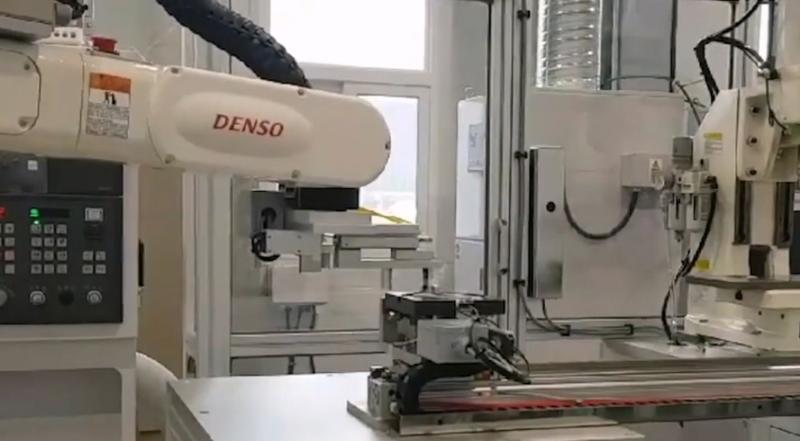
This automation solution uses two DENSO robots—VM60B1 (6-axis vertical articulated robot) and HS055 (SCARA robot)—to automate raw material loading, turning-center machining of plastic parts, and a downstream press-fit (crimping) operation. By integrating material loading, machining support, and press-fit handling into a single automated workflow, the system minimizes control points while improving overall productivity.
Components
| Robot | DENSO VM-60B1 Repeatability: ±0.07 mm IP rating: IP40 Standard cycle time: 0.95 sec DENSO HS-055A1 (SCARA) Horizontal reach: 550 mm Repeatability: ±0.02 mm IP rating: IP6 |
|---|---|
| Peripherals | Hyundai WIA turning center KIT 4500 (optional / separate) Pneumatic press Raw material loading unit CNC machined-part transfer unit Machining chip/swarf discharge conveyor Finished-product outfeed conveyor |
Workflow
| STEP 1. | Load plastic workpieces into the turning center |
|---|---|
| STEP 2. | Take out the machined/cut parts and place them onto the transfer unit |
| STEP 3. | Pick the parts with the SCARA robot and load them into the press station |
| STEP 4. | Pick the press-finished parts and discharge them to the outfeed conveyor |
Features
Improved Production Efficiency and Quality
Continuous, low-idle operation improves overall production efficiency.
High-speed industrial robots minimize cycle time.
Automates the full sequence—from part loading and first machining to press-fit—reducing control points.
Applicable as a shared cell across multiple lines for the same product.
Results
| Key Benefits | Improved productivity, Minimized staffing by reducing control/management points |
|---|---|
| Client Feedback | By deploying Seojeong’s solution, production speed increased, idle time was reduced, and overall productivity improved significantly. |
Unauthorized copying or reproduction of any content on Marosol may violate the Unfair Competition Prevention Act and Copyright Act.
Recommended Solution

Plastic Injection Molded Part Transport using Twinny NarGo 100
This logistics automation solution utilizes the Twinny NarGo 100 AMR to automate the transport of large plastic injection molded products to subsequent process stages. Equipped with triple safety sensors and advanced autonomous driving technology, Twinny's NarGo 100 performs tasks safely even in factories with complex layouts and high worker traffic. Previously, transporting heavy workpieces weighing around 100kg to a distant finished goods warehouse was time-consuming, causing idle time in processing and reducing productivity due to worker fatigue. Since implementing the autonomous robot, continuous processing has become possible, and worker fatigue has been significantly reduced, leading to an overall boost in productivity.

Aluminum Dross Processing using Yaskawa Robots
This automation solution utilizes YASKAWA robots to automate the hazardous manual process of handling high-temperature aluminum dross (a byproduct of molten aluminum). By deploying a robot with high heat resistance, this system replaces human operators in extreme thermal environments, ensuring workplace safety and enabling continuous, non-stop operation. The primary goal of this project was to enhance operational safety and improve the work environment by automating the byproduct treatment following high-heat aluminum processing.

Press Machine Tending for Thin Plate Sheets using Yaskawa Robots
This automation solution utilizes YASKAWA robots equipped with vacuum grippers to handle thin plates, automating the workpiece feeding process and significantly enhancing the safety of press operations. Due to the nature of press processes—characterized by extremely short cycle times and high-risk environments—industrial accidents involving human operators are frequent. By employing robot automation, particularly with vacuum grippers which are far more effective at handling thin plates than manual labor, this solution simultaneously improves production throughput and workplace safety.
Process layout
Process Overview
This automation solution uses two DENSO robots—VM60B1 (6-axis vertical articulated robot) and HS055 (SCARA robot)—to automate raw material loading, turning-center machining of plastic parts, and a downstream press-fit (crimping) operation. By integrating material loading, machining support, and press-fit handling into a single automated workflow, the system minimizes control points while improving overall productivity.
Components
| Robot | DENSO VM-60B1 Repeatability: ±0.07 mm IP rating: IP40 Standard cycle time: 0.95 sec DENSO HS-055A1 (SCARA) Horizontal reach: 550 mm Repeatability: ±0.02 mm IP rating: IP6 |
|---|---|
| Peripherals | Hyundai WIA turning center KIT 4500 (optional / separate) Pneumatic press Raw material loading unit CNC machined-part transfer unit Machining chip/swarf discharge conveyor Finished-product outfeed conveyor |
Workflow
| STEP 1. | Load plastic workpieces into the turning center |
|---|---|
| STEP 2. | Take out the machined/cut parts and place them onto the transfer unit |
| STEP 3. | Pick the parts with the SCARA robot and load them into the press station |
| STEP 4. | Pick the press-finished parts and discharge them to the outfeed conveyor |
Features
Improved Production Efficiency and Quality
Continuous, low-idle operation improves overall production efficiency.
High-speed industrial robots minimize cycle time.
Automates the full sequence—from part loading and first machining to press-fit—reducing control points.
Applicable as a shared cell across multiple lines for the same product.
Results
| Key Benefits | Improved productivity, Minimized staffing by reducing control/management points |
|---|---|
| Client Feedback | By deploying Seojeong’s solution, production speed increased, idle time was reduced, and overall productivity improved significantly. |
Unauthorized copying or reproduction of any content on Marosol may violate the Unfair Competition Prevention Act and Copyright Act.
Recommended Solution
Plastic Injection Molded Part Transport using Twinny NarGo 100
This logistics automation solution utilizes the Twinny NarGo 100 AMR to automate the transport of large plastic injection molded products to subsequent process stages. Equipped with triple safety sensors and advanced autonomous driving technology, Twinny's NarGo 100 performs tasks safely even in factories with complex layouts and high worker traffic. Previously, transporting heavy workpieces weighing around 100kg to a distant finished goods warehouse was time-consuming, causing idle time in processing and reducing productivity due to worker fatigue. Since implementing the autonomous robot, continuous processing has become possible, and worker fatigue has been significantly reduced, leading to an overall boost in productivity.
Aluminum Dross Processing using Yaskawa Robots
This automation solution utilizes YASKAWA robots to automate the hazardous manual process of handling high-temperature aluminum dross (a byproduct of molten aluminum). By deploying a robot with high heat resistance, this system replaces human operators in extreme thermal environments, ensuring workplace safety and enabling continuous, non-stop operation. The primary goal of this project was to enhance operational safety and improve the work environment by automating the byproduct treatment following high-heat aluminum processing.
Press Machine Tending for Thin Plate Sheets using Yaskawa Robots
This automation solution utilizes YASKAWA robots equipped with vacuum grippers to handle thin plates, automating the workpiece feeding process and significantly enhancing the safety of press operations. Due to the nature of press processes—characterized by extremely short cycle times and high-risk environments—industrial accidents involving human operators are frequent. By employing robot automation, particularly with vacuum grippers which are far more effective at handling thin plates than manual labor, this solution simultaneously improves production throughput and workplace safety.