

Helping with Hard Work Just by Wearing Them Like Clothes?! Analysis of Wearable Robots
2 min read01316
Hello everyone. It’s the return of the bi-weekly robot deep-dive by Marosol’s ultimate duo(?)—Pengbok x Brian!!
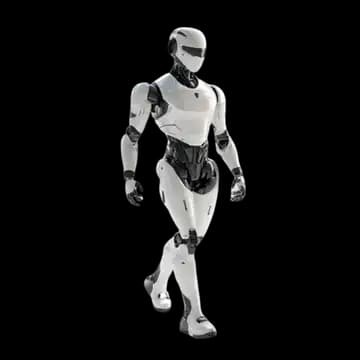
Today, we are looking at Hyundai Rotem's H-Frame series of wearable robots, which has been receiving a ton of inquiries lately. (Yay!) Most people who inquire through Marosol look for wearable robots for reasons such as preventing injuries during material loading/unloading, improving work productivity, and assisting workers.

Before we start, wearable robots that can be worn like clothes are made with technology that measures human judgment and will in real-time through sensors to control the robot's movements based on that data.

Click to view more details.
Currently, various wearable robots from Hyundai Rotem are listed on Marosol. Among them, the most popular is the H-Frame series, which assists when lifting heavy objects.
For more details, we’ll ask Brian. 😉 The A to Z of wearable robots! Brian, please come in! (Bows)
Jet Interview
Q. Hello, Brian. I heard you’ve been busy with the Marosol 2.0 update. How have you been?
Yes, I put in quite a bit of effort because there are so many new features. 😅 I'm glad we could update successfully since the whole team worked hard together. You've been well too, Pengbok?
Q. Yes, of course. While working hard this time, I started wondering if there are any robots that could help our team. Is that too random? 🤔
Haha. It would be great if such a robot existed. Actually, robots that assist workers at real job sites are already out. They are wearable robots.
Q. Oh, right! I heard inquiries for wearable robots are flooding into Marosol lately. Could you explain them?
First, the wearable robots currently listed on Marosol include Hyundai Rotem's H-Frame series, VEX, and CEX.
The H-Frame series comes in three types: S (Spring-assisted), P (Motorized), and X (Non-powered). These robots are used for loading and unloading items.

Click to view more details.
In the case of VEX, it helps reduce strain during "overhead" tasks, such as tying grapevines or repairing the undersides of ships.
And CEX is perfect for manufacturing tasks that require frequent bending, as it becomes a chair the moment you sit back.
Q. So there are many types even among wearable robots. I’m curious if you really just "wear" them like the name suggests!
It’s easier to think of it as "equipping" rather than just wearing. They can be equipped by **anyone—regardless of gender or age—**without restrictions on body size like shoulder height, waist length, or arm length. Among them, the H-Frame S, H-Frame X, VEX, and CEX types have lightweight structures in the 1-2kg range, allowing them to be worn comfortably depending on the worker's skill and ability.
Q. I see. 😮 Today, I want to hear more about the most popular one, the H-Frame. For the S (Spring-assisted) type, can it operate without a separate battery?!
Yes, that's correct. The same goes for the X (Non-powered) type. The S type can provide load reduction of 5–15kg* using the restoring force of a spring. And the X type is suitable for high-load transfers of even heavier objects. Combined with human strength, it can lift up to 60kg.
*Load reduction: If a worker lifts a 50kg item and the wearable robot's load reduction is 5–15kg, the worker only needs to exert enough strength to lift 35–45kg.

Click to view more details.
The only one among these that requires battery charging is the P (Motorized) type, which offers 5–30kg of load reduction and can be used for up to 8 hours on a single charge.
Q. S-P-X… with three types, it’s a bit of a headache to compare them. 😥 Is there an easier way to view them?
I thought so, which is why I carefully prepared a new feature for Marosol 2.0! I'll show you through the "Compare Solution Application Cases" feature.

As you can see, in terms of price, the X and S types are the most economical, in the 2 million KRW range. While rentals are actually possible, many people prefer to purchase them outright due to the affordable price.
👉Go directly to compare solution application examples
(Please refer to the 'Compare with similar applications' section below the video.)

Q. It’s so convenient to be able to compare them at a glance! What has been the reaction from actual workers who introduced these robots?
Generally, they said the wearable robots helped a lot in preventing musculoskeletal disorders by reducing electromyography (EMG) activity in arm muscles.
Being able to reduce the workload and fatigue during repetitive transport is a real game-changer. 😉
Q. Wow, I want to introduce these as soon as possible. But they say "look before you leap"... is it possible to actually try on these wearable robots?
Unlike other robot automation cases, you can simply try on a wearable robot for a quick test, so many people do want to experience it in person.

So! If you visit Marosol directly, free testing is available. For on-site visits, a separate travel fee of 200,000 KRW is charged.
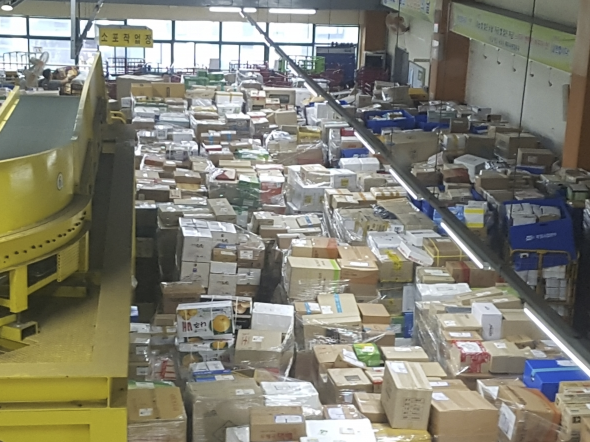
🐧: I hope the use of wearable robots becomes more active so they can be used in daily life, not just industrial sites! 😉 For example, in mart warehouses or courier logistics centers...
🧑: That’s exciting news. There are many exhausting tasks in daily life that need strength assistance. Places like nursing homes would be good, too...
🐧: Personally, I think a wearable robot that reduces fatigue while preparing holiday food would be incredibly convenient. Haha!

Today we’ve dug into another "We Want to Know Robot Automation!"
Inquiries regarding wearable robots are always welcome. :)
Robot automation involves significant investment—consult with Marosol and prepare smartly. 🙂
For accurate quote information and detailed expert consultation, apply by clicking Free Consultation at the top.
Readers also liked the following posts


Price Negotiation Available Now!
Additional discounts may be available depending on your needs.