



The Superstar of Logistics Robots: OMRON’s AMR Logistics Robot LD Series
1 min read0314
AGV / AMR / Logistics / Omron / LD Series
Why Did the Logistics Industry Fall in Love with Robots?💘
The logistics industry and robots have fallen in love. As proof, domestic robot companies are picking logistics robots as their new growth engine and expanding their businesses. As the role of logistics robots in replacing humans grows and their technology advances rapidly, the number of cases where sites are considering or actually implementing robots to create change is increasing fast.
From domestic giants like Coupang and Naver to global companies like Amazon, logistics automation is being achieved through logistics robots.
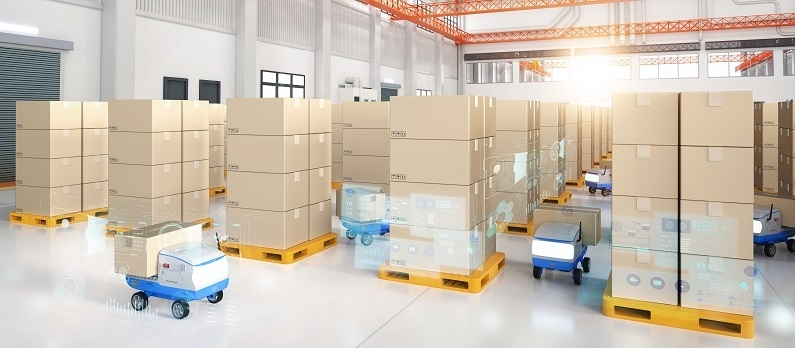
The Answer for Warehouses Where Humans and Robots Work Together: AMR
Logistics robots are mainly divided into two types: AGV and AMR. AGV (Automated Guided Vehicle) is a robot that follows a pre-defined line drawn on the floor. AGVs are currently the mainstream product used in many factories.
AMR (Autonomous Mobile Robot) is a more evolved technology than AGV, as it autonomously creates its own map and finds its destination without any physical lines. While AGV and AMR may look similar on the outside, the key difference is whether they are restricted to following a line or not.
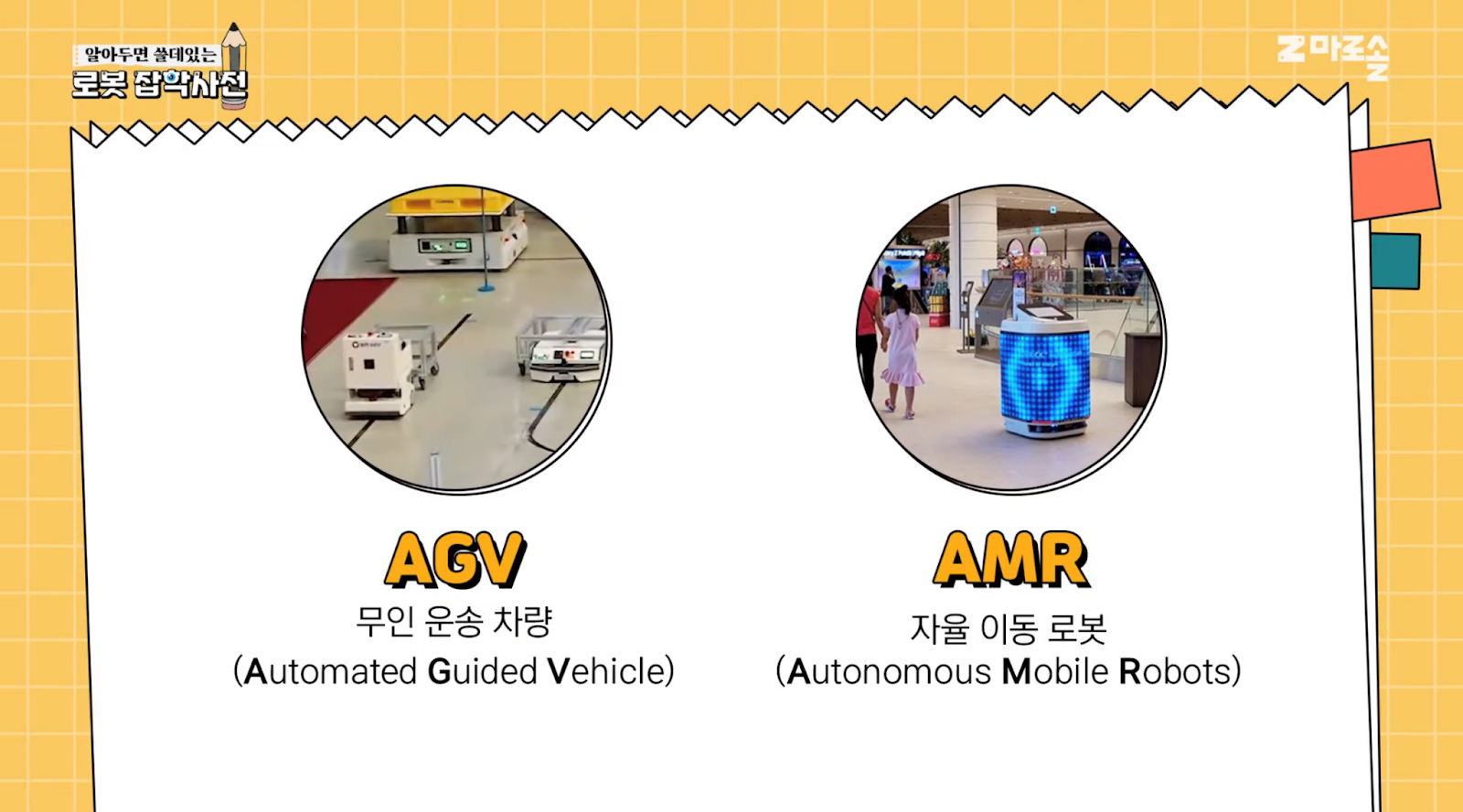
However, this small difference creates a massive gap. To put it simply, an AGV is like a train, and an AMR is like a car. Looking at the history of trains and cars, trains were invented first, followed by cars. Yet today, the car market is 1,000 to 2,000 times larger than the train market. The fact that a car can drive without the restriction of rails created this huge difference. Applying this logic to the robot market, it is true that the future of the AMR market is even more promising.
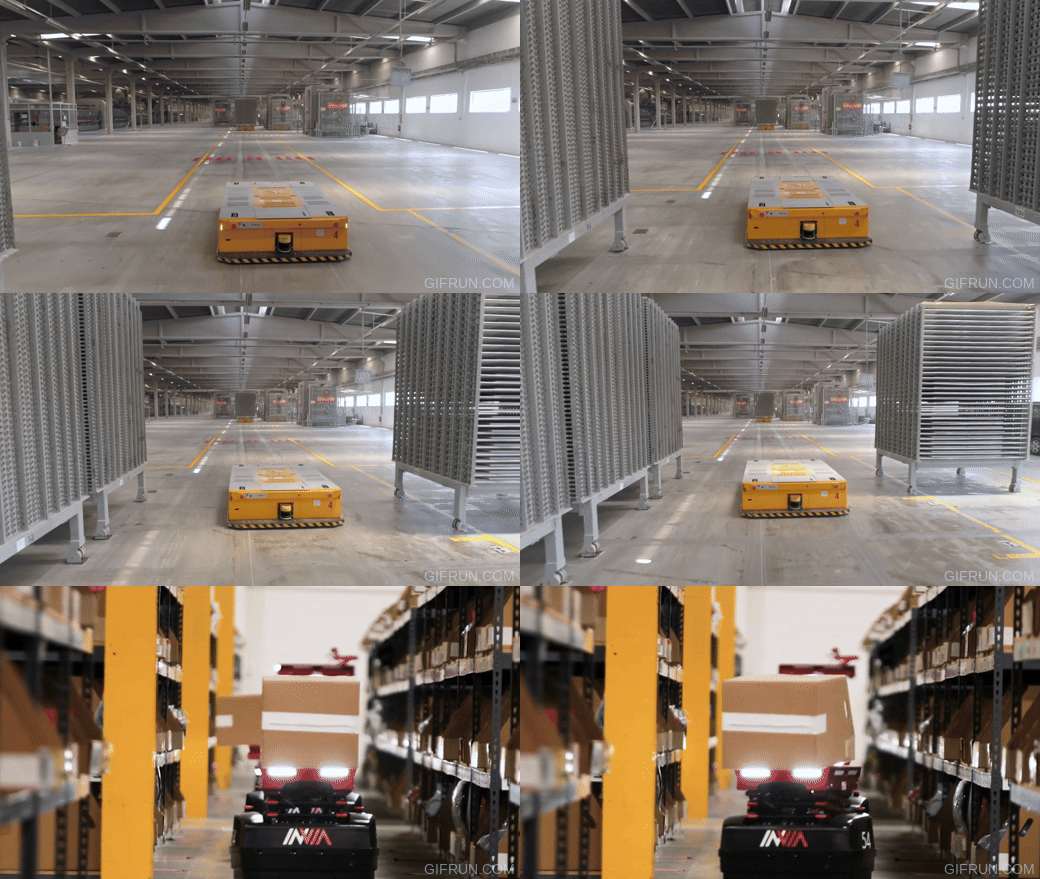
The Synonym for AMR Logistics Robots: OMRON LD Series
As mentioned earlier, various robot companies are heating up the development of AMR logistics robots. Among them, one company stands as a role model in the logistics robot world: OMRON, a Japanese factory automation specialist.
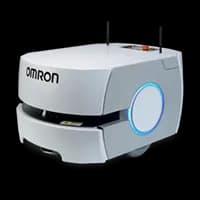
OMRON is a well-known company that manufactures a wide range of industrial automation and robot solutions. OMRON's logistics robots are designed to improve efficiency and productivity in warehouse and logistics operations. One of the most notable products in this field is the Omron LD series.

Since it is a company that inspires others, we need to take a closer look. We’ve invited Marosol’s robot expert, Brian, to tell us more about the OMRON LD series.
Q1. Hello Brian. What makes the OMRON LD series different from other AMR logistics robots?
The OMRON LD series consists of autonomous mobile robots (AMRs) specifically designed for material handling and transport tasks in logistics and industrial environments. These robots feature advanced navigation and safety functions for working alongside humans, allowing them to operate autonomously and safely. Let's look at each feature:
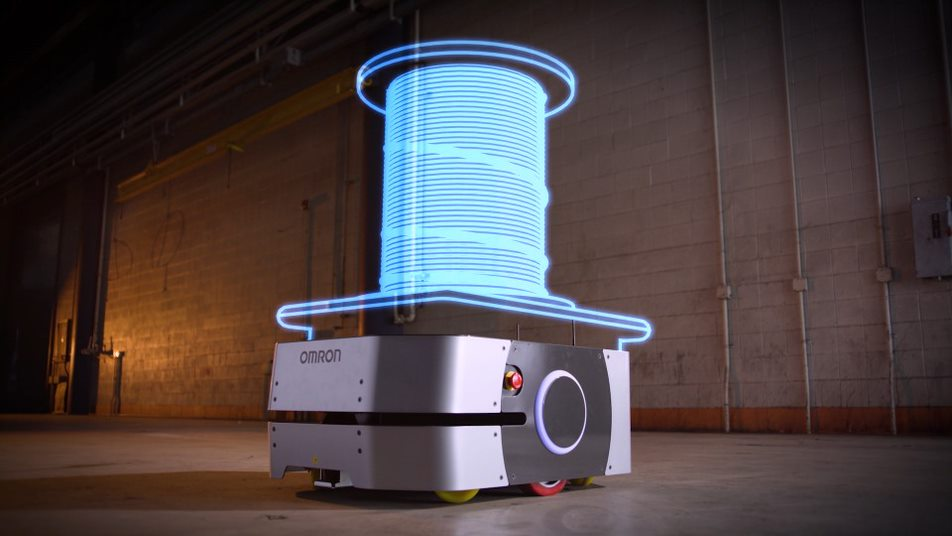
Navigation: Omron's robots use a combination of technologies, including laser scanners, vision systems, and advanced algorithms, to navigate and map their surroundings. By identifying obstacles and deciding how to avoid them in real-time, they find the optimal path to transport goods safely and efficiently.
Safety: Because the LD series is built to work with people, safety is emphasized. To meet the latest safety requirements, they are equipped with rear ultrasonic sensors, safety laser scanners, a front bumper, and a low front laser sensor.
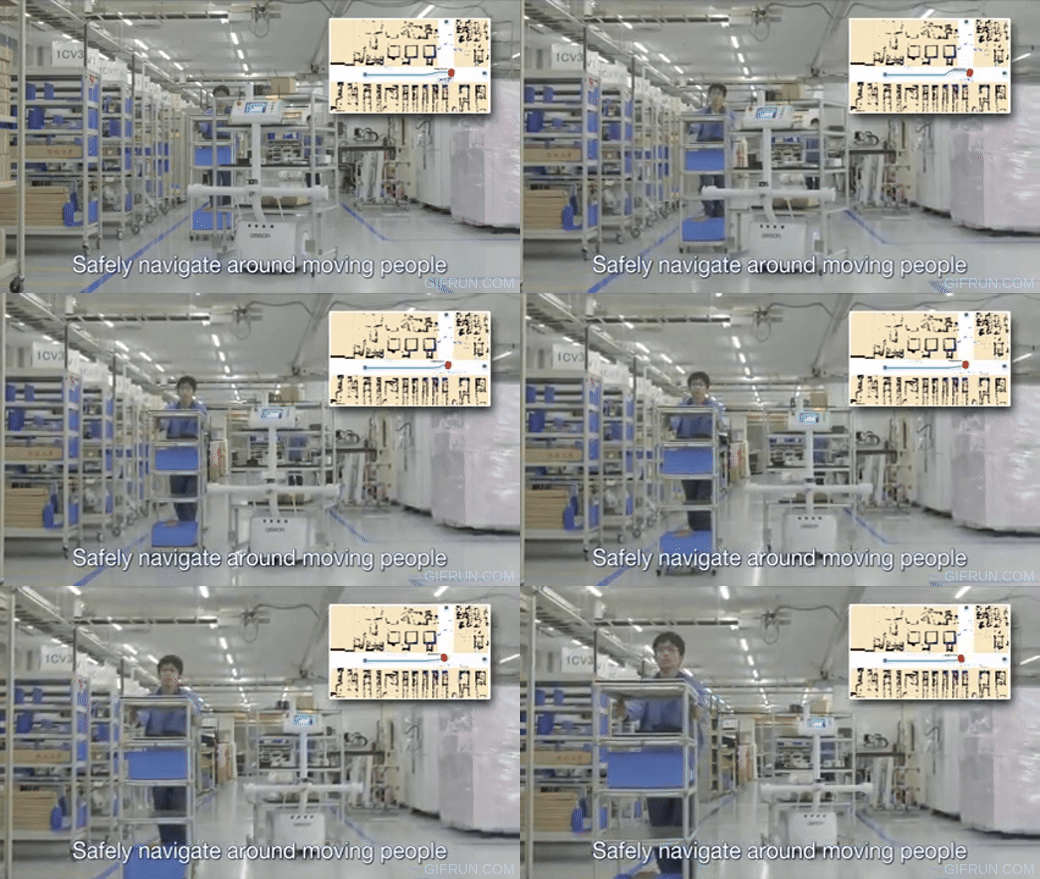
Q2. Could you explain the safety sensors on the LD series in more detail?
The rear ultrasonic sensors detect obstacles behind the robot using ultrasonic waves. The safety laser scanner is a safety-certified scanner that enables both SLAM (Simultaneous Localization and Mapping) and safety functions.
The low front laser sensor at the tip of the robot detects low-lying obstacles in the direction of movement. Furthermore, a front bumper is installed so that the robot stops immediately even if it makes the slightest contact with an obstacle. These features ensure the robot is designed to operate safely in human environments, complying with relevant safety standards.

Q3. So, the biggest features are the robot's ability to judge paths independently and its compliance with safety requirements.
Exactly. One more thing to mention is the role of OMRON's proprietary control system, EM. EM is software that can manage and control up to 100 Omron robots at once.
Users can monitor and manage a fleet, allowing for efficient task allocation, tracking, and resource management, which makes it easy to scale or adjust operations as needed.
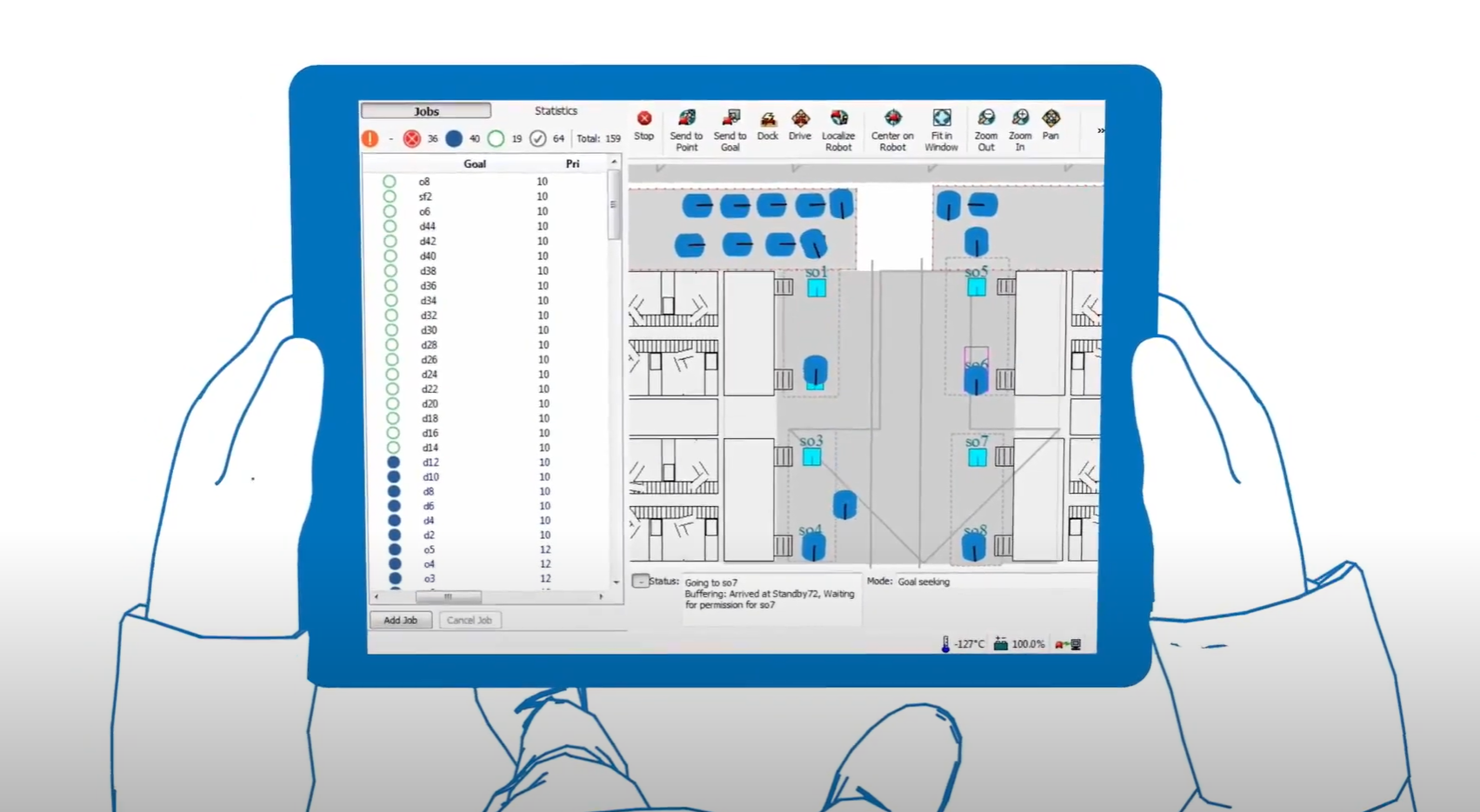
Q4. So EM is the control system that manages multiple robots instead of a person! What are its specific roles?
The main roles of EM are optimizing work efficiency, maximizing uptime, and improving flexibility.
To optimize efficiency, EM gives instructions to robots effectively. For example, it gives optimal commands so that unnecessary time and movement do not occur, considering the next task.
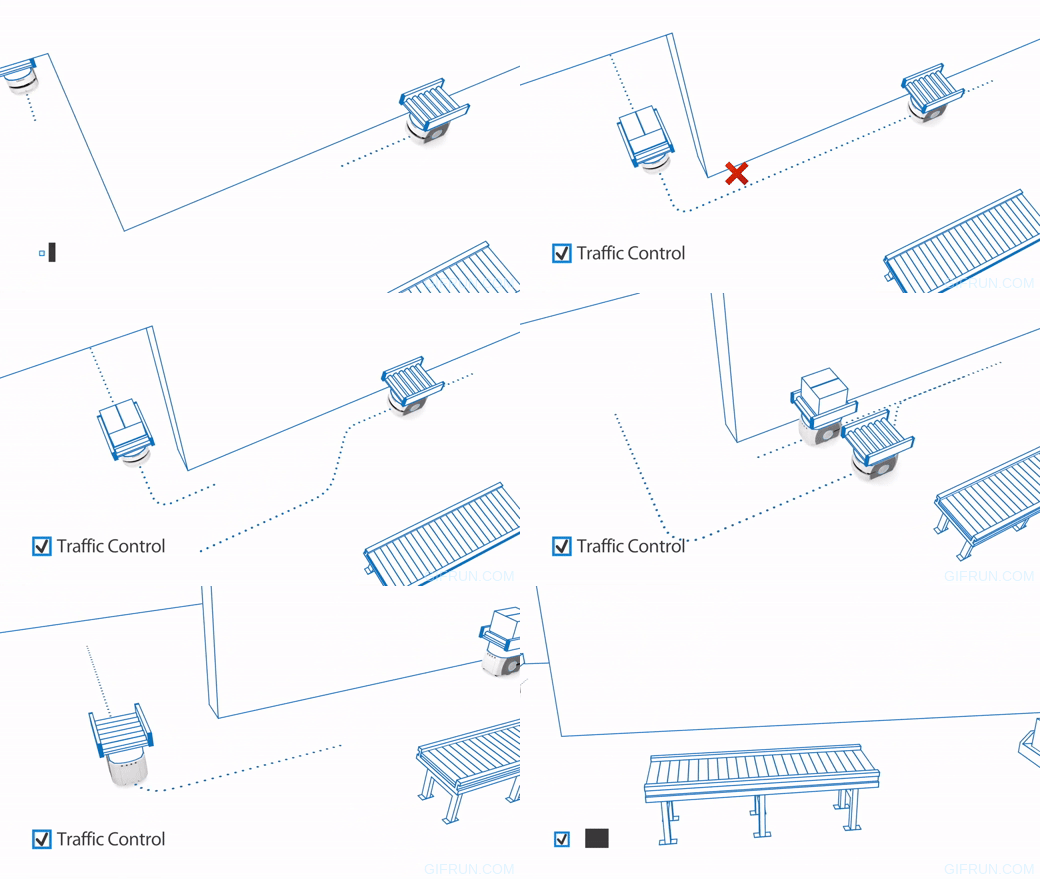
EM also handles motion management and traffic control. It manages movements so that multiple robots heading to the same destination do not get congested in narrow spaces. If interference is predicted based on current positions and paths, it raises an alert in advance and changes paths efficiently to prevent collisions or stops.
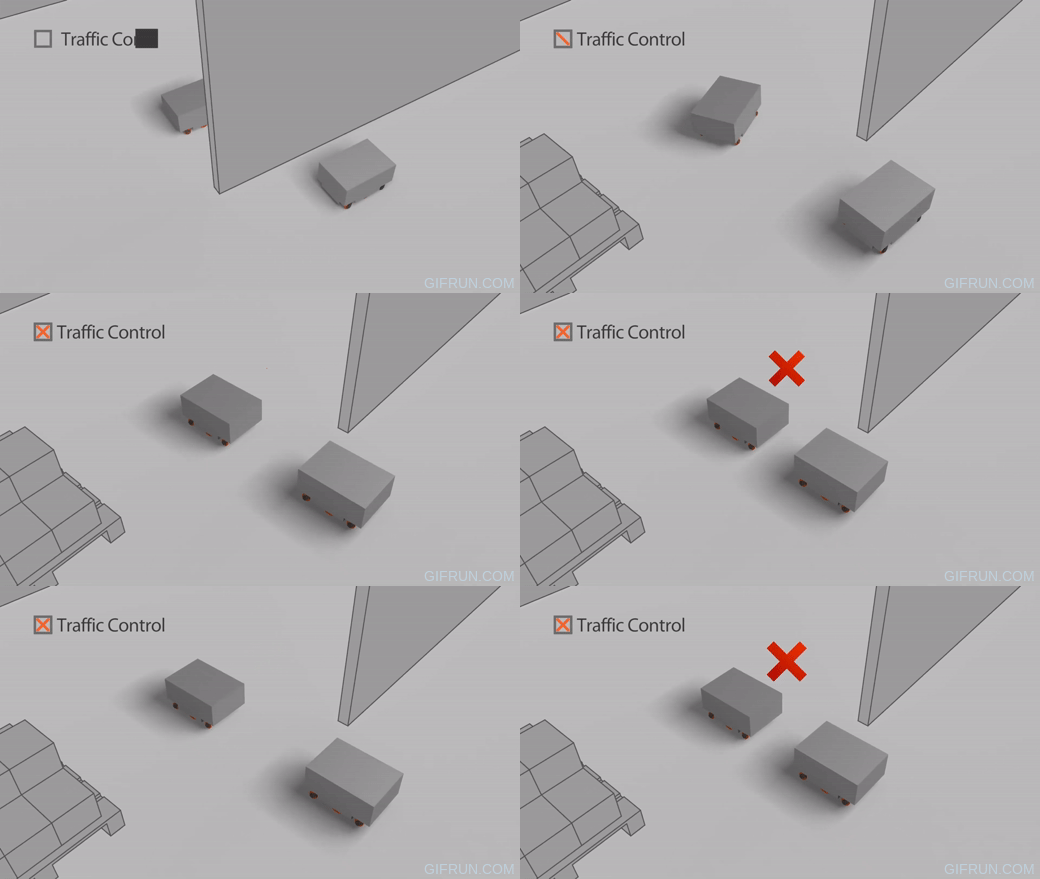
To maximize uptime, EM can update map information in batches. You can change map info or add new destinations without stopping the entire work environment.
EM also connects easily to IT systems like MES, ERP, and WHS to realize real-time work instructions for all robots.

Q5. They really are a role model. What about the charging and operating times?
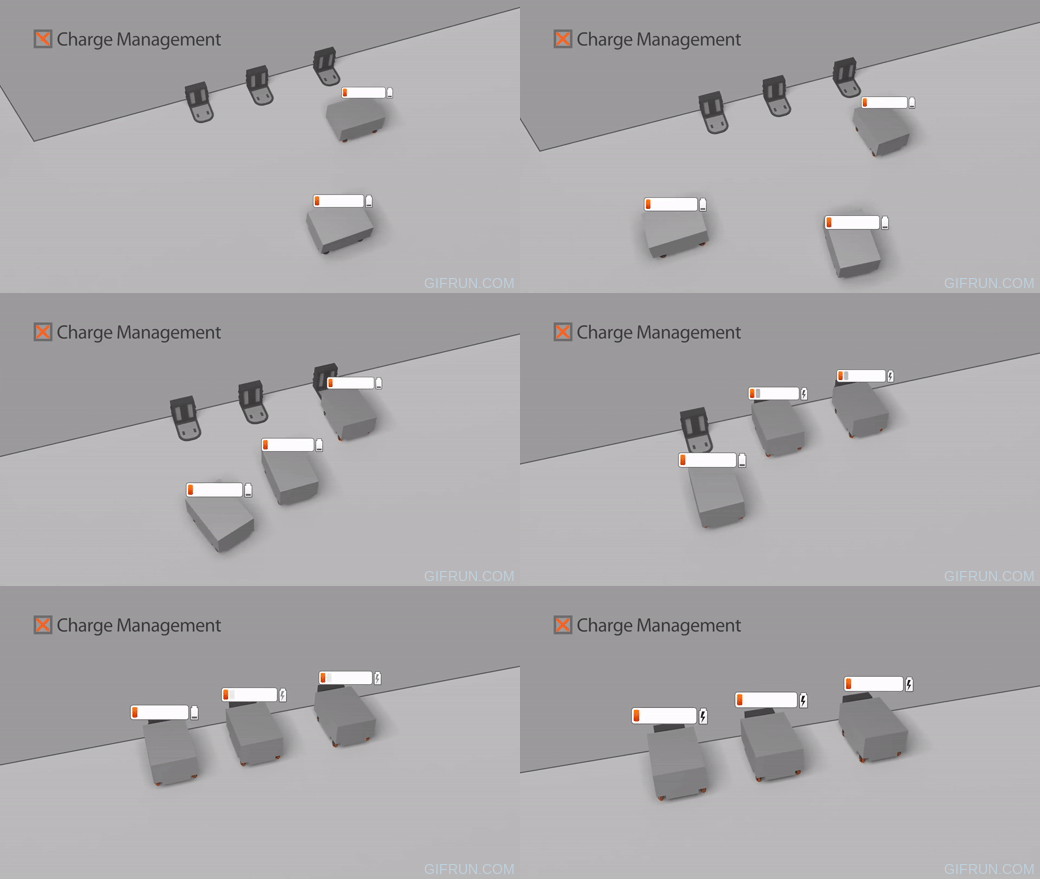
The OMRON LD-250 can run continuously for up to 13 hours on a 4-hour charge. Also, when the battery drops below 30%, the EM control system guides the robot to charge, so users don't need to worry about it. With a battery life of over 7 years, you won't have to worry about battery replacement for a long time after introduction.
Q6. It has great endurance too. It seems the LD series can be applied easily to various environments.
Yes. Because of their compact size, multiple AMR LD series units can be used in one location to work more efficiently. As mentioned, the LD series are autonomous robots that create their own maps and find optimal paths according to real-time changes. This prevents collisions and allows them to adapt easily to complex sites, which is why they are popular in narrow or crowded areas.
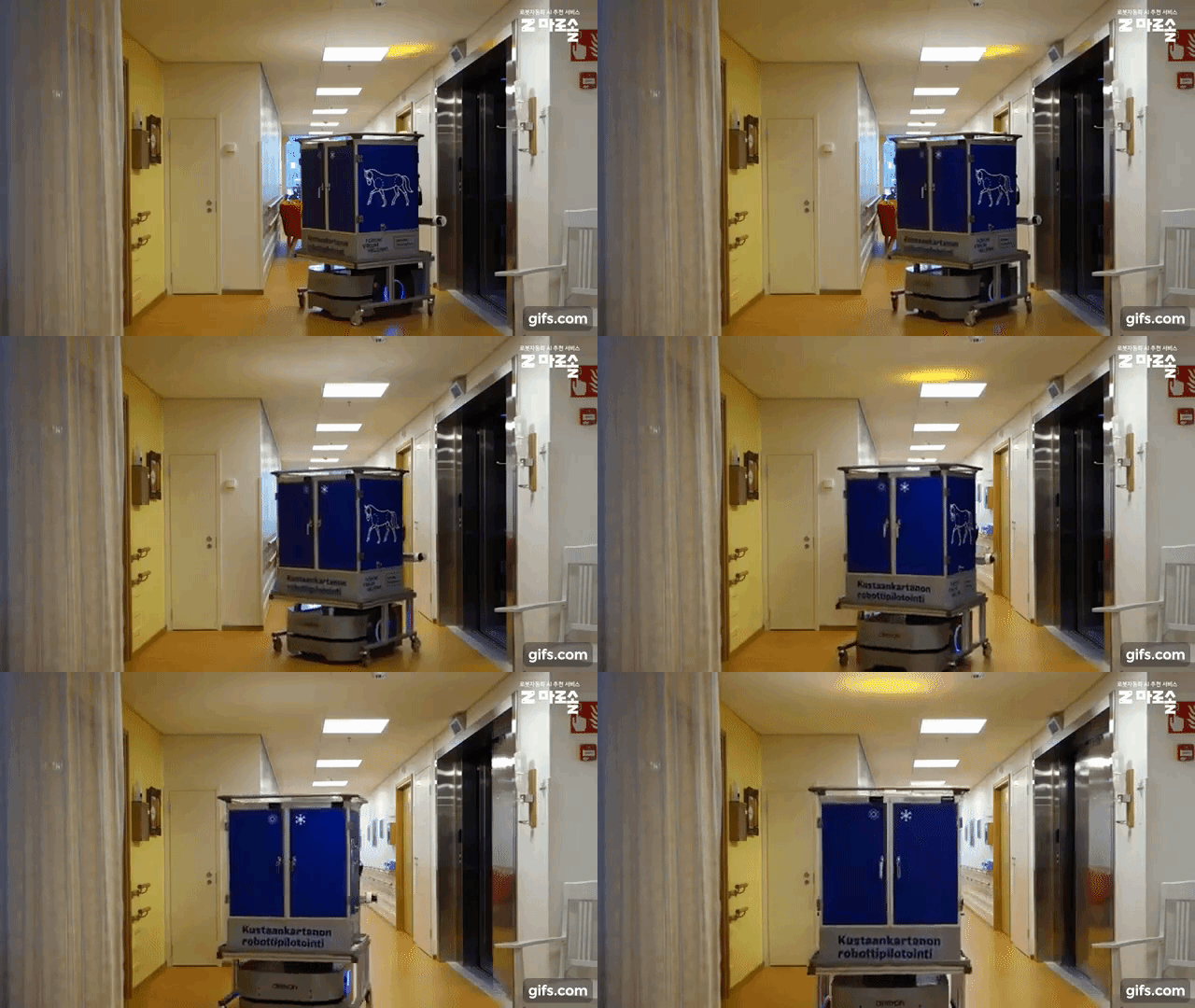
Also, the ability to move between floors via elevators significantly expands the automatic transport range of carts, which I think is its greatest advantage. 👍
Today, we took a detailed look at OMRON's LD series, which is making its mark in the logistics robot world, with robot expert Brian.
The Korean government is also aggressively promoting various demonstration projects related to logistics robots through policy support, so the growth of the domestic logistics robot market is expected to accelerate.
Visit the Marosol website now to check introduction cases and product details for the OMRON LD-60 AMR, LD-90 AMR, and LD-250 AMR! 👇👇👇
Readers also liked the following posts


Price Negotiation Available Now!
Additional discounts may be available depending on your needs.