

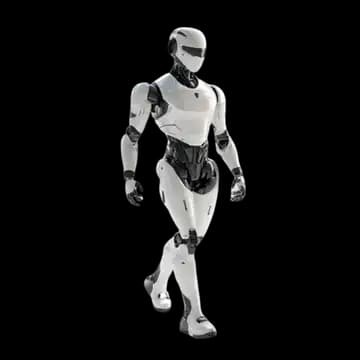
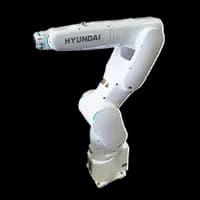
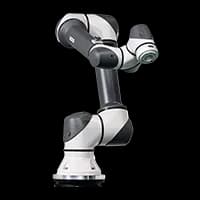

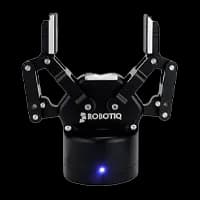
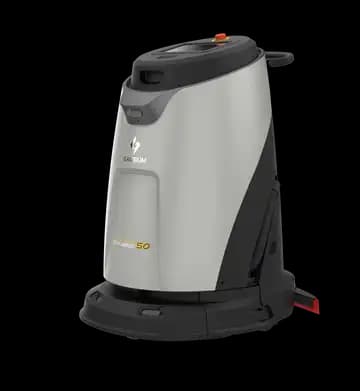

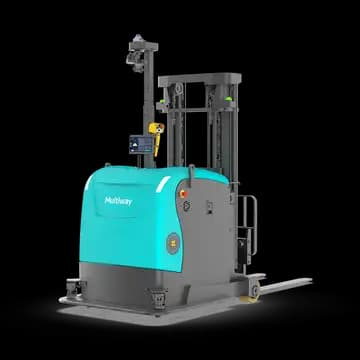
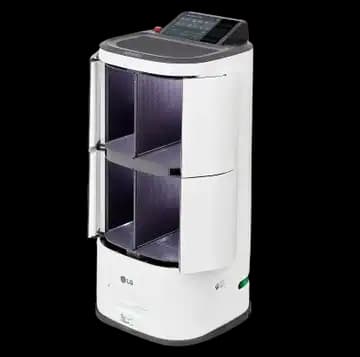

Curious about the robots deployed?
![[업계 최저가] YASKAWA GP250 (Payload : 250kg, Reach : 3490mm)](/_next/image?url=https%3A%2F%2Fd1fchzsdhim61l.cloudfront.net%2FStore%2Fthumbnail%2F191%2F775d76e3-2828-41ee-8d07-8c7d7f664023%2FGP250.png&w=256&q=75)
Process Overview
Korea & Company's palletizing solution prioritizes increased production volume and reduced workforce.
After removing the existing line consisting of only one palletizer, we secured production capacity by branching into two lines and configuring two palletizers. We also automated the styrofoam/plywood placement process, which was previously done manually, reducing the need for worker intervention so that one worker manages both lines.
Project Background and Purpose
Background:
The existing work method is structured such that the asymmetry between line production capacity and palletizing capacity requires workers to manually assist with the placement of styrofoam and plywood to meet production quotas. This results in extreme fatigue for workers due to the continuous input of 7kg of plywood, and the Logistics cycle experiences significant fluctuations because workers are forced to wait indefinitely until plywood is manually fed.
Major problems:
Palletizing quality instability and speed degradation caused by the manual process
Decline in productivity, increased worker fatigue, skilled worker issue
Objective
Improvement in production efficiency: Minimizing repetitive tasks through the introduction of improved robotic automation
Ensuring quality consistency: Ensuring quality consistency by minimizing manual intervention
Improvement of working environment: Reduction of worker fatigue and enhancement of safety
Components
| Robot | BYASAKAWA Industrial GP250 |
|---|---|
| Peripherals | Battery supply inline conveyor, distributor, battery multiple alignment conveyor, dedicated gripper, pallet conveyor, pallet feeder, diverter conveyor, plywood alignment stand, styrofoam supply magazine |
Workflow
| STEP 1. | Select the battery model and enter the quantity via the HMI |
|---|---|
| STEP 2. | Align the batteries on the conveyor according to the set quantity and wait for palletizing |
| STEP 3. | Transfer and secure the batteries to the palletizing position |
| STEP 4. | The robot aligns the plywood according to the number of layers specified in the recipe |
| STEP 5. | The 6-axis robot grips multiple batteries simultaneously |
| STEP 6. | The robot automatically stacks the gripped batteries onto the pallet |
| STEP 7. | Once a layer is complete, the system automatically seats the styrofoam and plywood |
| STEP 8. | Repeat the process until the number of layers specified in the recipe is reached |
※ The content provided by Bigwave Robotics is protected under U.S. and Canadian copyright and intellectual property laws. Unauthorized reproduction, distribution, or use of this content is strictly prohibited.
Recommended Use Cases

Cognex AI Vision: 4-Model Review 👀 Can This 3D AI Vision Read 255 Barcodes at Once?
Introducing four AI Vision solutions showcased by Cognex at the 2026 AW (Aircraft Automation Show). From simultaneous reading of 255 barcodes and 15-minute installation to deep learning cargo classification , check them out now if you are interested in Vision automation for logistics and manufacturing sites.

Bag Palletizing Solution using Hyundai Robotics HS220
Process Overview This application case features a paper bag palletizing solution that integrates a proprietary OP System with the Hyundai Robotics HS220. The self-developed OP System allows for flexible configurations based on pallet size and packaging characteristics, ensuring high operational efficiency. Leveraging years of expertise in delivering bag manufacturing equipment, we have implemented a responsible and stable palletizing system optimized for the production floor. Warranty: 1 Year Project Year: 2023 Project Duration: Subject to consultation Project Background & Objectives High-Speed Efficiency: The need for an efficient palletizing solution to match high-speed automated production lines. Flexibility: The requirement for a system that allows flexible setting changes to accommodate various product sizes.

Potenit Lift-type AMR for Home Appliance Part Rack Transfer
This logistics automation solution utilizes Potenit's Lift-type AMR to automatically transfer component racks for home appliances according to the manufacturing process sequence. Potenit's AMR solution can be deployed easily without additional infrastructure (such as magnetic tapes or floor markers) and responds flexibly to changes in factory layout or work positions. Through the proprietary MOS (Multi-Robot Operating System), operators can monitor real-time status and issue commands via mobile devices, tablets, or PCs. By automating material input and transfer across processes, idle time caused by preparation work has been reduced, leading to increased operational efficiency and productivity. This project was implemented as part of a Smart Factory advancement initiative to optimize worker movement, minimize production lead times, and increase overall production capacity to respond flexibly to shifting market demands.
Process Overview
Korea & Company's palletizing solution prioritizes increased production volume and reduced workforce.
After removing the existing line consisting of only one palletizer, we secured production capacity by branching into two lines and configuring two palletizers. We also automated the styrofoam/plywood placement process, which was previously done manually, reducing the need for worker intervention so that one worker manages both lines.
Project Background and Purpose
Background:
The existing work method is structured such that the asymmetry between line production capacity and palletizing capacity requires workers to manually assist with the placement of styrofoam and plywood to meet production quotas. This results in extreme fatigue for workers due to the continuous input of 7kg of plywood, and the Logistics cycle experiences significant fluctuations because workers are forced to wait indefinitely until plywood is manually fed.
Major problems:
Palletizing quality instability and speed degradation caused by the manual process
Decline in productivity, increased worker fatigue, skilled worker issue
Objective
Improvement in production efficiency: Minimizing repetitive tasks through the introduction of improved robotic automation
Ensuring quality consistency: Ensuring quality consistency by minimizing manual intervention
Improvement of working environment: Reduction of worker fatigue and enhancement of safety
Components
| Robot | BYASAKAWA Industrial GP250 |
|---|---|
| Peripherals | Battery supply inline conveyor, distributor, battery multiple alignment conveyor, dedicated gripper, pallet conveyor, pallet feeder, diverter conveyor, plywood alignment stand, styrofoam supply magazine |
Workflow
| STEP 1. | Select the battery model and enter the quantity via the HMI |
|---|---|
| STEP 2. | Align the batteries on the conveyor according to the set quantity and wait for palletizing |
| STEP 3. | Transfer and secure the batteries to the palletizing position |
| STEP 4. | The robot aligns the plywood according to the number of layers specified in the recipe |
| STEP 5. | The 6-axis robot grips multiple batteries simultaneously |
| STEP 6. | The robot automatically stacks the gripped batteries onto the pallet |
| STEP 7. | Once a layer is complete, the system automatically seats the styrofoam and plywood |
| STEP 8. | Repeat the process until the number of layers specified in the recipe is reached |
※ The content provided by Bigwave Robotics is protected under U.S. and Canadian copyright and intellectual property laws. Unauthorized reproduction, distribution, or use of this content is strictly prohibited.
Curious about the robots deployed?
Related Use Cases
Cognex AI Vision: 4-Model Review 👀 Can This 3D AI Vision Read 255 Barcodes at Once?
Bag Palletizing Solution using Hyundai Robotics HS220