


This welding automation solution utilizes the Panasonic Automatic Welding System (Active-TAWERS) to enable multi-angle welding of aluminum storage tanks.
By incorporating a positioner, the system can flawlessly perform tasks on large structures like silos or in locations that are difficult for human workers to reach. Implementing automation with the Panasonic system allows for the simultaneous achievement of high welding speeds and superior quality. Since the integrated welding system, robot, and positioner are provided as a single package, rapid installation and tuning are possible.
Components
| Robot |
|
|---|
Workflow
| STEP 1. | Loading: The aluminum tank components are secured onto the jig. |
|---|---|
| STEP 2. | Command: The operator initiates the process by clicking the work instruction button. |
| STEP 3. | Primary Welding: The robot performs the first stage of the welding task. |
| STEP 4. | Reorientation: The system moves the workpiece or robot to the next welding position. |
| STEP 5. | Subsequent Welding: Follow-up welding tasks are executed to complete the seam. |
※ The content provided by Bigwave Robotics is protected under U.S. and Canadian copyright and intellectual property laws. Unauthorized reproduction, distribution, or use of this content is strictly prohibited.
Recommended Use Cases

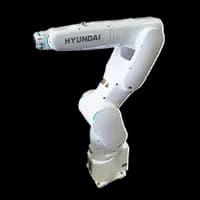
Deburring of Round Bar Products through Hyundai Robotics HH020
This is an automated deburring solution that utilizes the Hyundai Robotics HH020 to finish the machined sections of round bar products. The project was initiated to boost productivity and enhance quality by reducing the time required for the deburring process. Due to the nature of deburring, precise execution following the product's outer contours is essential. By performing high-precision operations from various angles, the system successfully shortened cycle times and contributed to significant quality improvements.

Pouch-to-Box Packing Automation with NACHI MZ07
This packaging automation solution utilizes the NACHI MZ07 robot to automate the process of packing pouch-type products into paper boxes. By leveraging this high-precision, high-speed industrial robot, the system can complete the packing of a single box in just 6 seconds, significantly boosting overall productivity.

Shaft Manufacturing Machine Tending through YASKAWA GP7
This automation solution utilizes the YASKAWA Motoman-GP7 to transfer shaft products that have completed their initial machining phase to the subsequent processing stage. The project was implemented to boost productivity by reducing standby and idle times while enhancing workplace safety by removing workers from high-risk environments. Transferring workpieces between machining stages is a process with a high potential for safety accidents. By automating this transition, the system eliminated hazards and shortened production lead times through continuous operation. With 18 units currently in operation, this project has significantly contributed to reducing fixed costs, such as labor expenses, by decreasing the required workforce by approximately 40 personnel across day and night shifts.
This welding automation solution utilizes the Panasonic Automatic Welding System (Active-TAWERS) to enable multi-angle welding of aluminum storage tanks.
By incorporating a positioner, the system can flawlessly perform tasks on large structures like silos or in locations that are difficult for human workers to reach. Implementing automation with the Panasonic system allows for the simultaneous achievement of high welding speeds and superior quality. Since the integrated welding system, robot, and positioner are provided as a single package, rapid installation and tuning are possible.
Components
| Robot |
|
|---|
Workflow
| STEP 1. | Loading: The aluminum tank components are secured onto the jig. |
|---|---|
| STEP 2. | Command: The operator initiates the process by clicking the work instruction button. |
| STEP 3. | Primary Welding: The robot performs the first stage of the welding task. |
| STEP 4. | Reorientation: The system moves the workpiece or robot to the next welding position. |
| STEP 5. | Subsequent Welding: Follow-up welding tasks are executed to complete the seam. |
※ The content provided by Bigwave Robotics is protected under U.S. and Canadian copyright and intellectual property laws. Unauthorized reproduction, distribution, or use of this content is strictly prohibited.