

Process Overview
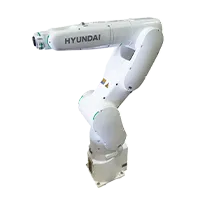
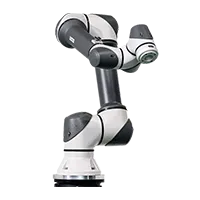
This solution is an assembly automation system that automates hazardous EV PTC heater assembly using Hyundai Robotics collaborative robots (YL012) and industrial robots (HH7, HH020).
This project was implemented to safely automate hazardous high-voltage/high-current operations and enable 24/7 production of automotive PTC heaters.
By unmanning high-voltage/high-current processes, the solution increased productivity through 24-hour operation and reduced the defect rate.
Components
| Robot |
|
|---|---|
| Peripherals |
|
Workflow
| STEP 1. | (1st robot) Bar material loading |
|---|---|
| STEP 2. | (1st robot) Transfer of loaded pallet jig |
| STEP 3. | (2nd robot) Load flexible material onto the bar |
| STEP 4. | (2nd robot) Transfer to infeed jig |
| STEP 5. | (3rd robot) Transfer bar & flexible material to silicone dispensing process |
| STEP 6. | (4th robot) Perform silicone dispensing on the material |
| STEP 7. | (5th robot) Assemble and inspect components after loading into curing equipment |
| STEP 8. | (6th robot) Discharge inspected products |
※ The content provided by Bigwave Robotics is protected under U.S. and Canadian copyright and intellectual property laws. Unauthorized reproduction, distribution, or use of this content is strictly prohibited.
Recommended Use Cases

Automated Electric Vehicle Console Assembly with EPSON SCARA Robots! 🦾
Process Overview Bigwave Robotics (Marosol) established an automated assembly line for console parts for Kia Motors' newly launched SUV-type electric vehicle. The existing console assembly line is a large-scale assembly line, requiring an average of 40-60 workers to assemble manually. The lack of automation experience presented challenges in securing space and recruiting assembly workers. Frequent staff turnover and resulting skill level issues hindered productivity. To address this, the company replaced some workers with robots, addressing the labor shortage and consistently ensuring productivity by adapting to the changing workforce. Warranty Period 1 Year Performance Year 2024 Project Duration 4 Months Project Background and Objectives Building a multi-product automated production line and reducing labor costs through robotic automation Preventing mis-assembly and mis-assembly using a lot-of-lot system and ensuring traceability Remote control and integrated management using SOLlink

Automotive Harness Component Assembly with a Vibratory Feeder and EPSON C4L
Process Overview This solution assembles automotive harness components using a vibratory feeder combined with an Epson C4L robot and a vision system. Bulk-fed parts are separated by the vibratory feeder, and the separated parts are located through vision for picking. By quickly separating, detecting, and picking parts in line with production speed, productivity can be improved.

AI Vision + Industrial Robot for 2D Picking Automation 🦾 (CTR 2D Picking System Case)
Process Overview A robot vision picking system using robots and AI vision for industrial pick-and-place operations. A smart conveyor provides flexible part feeding, while AI-based vision inspects parts and captures key information such as position. This enables fast and accurate robot-integrated pick-and-place automation. Company Introduction Company name: CTR Robotics Established: April 2, 2012 Location: 21, 333beon-gil, Gwahangsan-dong, Gangseo-gu, Busan, Korea Competitiveness Total solution capabilities for automation equipment manufacturing Extensive experience and skilled workforce in custom system design, control, and installation Robotics automation solutions aligned with leading industry trends Mass-production deployment experience for intelligent equipment using robot vision Advanced development capabilities and standardization expertise through PoC projects In-house R&D team dedicated to advanced technology development
Process Overview
This solution is an assembly automation system that automates hazardous EV PTC heater assembly using Hyundai Robotics collaborative robots (YL012) and industrial robots (HH7, HH020).
This project was implemented to safely automate hazardous high-voltage/high-current operations and enable 24/7 production of automotive PTC heaters.
By unmanning high-voltage/high-current processes, the solution increased productivity through 24-hour operation and reduced the defect rate.
Components
| Robot |
|
|---|---|
| Peripherals |
|
Workflow
| STEP 1. | (1st robot) Bar material loading |
|---|---|
| STEP 2. | (1st robot) Transfer of loaded pallet jig |
| STEP 3. | (2nd robot) Load flexible material onto the bar |
| STEP 4. | (2nd robot) Transfer to infeed jig |
| STEP 5. | (3rd robot) Transfer bar & flexible material to silicone dispensing process |
| STEP 6. | (4th robot) Perform silicone dispensing on the material |
| STEP 7. | (5th robot) Assemble and inspect components after loading into curing equipment |
| STEP 8. | (6th robot) Discharge inspected products |
※ The content provided by Bigwave Robotics is protected under U.S. and Canadian copyright and intellectual property laws. Unauthorized reproduction, distribution, or use of this content is strictly prohibited.
Related Use Cases
Automated Electric Vehicle Console Assembly with EPSON SCARA Robots! 🦾
Automotive Harness Component Assembly with a Vibratory Feeder and EPSON C4L