

Process layout
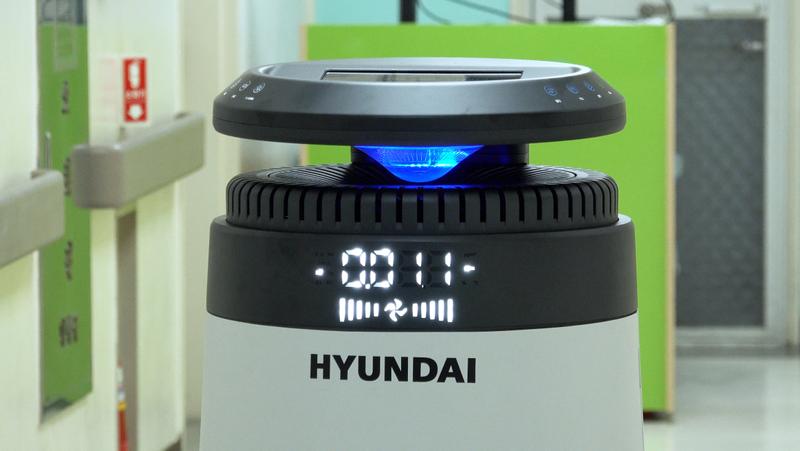
Hyundai Robotics' disinfection robot D1 is a solution that performs disinfection, air sterilization, and cleaning tasks in indoor spaces such as large shopping malls, museums, office buildings, and workplaces.
This is a sterilization method that inactivates the molecular structures of viruses and allergens in the air by generating a large amount of plasma through the Bipolar Ionization technology of the disinfection robot D1.
UV-C radiation has been proven effective in inactivating the SARS-CoV-2 virus, which causes COVID-19.
Project Background and Objective
Increased risk of pandemics caused by infectious diseases after COVID-19
Solving problems caused by the intensification of environmental issues such as fine dust and harmful gases
Components
| Robot | HYUNDAI Disinfection Robot Robot D1; - 10.1-inch touchscreen; - Weight: 75kg; - Dimensions: 58x58x129cm; - Operating time: 5–8 hours; - Charging time: 2 hours; - Disinfection Robot area: 152㎡ (46 pyeong); |
|---|---|
| Peripherals | Plasma module (air purification); Robot control unit (10.1-inch touchscreen, LED indicator); Circular triple filter (air purification, triple filter); UVC LED (floor sterilization); |
Workflow
| STEP 1. | Register a disinfection schedule |
|---|---|
| STEP 2. | Sterilize the air while moving along the optimal path |
| STEP 3. | (If necessary) Move to a designated location and perform immediate disinfection |
Features
Powerful disinfection performance
A method of sterilization that uses Bipolar ionization technology, a type of plasma sterilization, to inactivate the molecular structures of airborne viruses, allergens, and causative agents such as COVID-19.
UV-C provides strong sterilization with environmentally friendly light using ultraviolet wavelengths in the 200~280m range that have a sterilization effect.
Indoor autonomous driving-based robot
With 8 types of sensors including a 2D laser scanner and a 3D camera, as well as voice interaction, an artificial intelligence platform and an automatic charging system have been applied.
Differentiated sterilization function
Verified sterilization of 8 types of surfaces (UV-C) (Staphylococcus aureus, Escherichia coli, Streptococcus pneumoniae, MRSA, Pseudomonas aeruginosa, Streptococcus, Bacillus, Candida)
Capable of purifying and deodorizing bacteria, viruses, ozone, and odors (Influenza A (H1N1), 0.0017 ppm, fine dust (PM1.0/2.5/10.0), acetic acid, acetaldehyde, ammonia, toluene, formaldehyde)
Warranty Period: 1 year
Unauthorized copying or reproduction of any content on Marosol may violate the Unfair Competition Prevention Act and Copyright Act.
Curious about the robots used?
Recommended Solution

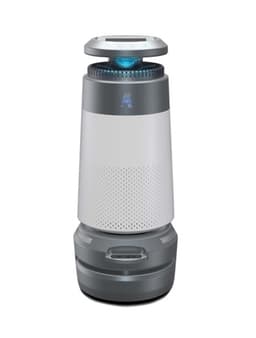
Large Hospital Sterilization and Goods Transportation using Twinny Nargo and Bykiller
This sterilization robot is a 2-in-1 autonomous logistics capable of transporting essential supplies for large hospital while simultaneously completing Disinfection within wards. The Nargo Bykiller solution utilizes triple safety sensors and autonomous driving technology to safely perform tasks even in crowded and complex indoor environments. Furthermore, equipped with a powerful three-stage air purification function, it offers excellent sterilization, deodorization, and harmful gas decomposition effects even while in motion. By automating the supply and collection of items for each department, it allows hospital staff to focus more on patient care. It offers a double benefit: in these times of heightened concern over infectious diseases like COVID-19, it enables Hospital visitors to visit with peace of mind. This project was undertaken not only to prevent the spread of infectious diseases such as COVID-19 through air purification and sterilization, but also to eliminate concerns about viral infection by introducing a reassuring sterilization solution for Hospital visitors. Following the project, work fatigue caused by increased patient care was reduced by minimizing hospital travel distances, and customer responsiveness was enhanced through efficient division of labor.

Hyundai Robotics D1 - Hallym University Sacred Heart Hospital Disinfection Robot
This is an example of the installation of Hyundai Robotics D1's disinfection robot, a project conducted by Bigwave Robotics (Marosol) with Hallym University Sacred Heart Hospital in Pyeongchon as a large-scale robot convergence model demonstration project. With the installation of the robots responsible for disinfection, it is transforming into a hospital that provides more advanced services.

Marosol: Comprehensive Robot Integration at Pyeongchon Hallym University Sacred Heart Hospital (Guide / Delivery / Disinfection / Multidisciplinary / Home Care Robots)
This project, conducted by Bigwave Robotics (Marosol) in collaboration with Pyeongchon Hallym University Sacred Heart Hospital, serves as a large-scale demonstration of a robot convergence model featuring various service robots. By integrating Delivery Robots for medications and specimens, Consultation Robots for multidisciplinary treatment, Disinfection Robots for hospital hygiene, and Home Care Robots for remote patient support, the hospital is transforming into a smart medical facility providing next-generation services.