


Why on Earth Should We Automate with Robots?🤔 Smart Factory / Logistics Automation / Yujin Robot / GoCart 180
2 min read0294
Smart Factory / Logistics Automation / Yujin Robot / GoCart 180
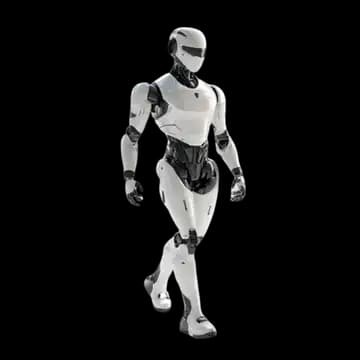
The coexistence of humans and robots is no longer a story of the distant future.👀 From frying chicken instead of people to tirelessly moving heavy materials and easily performing precise welding tasks, robots are now so common that meeting them anywhere is not strange at all. In factories, robots have already been deployed to various sites to replace dangerous tasks or jobs where accuracy is critical.🤖
In particular, Korea is one of the countries that utilizes robots the best. According to the "2022 World Robot Report" recently released by the International Federation of Robotics (IFR), Korea's industrial robot density in 2021 recorded 1,000 units. This is an increase of 68 units (7%) from 932 in 2020, making Korea the only country in the world where robot density has risen to four digits.👍
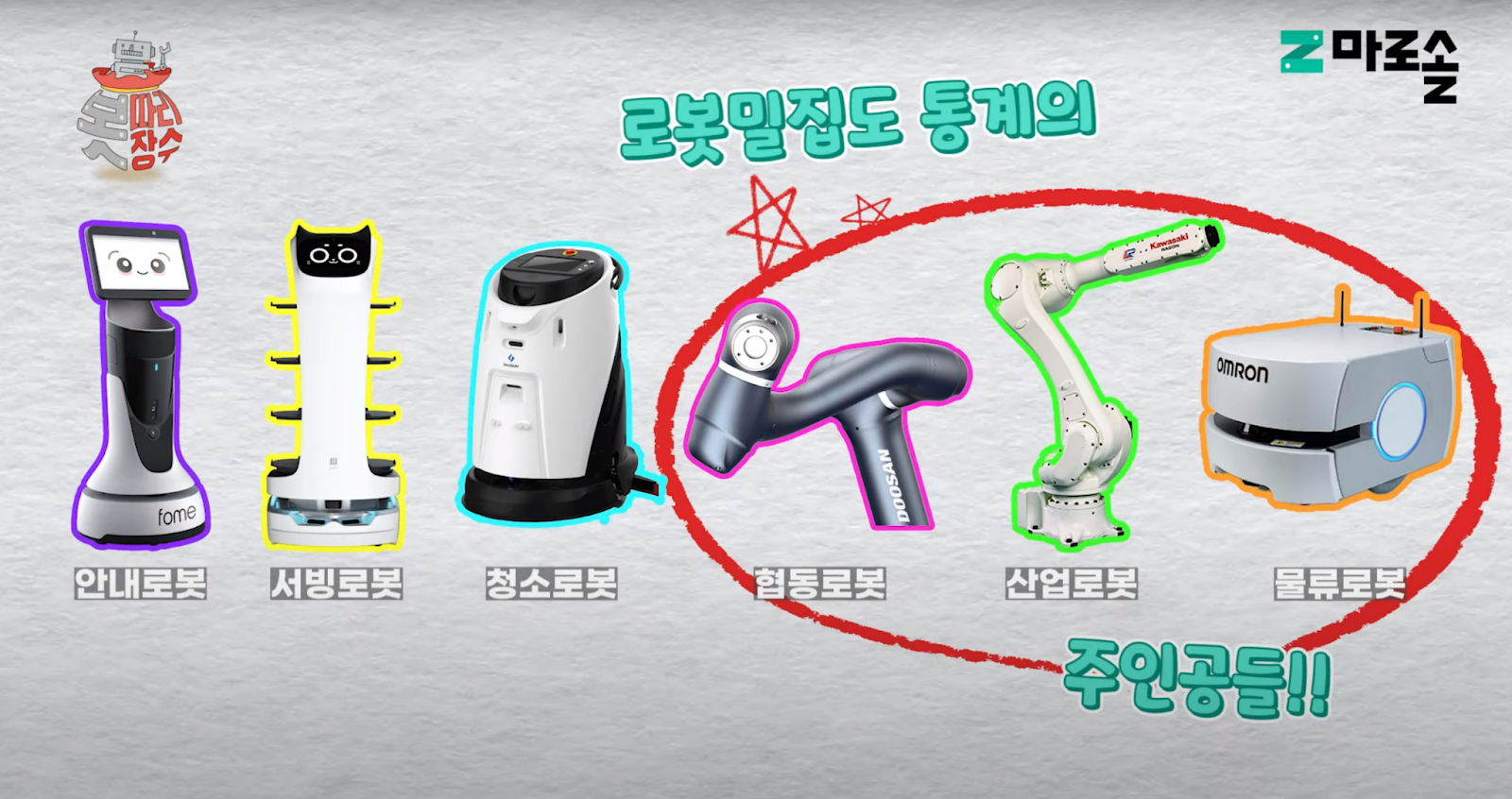
Not only industrial robots but also the utilization of logistics robots and collaborative robots is measured to be very high. Recently, Coupang filled an entire factory with logistics robots for faster Rocket Delivery, and companies like Rainbow Robotics, in which Samsung Electronics invested nearly 60 billion KRW, or the recently listed Doosan Robotics, are selling collaborative robots like wildfire.
What on earth are companies doing with these robots that simply look like robot arms or boxes that they are rushing to invest in and introduce them?🤔
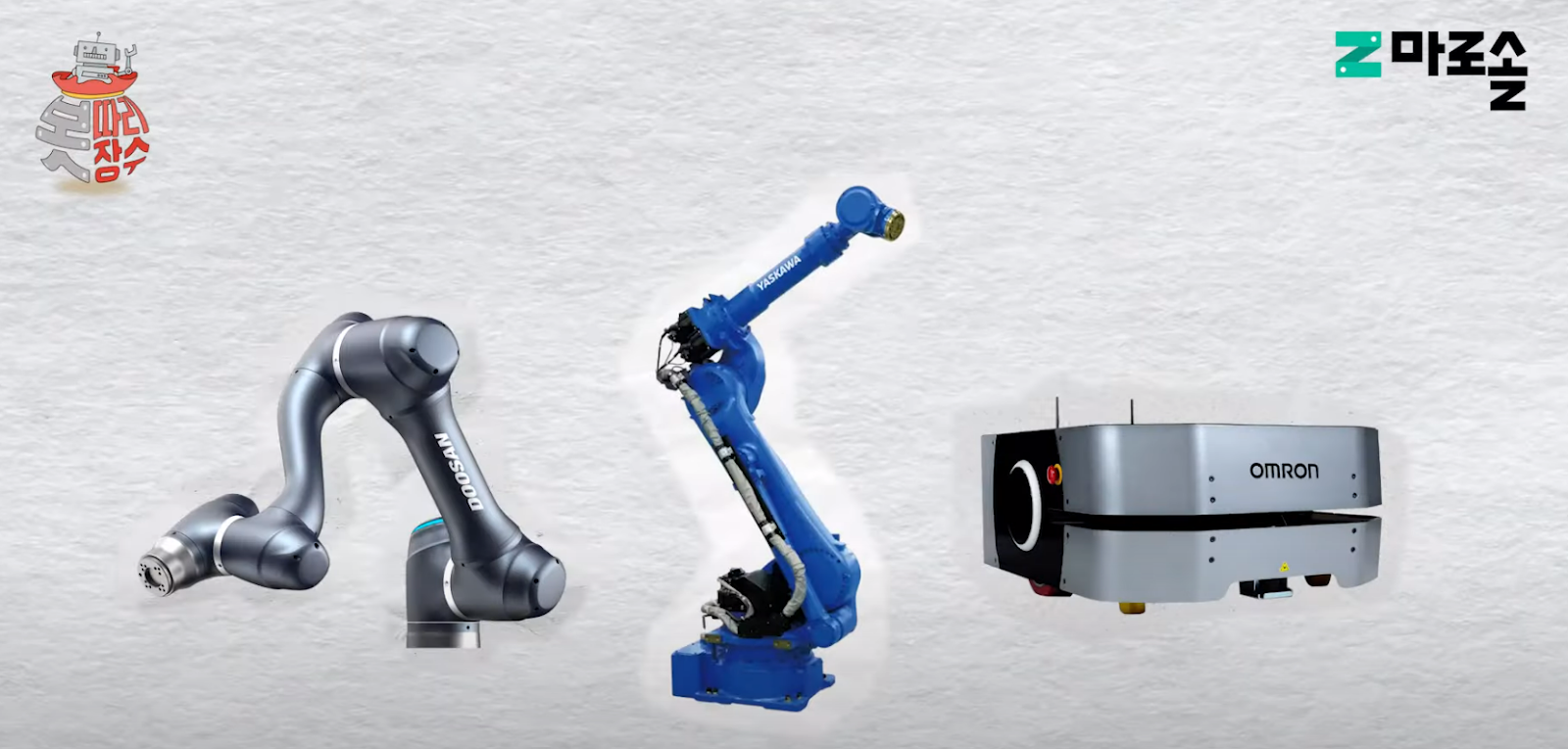
Because they are the arms and legs of the smart factory! 🦾 🦿
This is because the aforementioned robots play the role of arms and legs when building a smart factory. A smart factory refers to a factory that optimizes manufacturing processes and increases productivity by utilizing technologies such as artificial intelligence, big data, the Internet of Things, and robots. In other words, humans, robots, and artificial intelligence work in harmony, and the entire factory operates like a single entity.
With the addition of the Korean government's policies, interest in smart factories is growing even more.📈 This year, the Ministry of SMEs and Startups provided 146.2 billion KRW to support smart manufacturing innovation for small and medium-sized enterprises.
What are the benefits when robots play the role of arms and legs in a smart factory? 👇
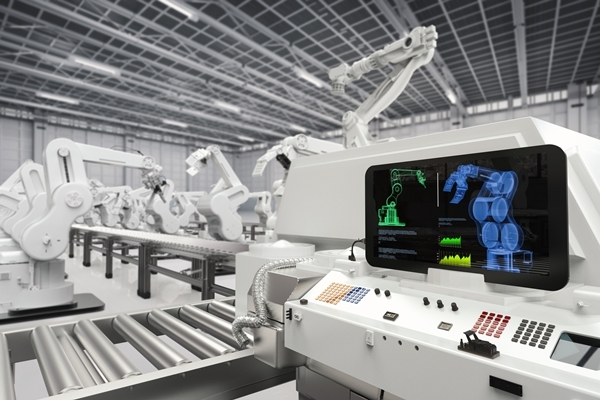
The core of smart factory solutions is data integration. [Photo=dreamstime]
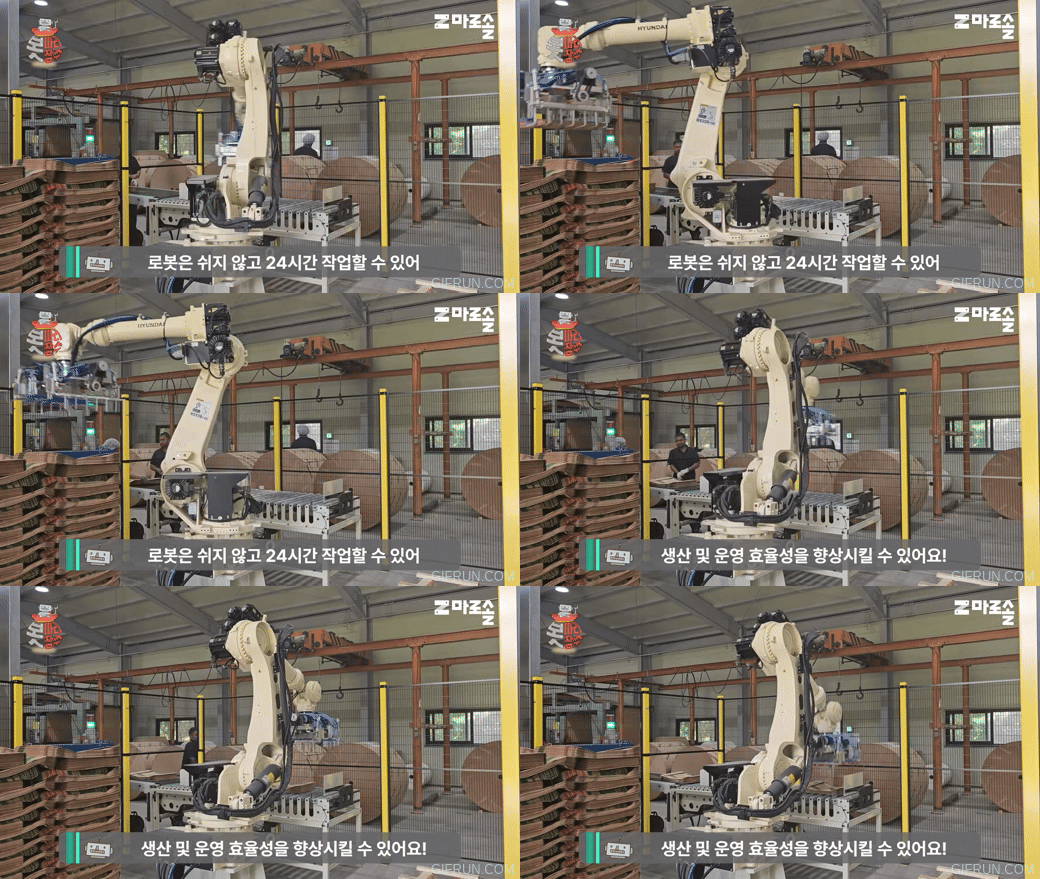
First, productivity improvement. Robots can work 24 hours a day without rest, improving production and operational efficiency. When checking the performance of 12,660 companies that achieved automation between 2014 and 2019, productivity improved by 34.7%, costs fell by 32.3%, and sales rose by an average of 9.5%. Since a robot finishes a task in 9 seconds that takes a person an average of 30 seconds, this is a natural result.
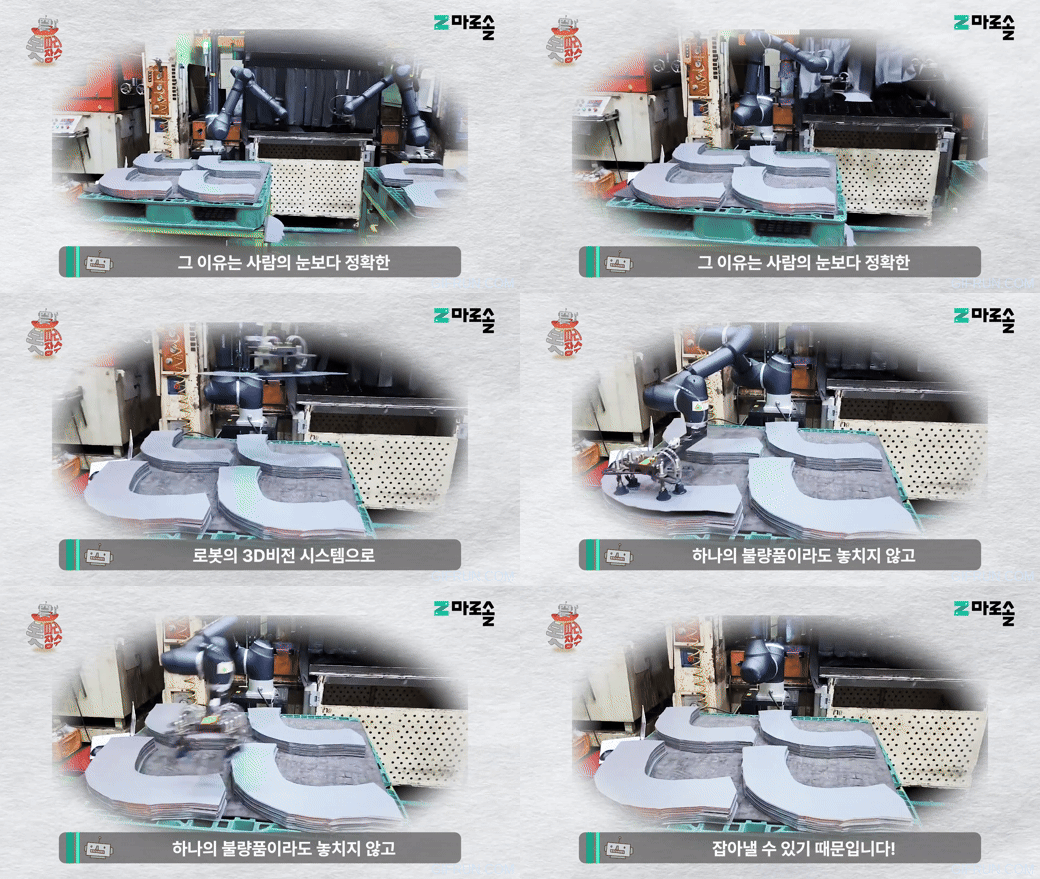
Second, product quality improvement. Robots can perform repetitive tasks with consistent precision to improve product quality and reduce defects. As you can see in the data, the average product quality improvement of 12,660 companies increased by 48.4%. The reason is that a robot's 3D vision system, which is more accurate than the human eye, can catch and identify even a single defective product without missing it.
Third, Increased safety. Robots can easily work in environments dangerous for humans, such as handling hazardous materials, working in extreme temperatures, or performing tasks with a risk of injury. When investigating the industrial accident rate of companies that introduced robots between 2014 and 2019, you can see a 33% reduction. To prevent serious accidents, the introduction of robots is essential, right?

Click to view more details about Manufacturing robot solutions.
In addition, there are many advantages such as production line expansion, cost reduction, and environmental benefits. Honestly, robot automation might not be well understood just with these verbal explanations of benefits. So, we have prepared an actual robot automation case achieved by the robot total solution company Marosol.

Recently, there is a company that successfully achieved automation by introducing logistics robots. It is "Bara," a plastic food container manufacturer. Bara produces plastic injection-molded containers using 21 injection molding machines, producing various plastic containers such as cookie sheets, yogurt sheets, and ramen bowl sheets.
What was the motivation for Bara to introduce logistics robots? Let's find out in detail from why they introduced robots to how they are currently utilizing them with Marosol robot expert Hwi-yong!👇
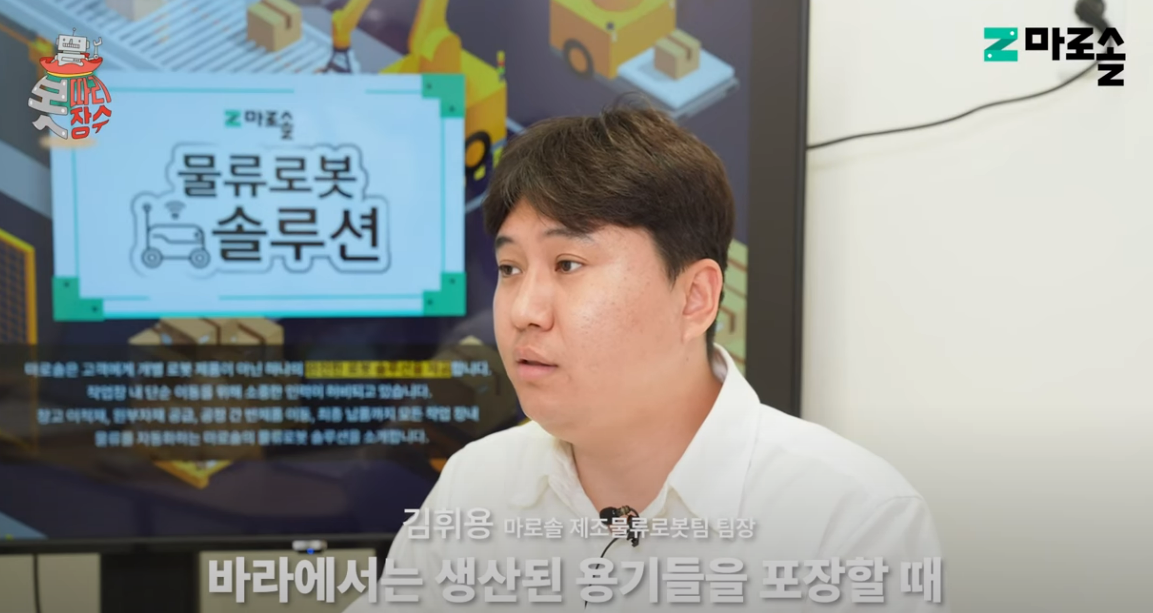
Q1. Hello, Hwiyong! What motivated Baraga, a plastic food container manufacturer, to adopt logistics?
Hwi-yong: At Bara, when packing produced containers, workers moved to each injection molding machine and then transferred the products to boxes. However, after establishing a new factory, the number of injection molding machines increased, the distance between the machines became farther, and the workers' movement distance also became longer, which hindered work efficiency. It is said that they spent most of their working time moving, and their fatigue worsened rapidly, so they considered robot automation.

Q2. So, you considered automation to reduce worker fatigue caused by increased travel distances. What is the automation scenario proposed by Marosol?
Hwi-yong: When food containers are injection-molded in the machine, they are discharged to a conveyor. When a certain amount of produced containers is made, the robot is called automatically. Then, when the conveyor on the injection molding machine side and the conveyor attached to the top of the logistics robot combine, the products are transferred to the robot. The logistics robot, fully loaded with products, automatically moves to the shipping conveyor, and then the waiting worker proceeds with packing.

Click to view more details about Logistics robot solutions.
If automation is achieved according to the scenario, the robot takes over the repetitive task of the worker directly pulling a cart to the shipping location, lowering worker fatigue and increasing work efficiency by reducing movement time.
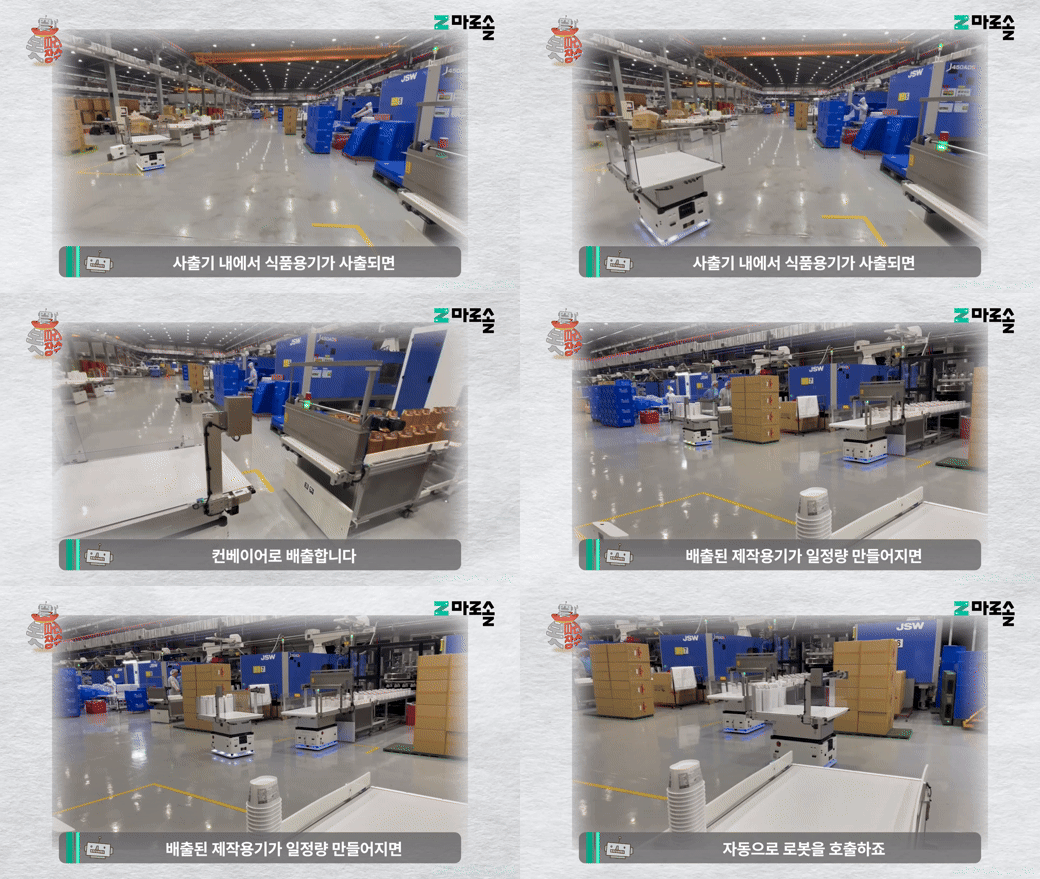
Q3. If everything proceeds exactly as planned, the added value must be enormous! Was the automation successfully implemented?
Hwi-yong: Yes, Bara was satisfied with the scenario proposed by Marosol, and the design and production required for automation proceeded for a total of 6 months. Currently, a total of 2 logistics robots are smoothly performing tasks along with the workers.
Q4. It seems the implementation was successful! What types of logistics were introduced at Bara?
Hwi-yong: It is Yujin Robot's GoCart 180. Yujin Robot is a company specializing in autonomous driving solutions that is currently receiving much interest even in terms of stock price. Yujin Robot is recognized globally for its technology as well as safety, even holding the international standard ‘ISO 13482’.
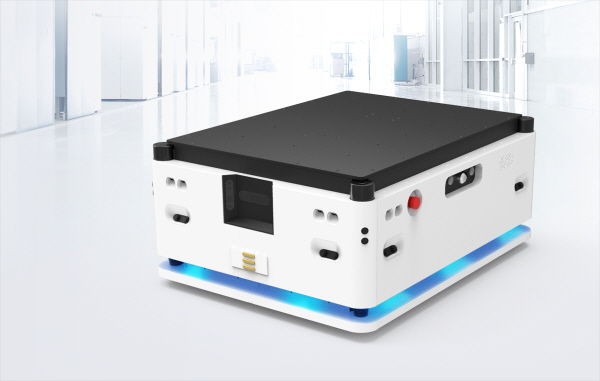
Q5. So, it was the Logistics from Eugene Robot that is hot in the stock market! Is there a reason why you recommended the Eugene Robot GoCart 180?
Hwi-yong: The versatility of GoCart is truly extensive. In addition to manufacturing processes and logistics warehouses, it can be used in various fields such as airports, hospitals, and smart buildings. The loading box that holds the load is also replaceable, so it can be utilized for various purposes.👍
Also, if you link Solink, which was independently developed by Marosol, GoCart can call elevators itself to move freely between floors and pass through automatic doors at will.
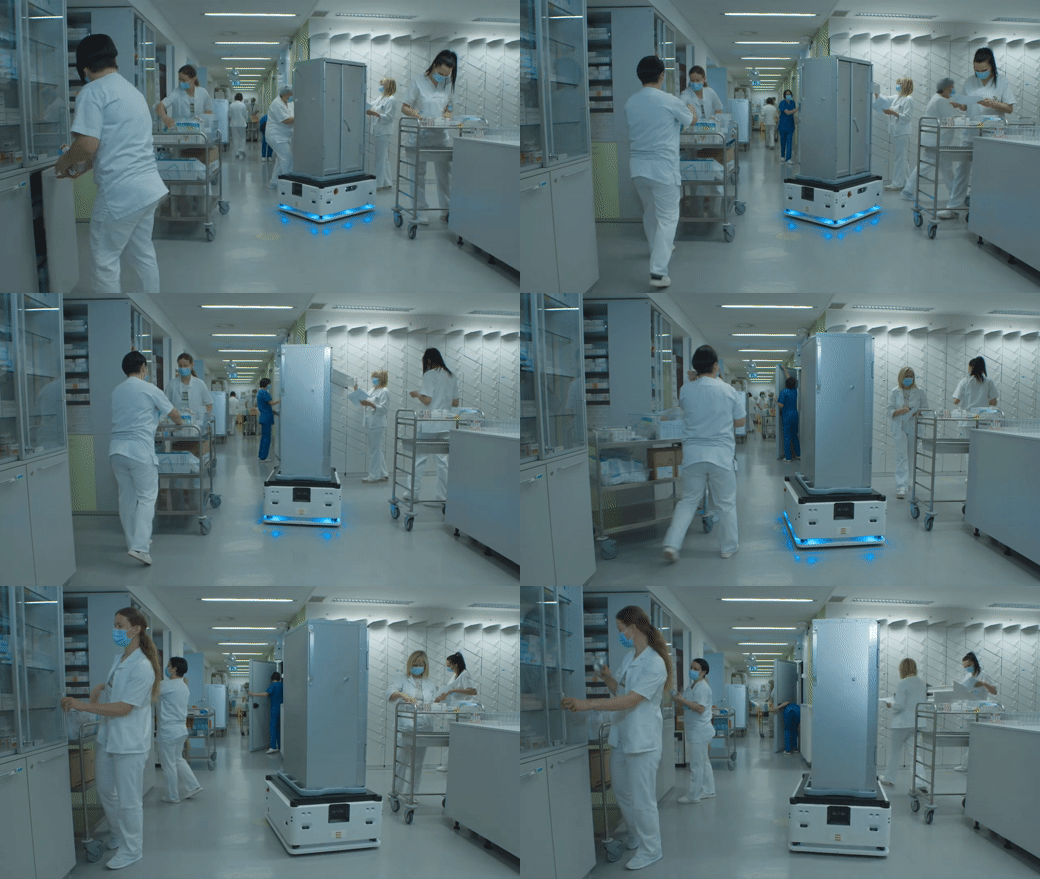
From Bara's perspective of having to work with people, they also viewed safety as important. GoCart is equipped with a 3D LiDAR sensor independently developed by Yujin Robot. Through this, it has higher precision than logistics robots equipped with 2D LiDAR sensors and can implement accurate autonomous driving even if the environment changes.
Therefore, precise driving and obstacle avoidance are possible without installing driving auxiliary tools such as magnetic lines or markers installed for using existing transport platform services. Also, it can accurately analyze space using stereo cameras, ultrasonic sensors, etc.

Q6. What are the points that improved for Bara after automation?
Hwi-yong: There seem to be three main differences before and after the robot introduction. First is the worker's movement distance. Before the robot introduction, a worker had to walk a maximum of over 2km per hour, but after introducing the robot, it was reduced to 200m per hour.
Second is the number of injection molding machines one worker is in charge of. Before introduction, the number of injection molding machines per person was a maximum of 3, but after the robot was introduced, it increased to 5. It is said that production also rose by 20%.

Click to view more details about Logistics robot solutions.
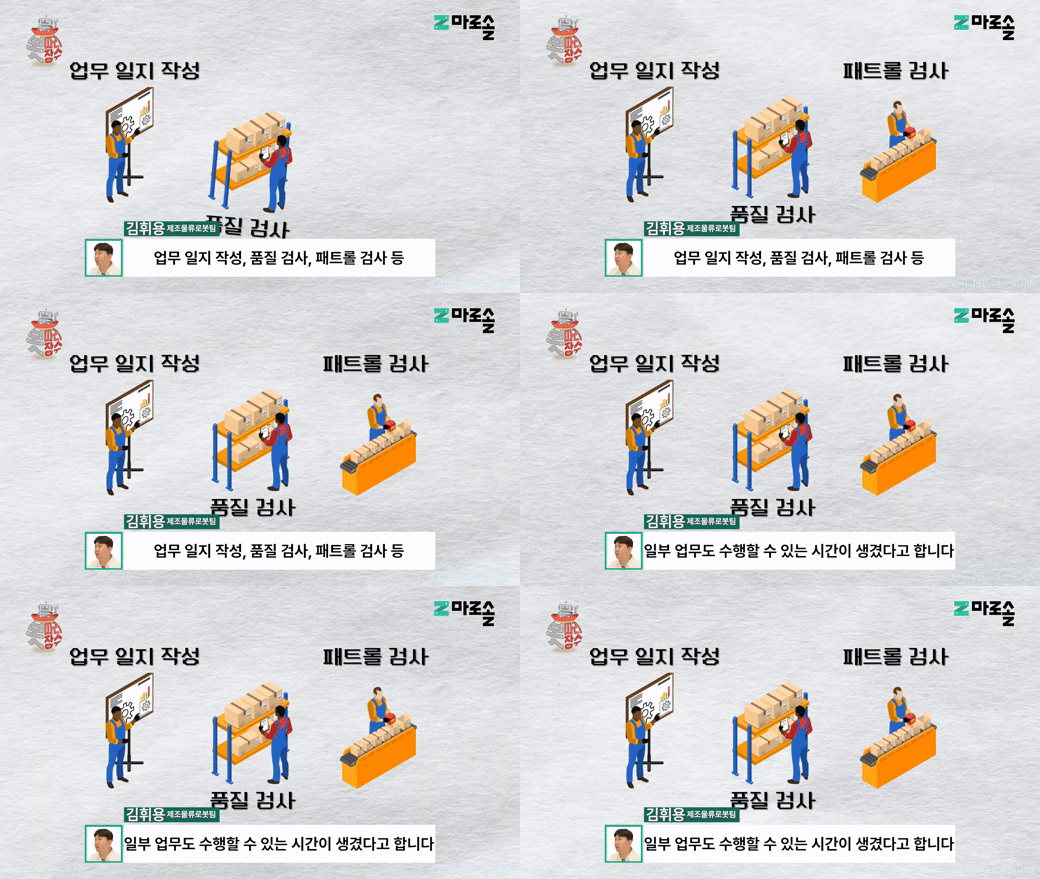
Lastly, workers have gained free time. Before the robot introduction, there was no break time, but after the robot was introduced, they can rest at the packing station during the time spent waiting for product delivery, and they have time to perform some tasks such as writing work logs, quality inspections, and patrol inspections.
Q7. Is there a reason why Marosol excels at robotic automation?
Hwi-yong: To lead robot automation successfully, a robot total solution is needed. The total solution has three stages: introduction consulting, solution design, and follow-up management. Marosol has built up its capabilities to perform these three stages best in the robot industry.
First, you can meet robot introductions at the lowest price at Marosol. To solve the price problem, which is the biggest concern for companies, Marosol developed robot financial products for the first time, allowing robots to be purchased through leasing, rental, or 12-month interest-free installments. Also, by purchasing robots in bulk directly from manufacturers, solutions can be implemented at the industry's lowest prices.

Furthermore, automation experts with a total of over 40 years of experience, including experience in major corporate automation projects, reside at Marosol. Since these experts directly design and implement robot solutions, reliable automation can be achieved in a short period.👏
Recognized for these capabilities, Marosol has been able to stand tall as a leader in robot total solutions, performing more than 60 projects annually and achieving annual sales of over 10 billion KRW.
Click to view the Logistics solution page.
For those who want to utilize a robot perfectly suited for their factory but cannot visualize how to systematically replace tasks, or those who have a desired process concept but are looking for a company that can realize it economically, Marosol, a company specializing in robot total solutions, can be the solution.🤗
If you click the image above, you can check Marosol's solution capabilities in detail along with case study videos.☝
Readers also liked the following posts


Price Negotiation Available Now!
Additional discounts may be available depending on your needs.