


7-Axis vs. 6-Axis Collaborative, What's the Difference? Comparison of AI-Based Intelligent Collaborative
1 min read0483
We Compare Two Types of AI-Based Intelligent Collaborative Robots in Detail
Neura Robotics MAiRA (7-axis) vs. Elephant Robotics myCobot 280 (6-axis)
When trying to bring a robot arm into a laboratory, people often worry, “Which model would actually fit our experiments well?”
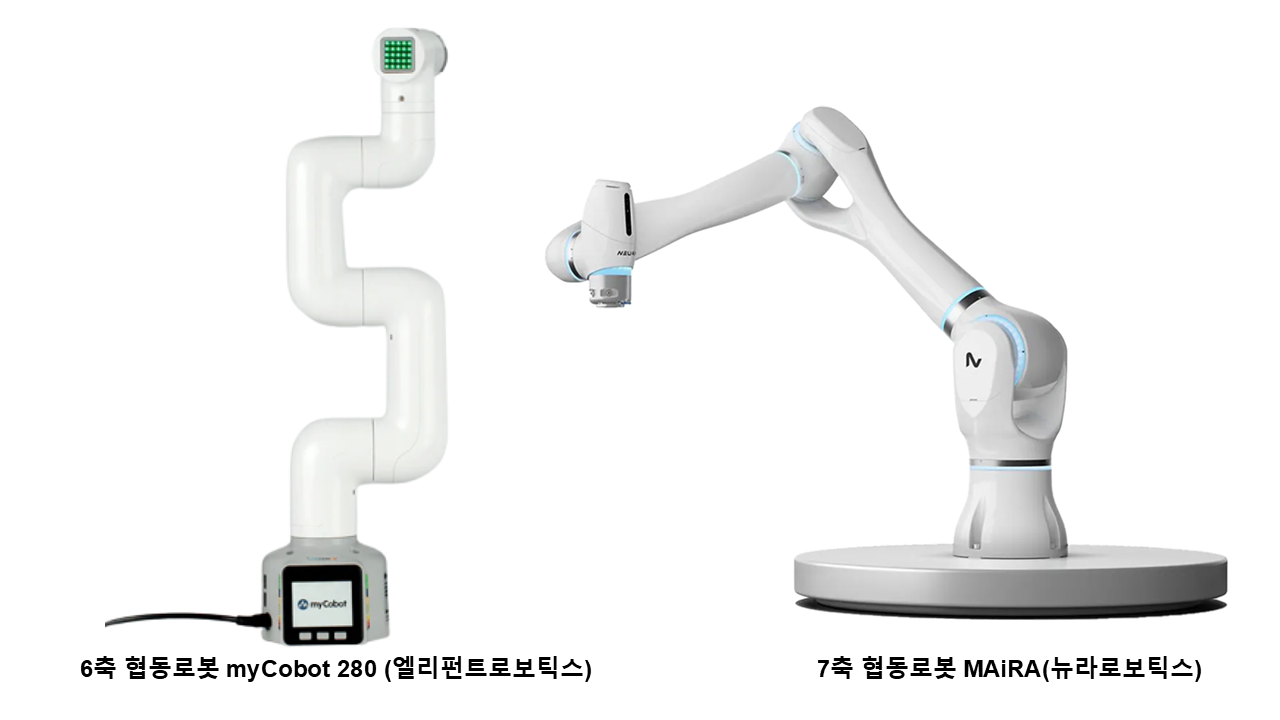
In this post, we are going to compare two popular collaborative robots for research: the 7-axis MAiRA (NEURA Robotics) and the 6-axis myCobot 280 (Elephant Robotics).
By looking at the features of each robot, we will help you make a smart choice on which robot is suitable for which situation.
This post is structured as follows: 👇
▪ Difference between 6-axis and 7-axis collaborative robots
▪ Identifying core differences: "MAiRA vs. myCobot"
▪ Recommendations by research type (AI experiments / Prototyping / Educational practice)
▪ Information on Marosol Special Exhibition benefits
After reading this post to the end, the picture in your head of why your lab really needs to introduce a robot arm, and which of the two models should be reviewed first, will become much clearer. 🙌
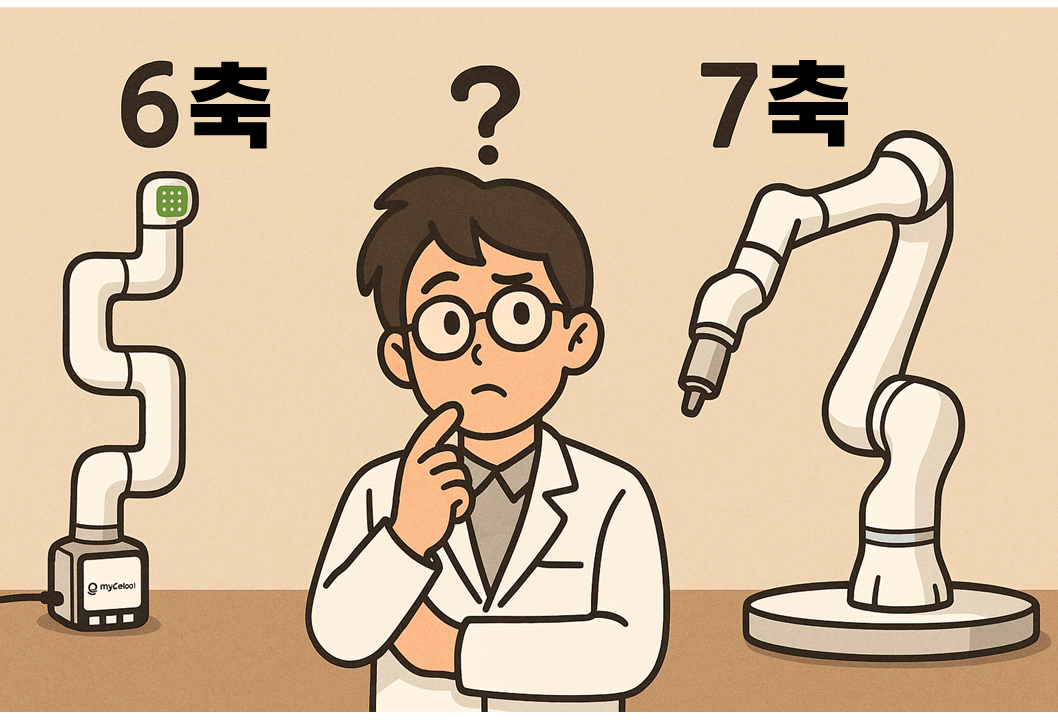
Difference between 6-axis vs. 7-axis Collaborative Robots: What is Different?
First, let’s go over the concept of axes (Degrees of Freedom). The axes (joints) of a robot arm mean the degrees of freedom it can move. A typical industrial robot arm has a 6-axis structure, possessing 6 joints like a human shoulder-elbow-wrist, allowing it to position and rotate its fingertip in any direction in space.
Since 6-axis robots provide sufficient flexibility for most tasks, they have been used as a standard in industry and research for a long time.
Then, what is different about a 7-axis robot (7-DOF Robotics Arm)?
By having a 7th axis, additional freedom of movement is created in the robot arm. For example, a human arm also has extra joints at the shoulder and elbow, so it can work by twisting the arm even in narrow spaces. Similarly, a 7-axis robot can work by changing postures more flexibly in cramped spaces and can manipulate tools in various directions even when approaching very close to a workpiece.
As a result, 7-axis robots utilize workspace more efficiently than 6-axis robots and can show more flexible motions like a human arm.
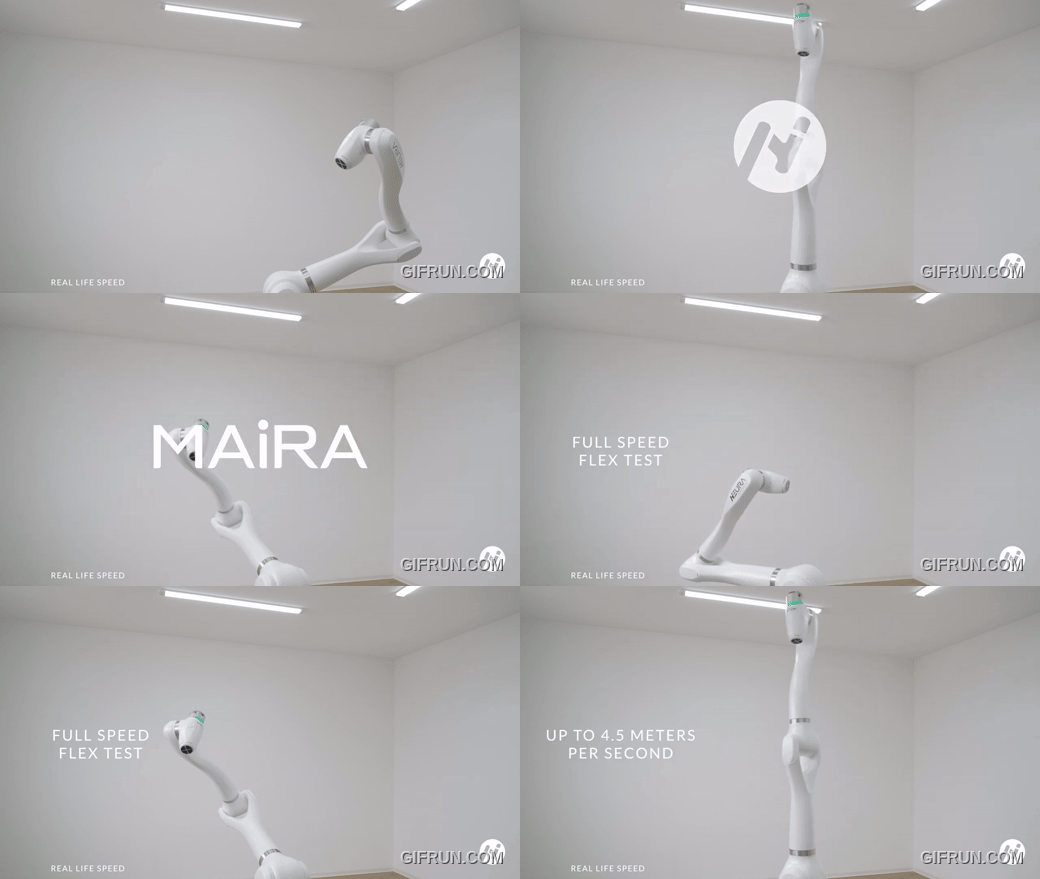
In summary, a 6-axis robot is already sufficiently capable for various tasks, but a 7-axis robot can be called an even more talented arm. Due to the additional axis, options for intermediate postures increase, dead zones at specific positions are resolved, and it allows for relaxed handling of complex tasks. Therefore, if precise and complex motions or work in limited spaces are required depending on the research purpose, the advantages of a 7-axis robot (7-DOF Robotics Arm) will be significant.
NEURA Robotics' 7-axis Collaborative MAiRA
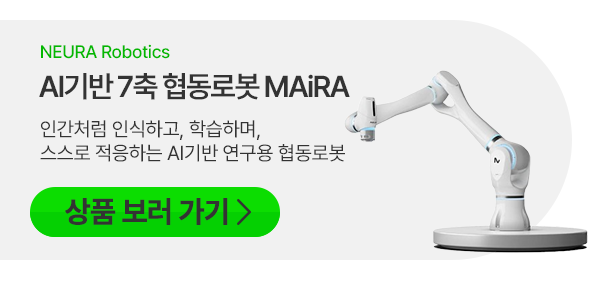
MAiRA is a 7-axis collaborative robot made by the German company NEURA Robotics. This robot is introduced as the world's first commercialized cognitive robot, characterized by being an AI-based robot arm that recognizes surroundings like a person, learns, and adapts on its own.
MAiRA has built-in advanced machine vision (3D camera), spatial acoustic sensors (360° microphone), and a high-performance AI processor, so it operates as if a robot research platform and an AI assistant are combined.
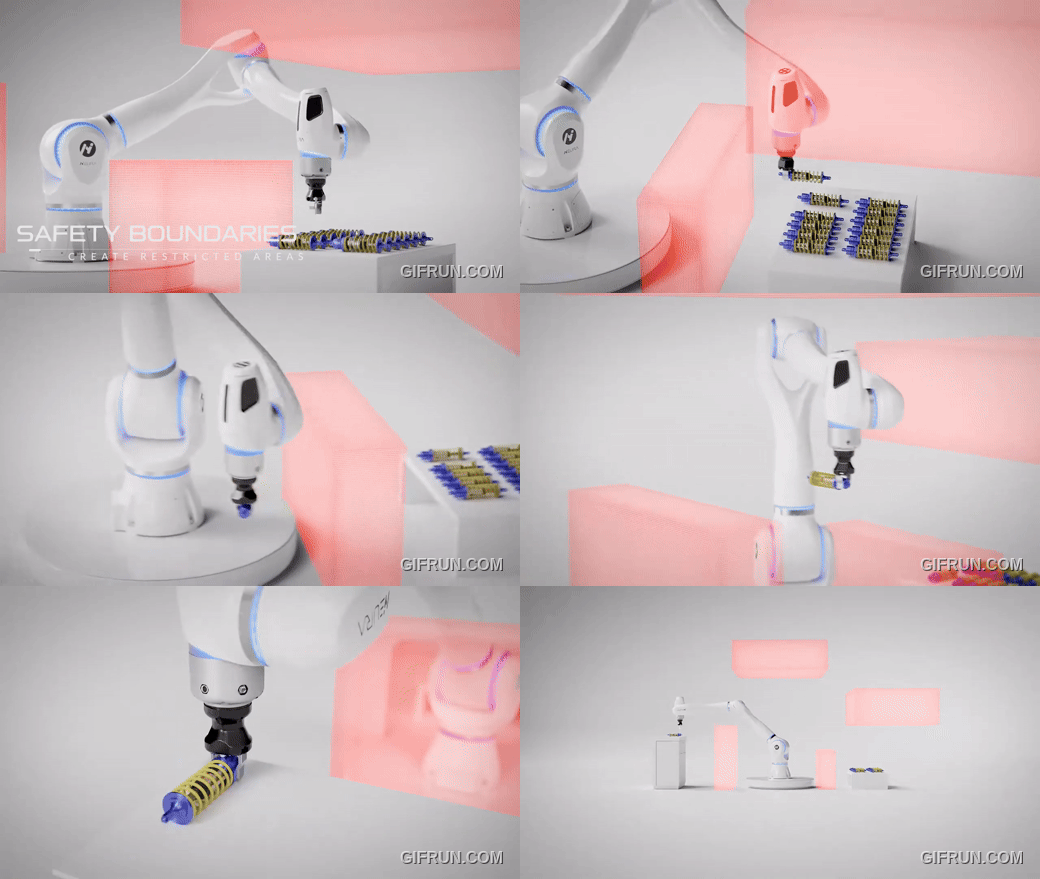
MAiRA Key Features · Brief Summary
① 7-axis High-Precision Control: Moves smoothly along complex paths with a flexible 7-axis structure like a human arm. Based on dual-encoder control, the repeatability is at the level of 0.01mm, making it precise enough to handle small objects accurately.
② Powerful Hardware Specs: Capable of covering both research and industrial environments with a maximum payload of 18kg and a working radius of approximately 1100mm. The main body is solidly built at the 51kg class and responds to various experimental environments with an IP65 dustproof and waterproof rating.
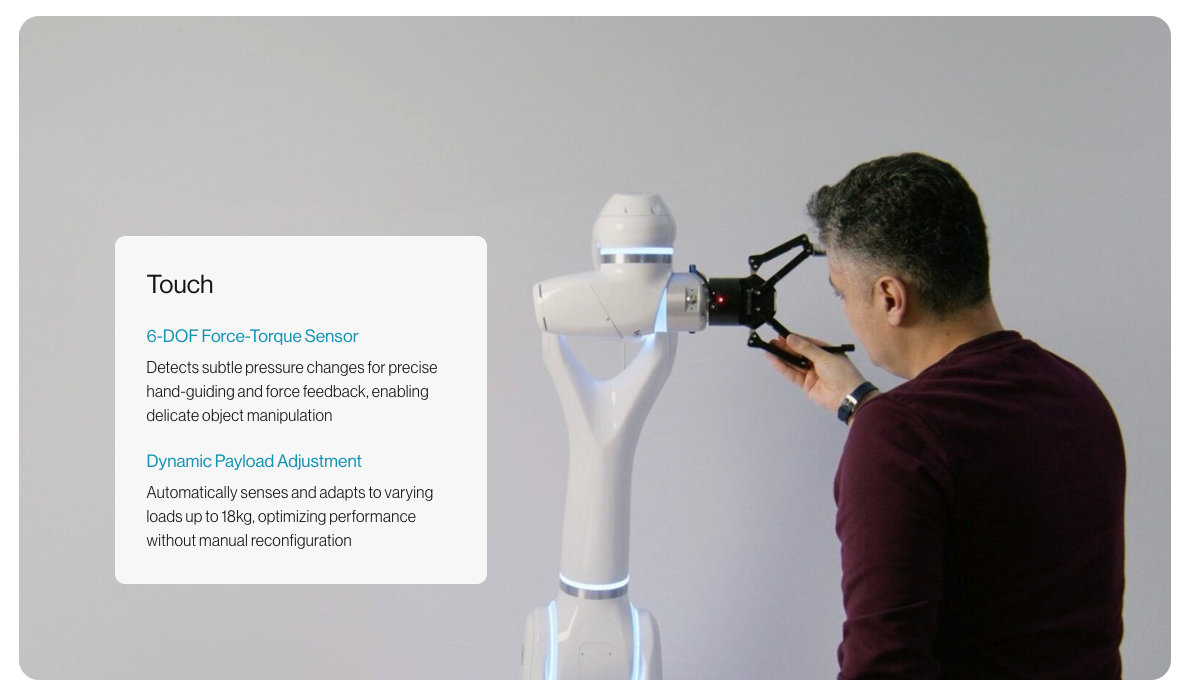
③ AI-based Perception and Sensing Ability: It is a 'multimodal AI robot' equipped with 3D vision, force-torque sensors, and even gesture and voice recognition. It sees, hears, feels, and reacts to surrounding objects in real-time, enabling delicate tasks and intuitive manipulation.
④ High Safety and Collaboration Performance: It features Touchless Safe Human Detection technology that detects people in a non-contact way. It responds immediately by adjusting speed or stopping when someone approaches and is optimized for collaborative environments as it satisfies international safety certifications.
⑤ Easy Usability and Open Structure: Designed to be easily used even by non-experts through drag & teach, and gesture/voice commands. If necessary, in-depth research and development are possible with Python and ROS-based APIs. It officially supports ROS (Robot Operating System), making integration with other robot solutions or research software very flexible. In addition, its scope of utilization is even wider as it possesses a self-optimization function that learns by itself to increase efficiency.
Utilization Fields and Cases of MAiRA
As such, MAiRA, equipped with high specifications and AI technology, is a robot well-suited for advanced research or industrial prototyping. For example: MAiRA can be widely utilized throughout research and industrial prototyping thanks to its high-performance hardware and AI technology. Due to precise control and high payload, it demonstrates its capabilities in difficult manufacturing research such as part machining, assembly, palletizing, and quality inspection, showing stable performance enough to be put into actual industrial automation processes.
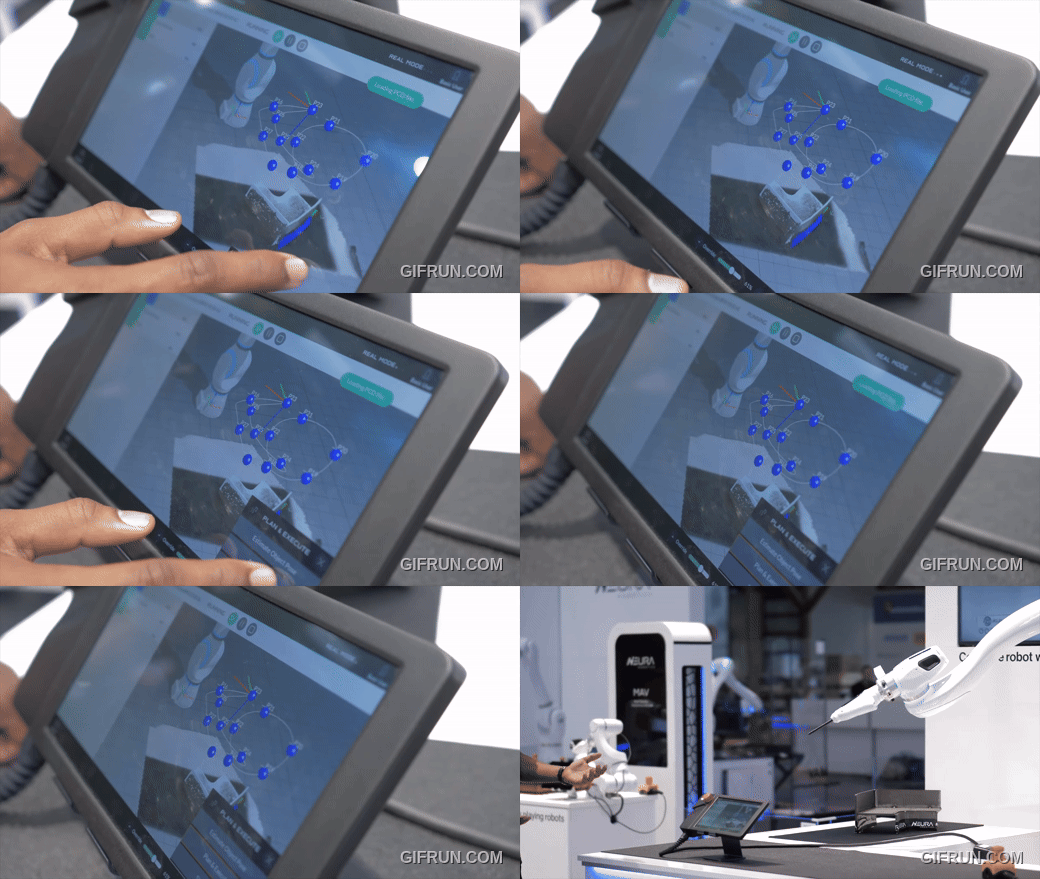
Also, it is particularly well-suited for Human-Robot Interaction (HRI) research due to its excellent ability to understand gestures and voices. It can be utilized as a next-generation AI robot platform that reads human intentions and reacts, beyond the level of simply moving a robot arm. If you are an institution researching conversational task assistance robots or AI service robots, MAiRA will be a good experimental foundation.
⏬ See more about MAiRA Collaborative Robot for Research:
To learn more about MAiRA, please check the technical data and demo videos on the product detail page. If you need robot introduction consultation or a quote, feel free to inquire through the Marosol professional consultation service!
Elephant Robotics' 6-axis Small Collaborative Robot: myCobot 280 M5Stack
Now, for comparison, I will introduce the myCobot 280 M5Stack by Elephant Robotics. myCobot 280 is well-known as one of the world's smallest and lightest 6-axis collaborative robots. The M5Stack version is a model that can be conveniently programmed and controlled as an M5Stack module (a small development board based on ESP32 with a display) is integrated into the robot base. Although it is small enough to be lifted with one hand, it is an all-around desktop robot arm loved by countless users worldwide for education, hobbies, and entry-level research.
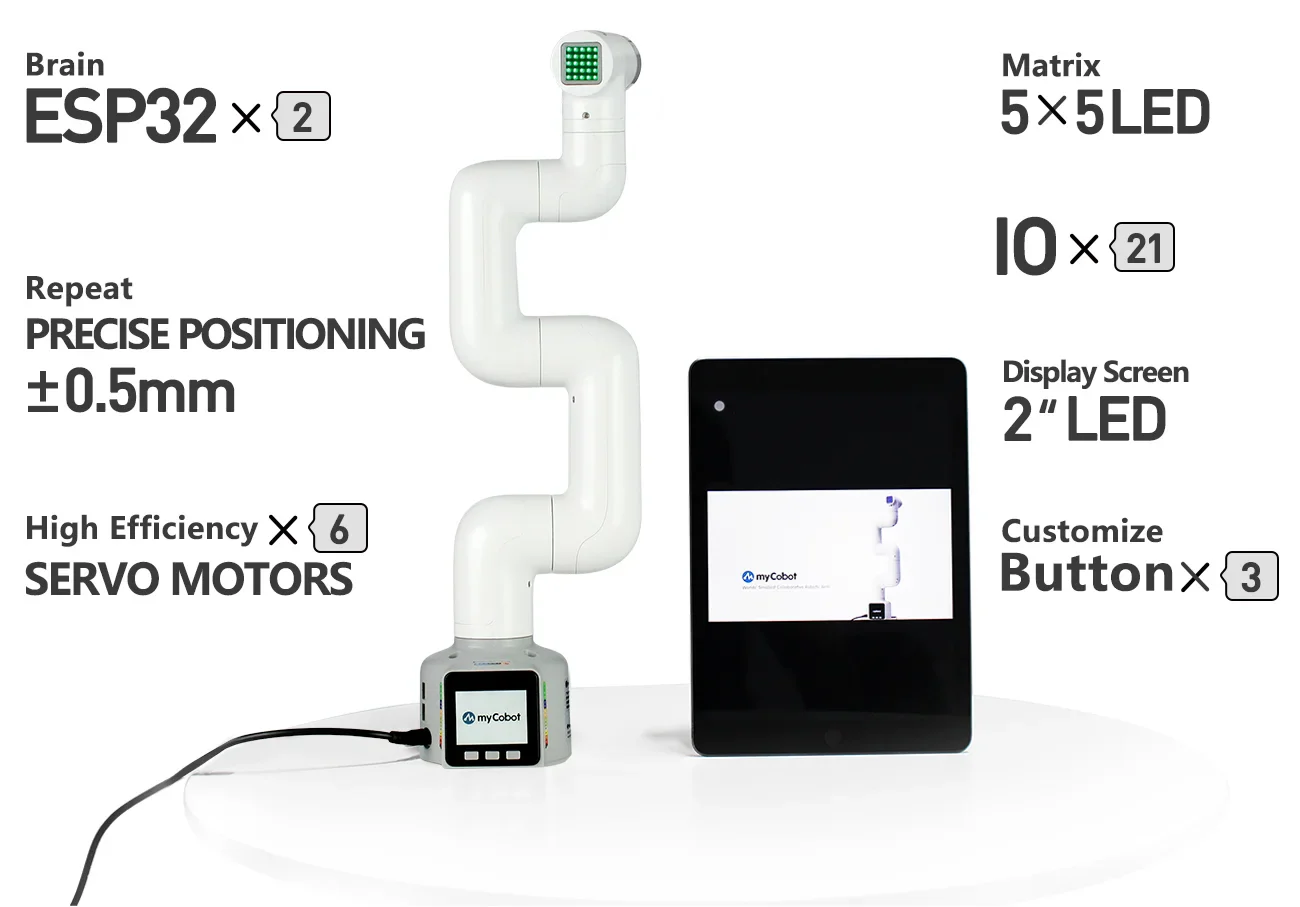
Key Features and Specifications of the myCobot 280 M5 · Brief Summary
① 6-axis Ultralight Robot Arm: myCobot 280 is a small collaborative robot with 6 axes, an ultralight model with an arm length of about 280mm and a weight of only 0.86kg. Instead, the payload it can lift is at the level of 250g, suitable for experiments centered on light objects. The repeatability is about ±0.5mm, showing sufficient performance for basic pick-and-place or educational practice.
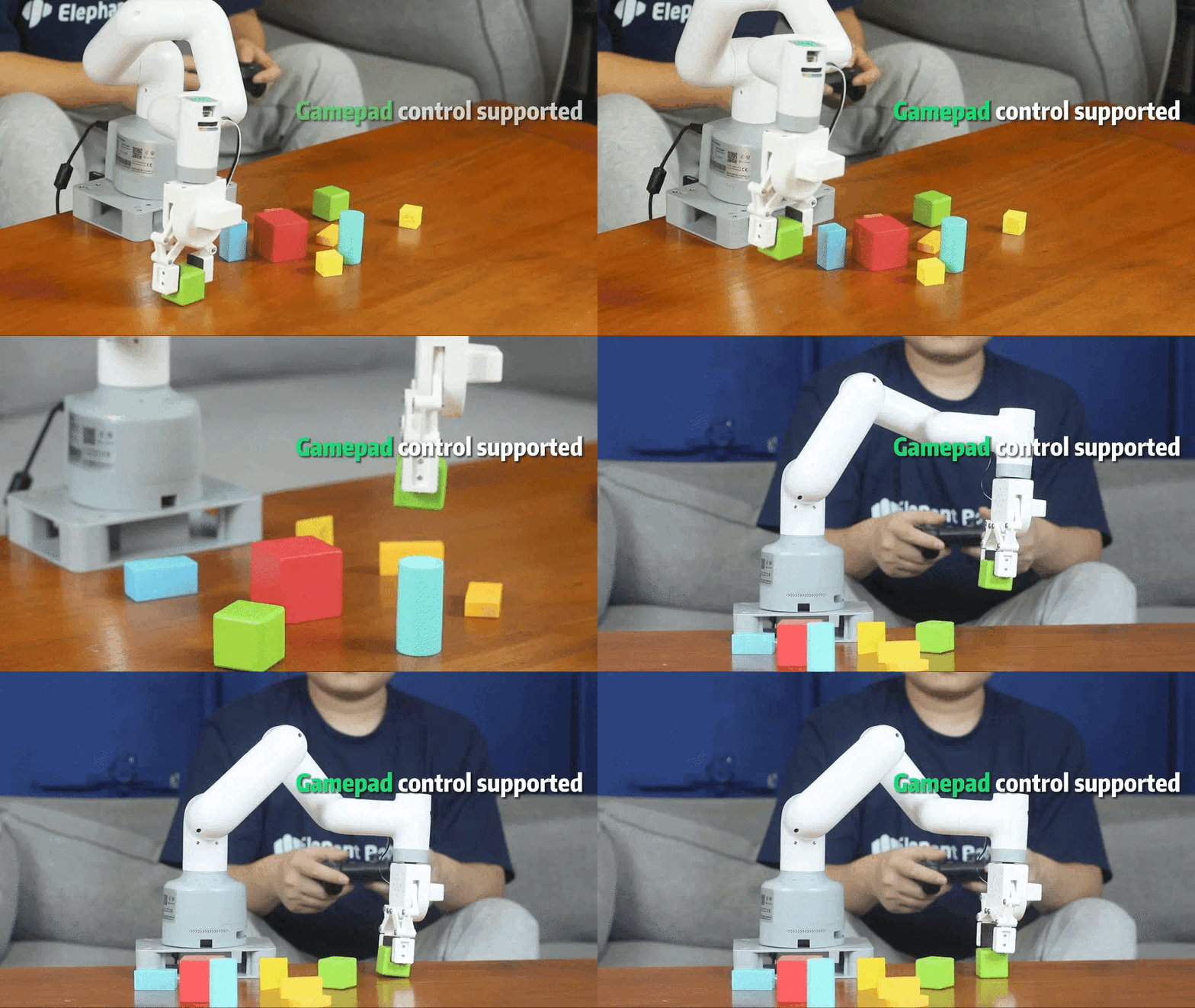
② Easy Control & Education-Friendly Programming: Based on M5Stack, simple manipulation is possible on the robot body, and it can be used conveniently by connecting to a PC or mobile via Wi-Fi/Bluetooth. It provides dedicated block coding (myBlockly, UIFlow) so even beginners can program easily, and as they become familiar, they can expand to Python, C++, and ROS1/ROS2 for advanced research.
③ Safe Collaboration and Built-in Basic Sensors: Its own small and light structure provides basic safety, and torque sensors built into the servo motors can detect collisions and stop immediately. Although there are no complex sensing functions, demos are possible without a fence in labs and educational sites thanks to the safety design following ISO collaborative robot standards.
④ High Scalability and Compatibility: It has LEGO-compatible mounts, so user-made parts can be attached immediately for experiments, and it supports various accessories such as grippers, suction pumps, camera modules, and autonomous driving bases (myAGV). It can be linked with Arduino, Raspberry Pi, etc., making it good for use in maker projects or creative research.
⑤ Active Global Community Support: myCobot has a wide user base worldwide, so tutorials, example codes, and project cases are abundantly shared. A major advantage is that everyone from students learning robots for the first time to developers conducting simple research can easily get help.
Applications and Cases of myCobot 280
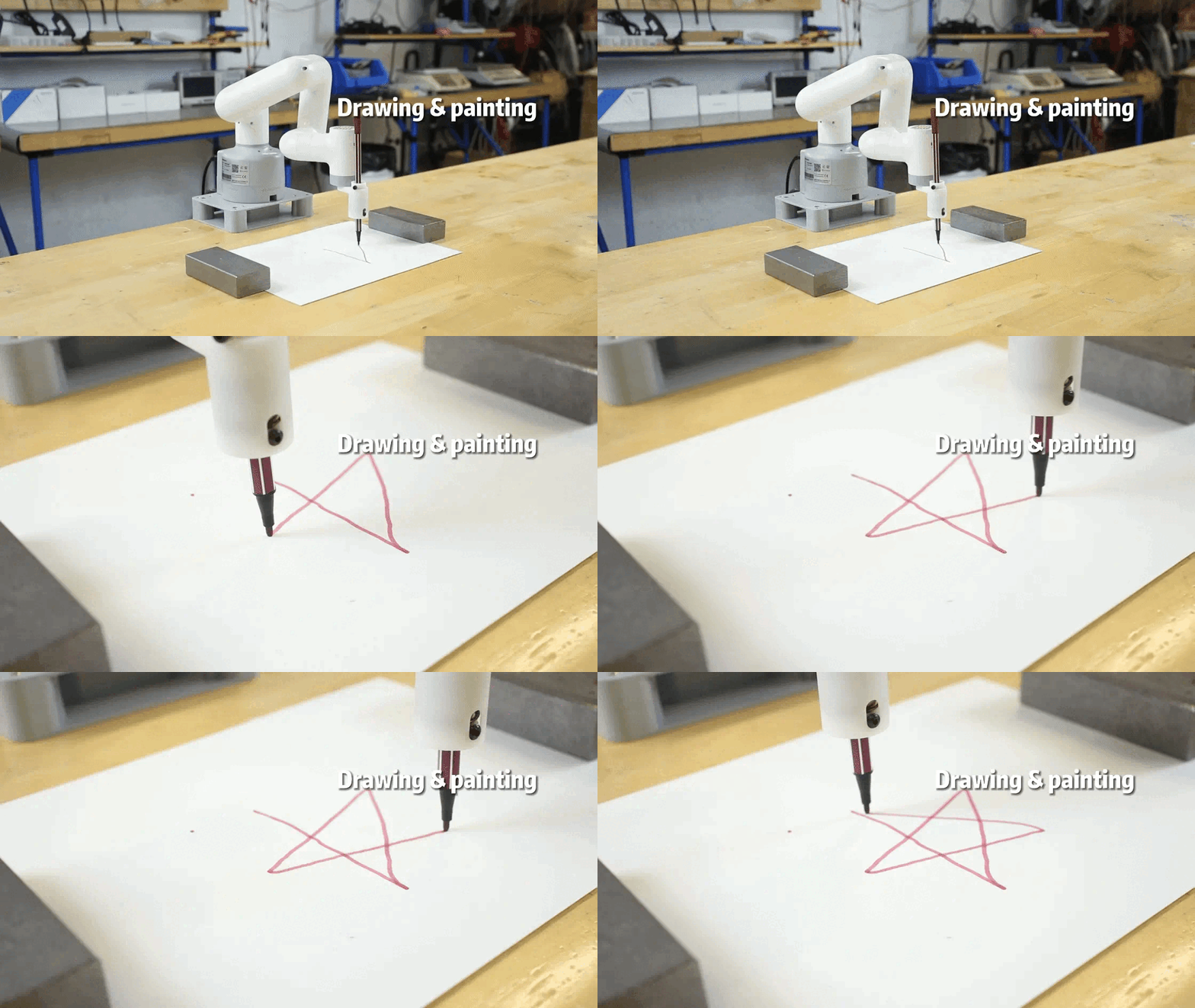
myCobot 280 M5 is small, light, and easy to handle, so it is being utilized in various fields from education and research to personal projects. In schools or maker spaces, it is frequently used as practical equipment where students program robots themselves. They can experience STEM education naturally by creating robot movements with block coding and performing simple sensor experiments.
In laboratories, it is useful for prototyping new algorithms or repetitive task experiments moving small parts. Although it is difficult to handle heavy objects, it can sufficiently perform assisting roles such as light assembly tasks or sample processing.
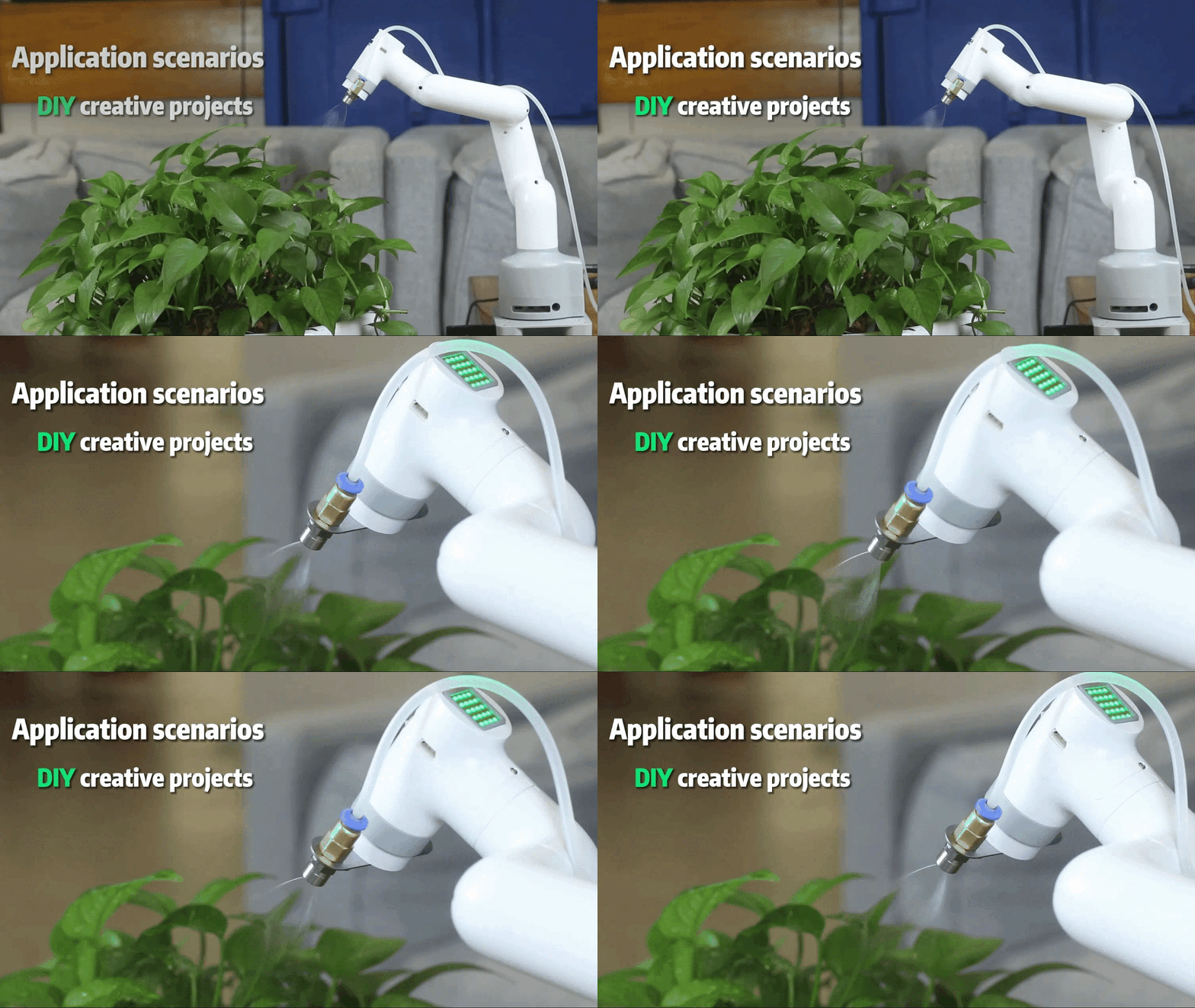
Makers and hobbyists also frequently choose myCobot. Since it is small, it can be used on a desk, making it good for implementing creative ideas such as drink serving robots, simple automation devices, or mini CNC projects into actual actions.
As such, myCobot 280 M5 has a low barrier to entry and high scalability, playing the role of an 'entry-level robot arm' that can be used widely from education to research and hobbies.
⏬ See more about myCobot 280 M5Stack:
More detailed information can be found on the myCobot 280 product page. Along with product specs and usage videos, please request a demo demonstration or a customized quote through a free consultation!
MAiRA vs. myCobot 280 Features Comparison Table
The main specs and features of the two robots compared at a glance are as follows:
※ As seen in the table above, while MAiRA has advanced AI sensors and high performance, myCobot is an accessible robot arm due to its light weight and low price.
Although both products are collaborative robots, the target application fields and specification levels are significantly different, so it is important to choose according to your needs.
Conclusion: Which Research Collaborative Robot Should You Choose?
Now that we've looked at the features of the two robots, let's summarize the recommended scenarios by research purpose.
💡 When MAiRA is suitable :
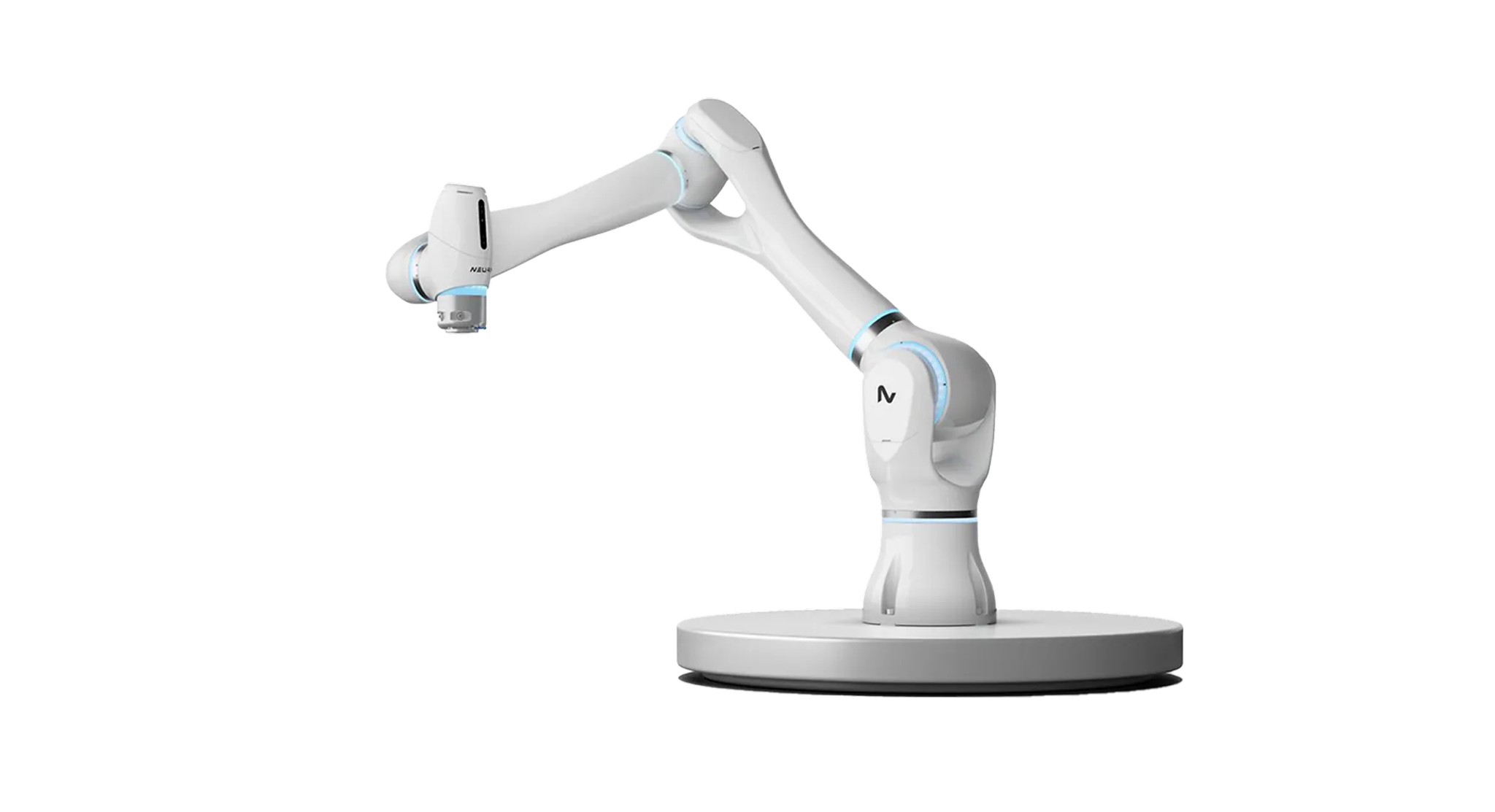
If your research is in a field close to advanced AI robot development or high-difficulty task automation, I would like to recommend MAiRA. For example, if it is research such as AI-based human-robot interaction, precision manufacturing process automation, or handling high-load objects, MAiRA’s powerful hardware (18kg payload, 1100mm workspace) and various sensor integration capabilities will be a great help.
Also, it is perfect for projects that must work closely with people due to safety certification and touchless human sensing technology. When a university lab wants to solve several advanced experiments with one machine, MAiRA will be a reliable all-around research partner.
💡 When myCobot 280 is suitable:
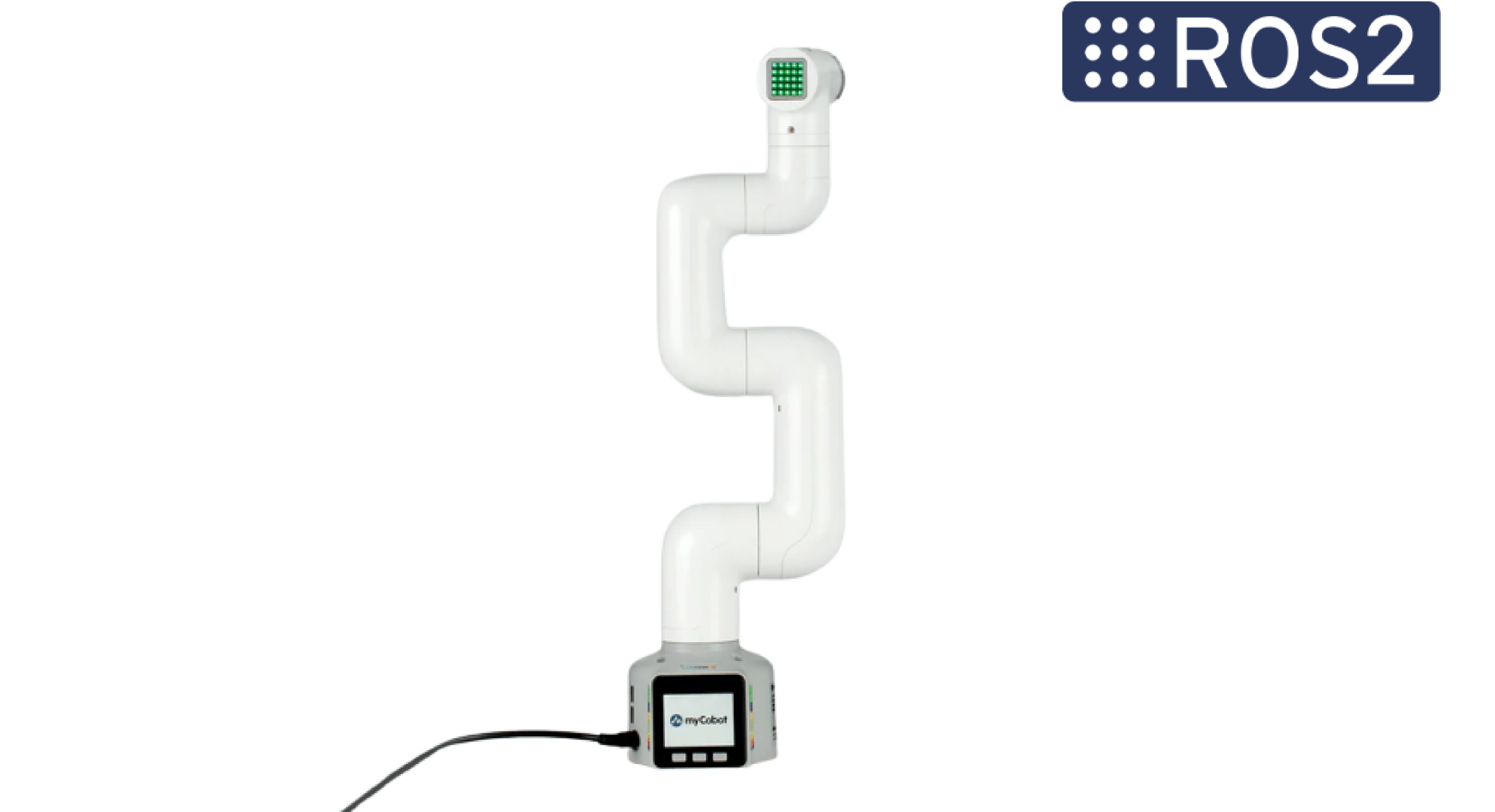
If you are looking for a robot arm for education or prototype production/practice rather than research, please choose myCobot 280 M5. It is perfect when the budget is limited but you want many students to handle multiple robots, or when you want to systematically conduct entry-level robot programming education.
It is light and small, so there is little burden on equipment, and it is relatively easy to repair in case of failure and the cost is not large.
For example, if you conduct robot control practice in engineering education, you can provide experience from basic concepts to ROS programming with myCobot. In summary, it can be called a cost-effective entry-level collaborative robot optimized for education/hobbies/light research.
Want to Introduce a Robot More Smartly?
Both collaborative robots have distinct strengths, so it is difficult to say “this is unconditionally the right answer.” Ultimately, the important thing is to understand and choose the robot that best fits your lab's goals, environment, and budget. I hope your choice has become a bit clearer after comparing the differences between 7-axis and 6-axis, and the features of MAiRA and myCobot 280 in this post.
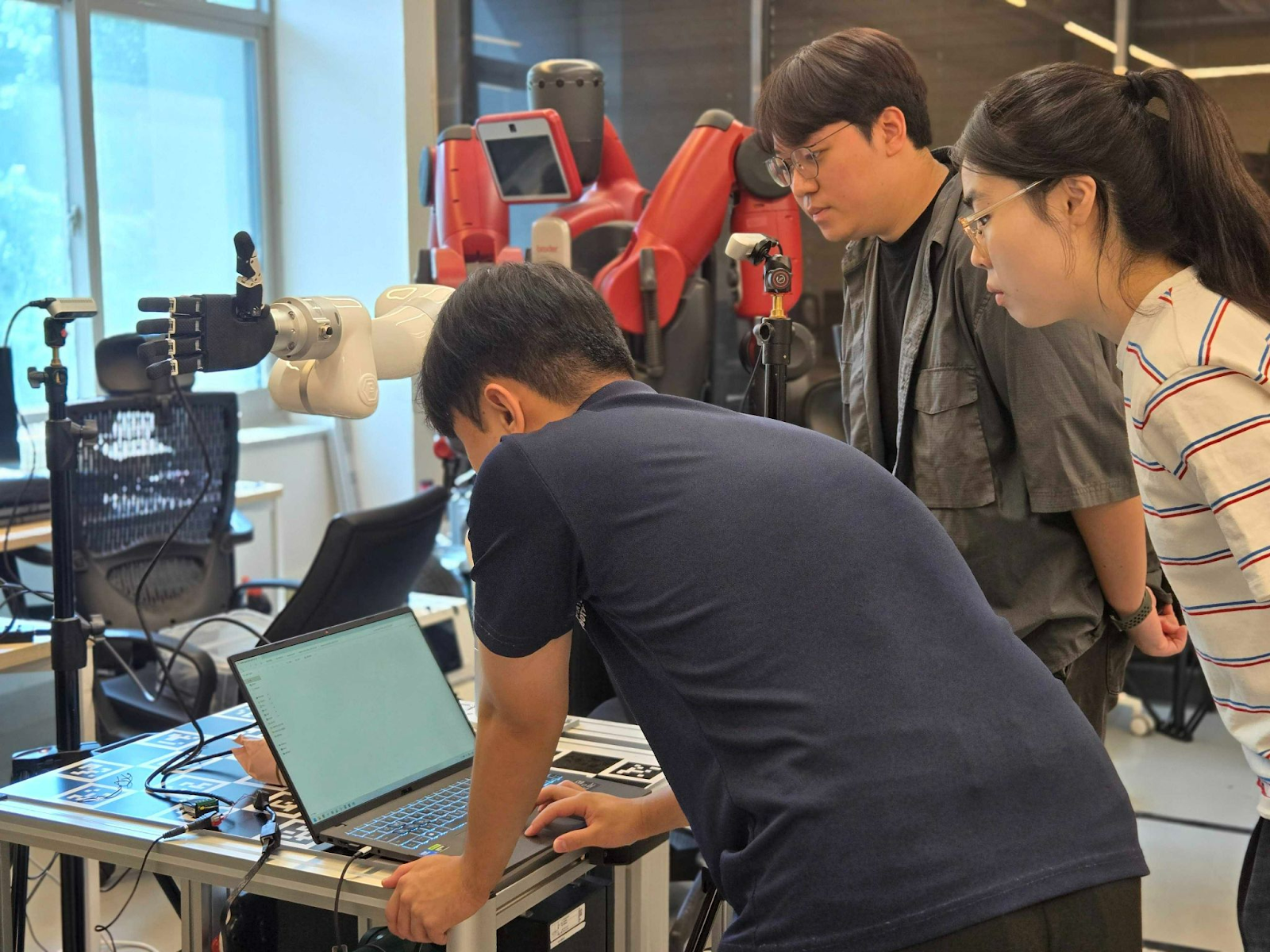 Marosol Robotics Expert providing teaching support for the Collaborative and robot hand delivered to UNIST
And there is one more thing I want to tell you.
Marosol is not simply a “place that sells robots,” but a partner responsible for after introduction as well. Professional engineers directly support from installation to initial teaching and utilization training, and even optimize detailed settings such as force thresholds or motion sequences according to the research environment. Our goal is to help even a lab introducing a robot for the first time achieve results quickly. 🙏
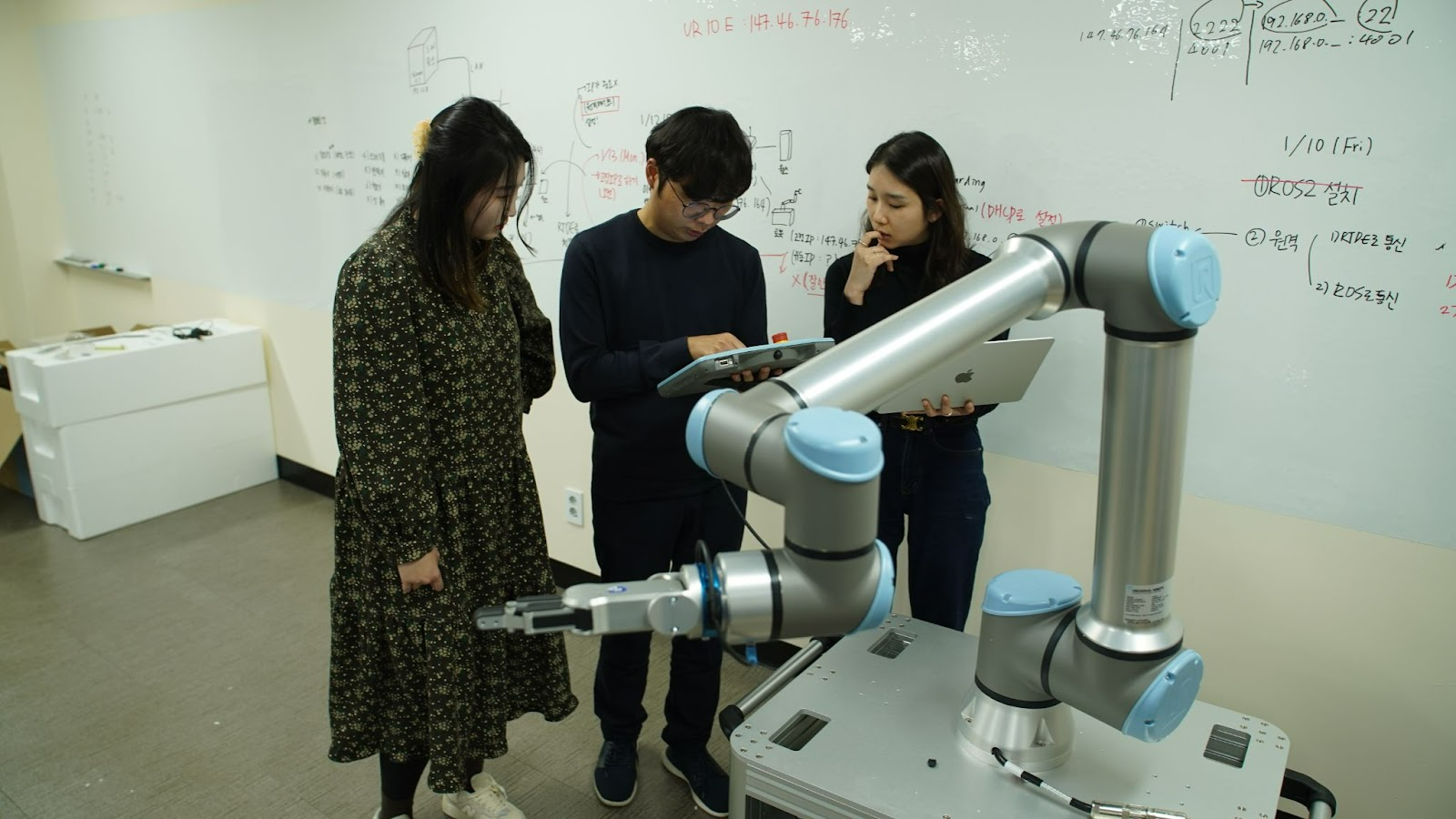 A robotics expert, Marosol, providing UR robot education support to Seoul National University graduate students.
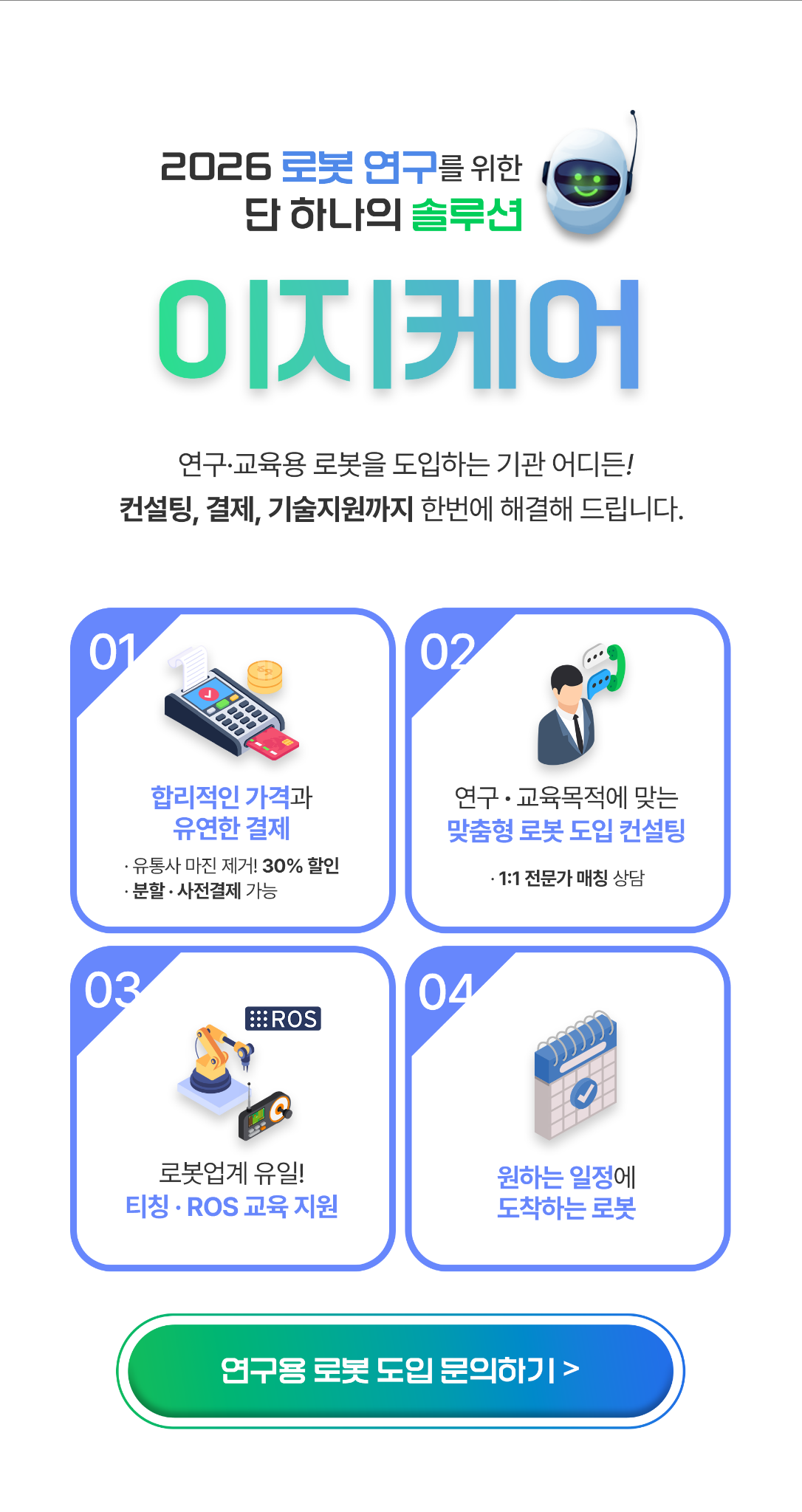
Also, through the EasyCare service, you can solve maintenance, regular inspections, and rapid A/S all at once. 🤗 Currently, if you use the EasyCare service, we are providing a package of discounts + installation support + teaching guides + regular inspections for various robot products (humanoids, grippers, 3D cameras, mobile bases, etc.), so you can significantly reduce introduction costs and operational burdens.
Marosol will continue to be a reliable partner so that researchers and companies can utilize the latest robot technology more easily and conveniently. If you are worried about the choice, please feel free to request a consultation.
We will guide you to the optimal solution according to the research purpose and budget, and help with demo demonstrations and quote consultations! 👇👇
Readers also liked the following posts


Price Negotiation Available Now!
Additional discounts may be available depending on your needs.