

Curious about the robots deployed?


Process Overview
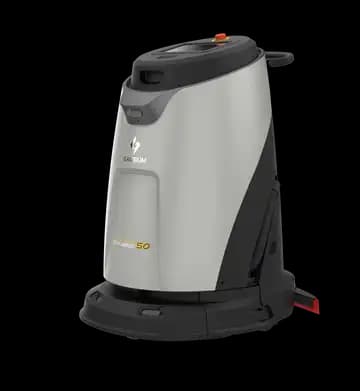
This implementation case involves the introduction of industrial cleaning robots to provide a pleasant environment for the Sinjeon Tteokbokki factory and office. The deployed industrial cleaning robots, Phantas and VC40, are being utilized in various spaces including Sinjeon Tteokbokki's manufacturing lines, the Sinjeon Museum (Tteokbokki Museum), and even the tennis court provided for employee welfare. In particular, the introduction of cleaning robots has significantly improved work efficiency and hygiene management, contributing to providing a pleasant space where both employees and customers can feel at ease.
Warranty Period
1 year
Year of Execution
2024
Project Period
2 weeks
Project Background and Objective
Sinjeon Tteokbokki aimed to establish an unmanned cleaning system through cleaning robots equipped with autonomous driving technology, advanced cameras, and sensors. By dividing cleaning tasks between existing janitorial staff and robots, cleaning efficiency is increased, and nighttime cleaning provides an environment where staff can focus on their work during daytime hours. Additionally, robots can be remotely controlled through SOLlink, a heterogeneous/multi-robot integrated control system, and work reports can be checked after each cleaning task, maximizing management efficiency and convenience.
Components
| Robot |
|
|---|
Workflow
| STEP 1. | Select and Set Cleaning Areas: The industrial cleaning robot selects the designated cleaning area and simply sets the required cleaning mode (wet, dry). |
|---|---|
| STEP 2. | Start Cleaning: The robot moves according to the set cleaning area and starts cleaning. |
| STEP 3. | Movement Between Areas: After completing cleaning in one area (A), it moves to the next area (B) to clean continuously. |
| STEP 4. | Task Completion and Return: Once all cleaning tasks are finished, the robot automatically returns to the charging station to recharge. |
※ The content provided by Bigwave Robotics is protected under U.S. and Canadian copyright and intellectual property laws. Unauthorized reproduction, distribution, or use of this content is strictly prohibited.
Recommended Use Cases

The Industrial Robot Vacuum Cleaner Chosen by Inha Technical College! Capable of Cleaning Up To 212 pyeong Per Hour?! 😎
This is an example of the installation of the Cleaning Robot robot Fantas by Big Wave Robotics (Marosol) for Cleaning Robot the hallways of the Inha Technical College dormitory. By utilizing Fantas’s excellent Cleaning Robot performance, convenience, and charging station, automated cleaning management was implemented in the 1st-floor lobby and hallway areas on all floors, and an unmanned automatic system was put into operation.

Commercial Cleaning Robot Fantas Introduced at Juwangsan National Park Visitor Center
This is an example of the installation of the Fantas cleaning robot by Big Wave Robotics (Marosol) for interior floor cleaning management at the Juwangsan National Park Visitor Information Center. By utilizing Fantas, automated cleaning management was implemented within the visitor information center, and an unmanned automatic system was operated by equipping the robot with a charging station and offering superior cleaning performance and convenience.

Brewing Process Using the Inopiece Muscle Suit Every
Inopiece’s Muscle Suit Every is a non-powered wearable robot that helps minimize worker fatigue by distributing the workload when lifting heavy workpieces or working with the waist bent for extended periods. Utilizing pneumatic artificial muscles, it is not limited by usage time and offers excellent ease of attachment and detachment, minimizing discomfort during task switching and significantly improving work efficiency. * A fee of 200,000 KRW per day applies for the demo.
Process Overview
This implementation case involves the introduction of industrial cleaning robots to provide a pleasant environment for the Sinjeon Tteokbokki factory and office. The deployed industrial cleaning robots, Phantas and VC40, are being utilized in various spaces including Sinjeon Tteokbokki's manufacturing lines, the Sinjeon Museum (Tteokbokki Museum), and even the tennis court provided for employee welfare. In particular, the introduction of cleaning robots has significantly improved work efficiency and hygiene management, contributing to providing a pleasant space where both employees and customers can feel at ease.
Warranty Period
1 year
Year of Execution
2024
Project Period
2 weeks
Project Background and Objective
Sinjeon Tteokbokki aimed to establish an unmanned cleaning system through cleaning robots equipped with autonomous driving technology, advanced cameras, and sensors. By dividing cleaning tasks between existing janitorial staff and robots, cleaning efficiency is increased, and nighttime cleaning provides an environment where staff can focus on their work during daytime hours. Additionally, robots can be remotely controlled through SOLlink, a heterogeneous/multi-robot integrated control system, and work reports can be checked after each cleaning task, maximizing management efficiency and convenience.
Components
| Robot |
|
|---|
Workflow
| STEP 1. | Select and Set Cleaning Areas: The industrial cleaning robot selects the designated cleaning area and simply sets the required cleaning mode (wet, dry). |
|---|---|
| STEP 2. | Start Cleaning: The robot moves according to the set cleaning area and starts cleaning. |
| STEP 3. | Movement Between Areas: After completing cleaning in one area (A), it moves to the next area (B) to clean continuously. |
| STEP 4. | Task Completion and Return: Once all cleaning tasks are finished, the robot automatically returns to the charging station to recharge. |
※ The content provided by Bigwave Robotics is protected under U.S. and Canadian copyright and intellectual property laws. Unauthorized reproduction, distribution, or use of this content is strictly prohibited.
Curious about the robots deployed?
Related Use Cases
The Industrial Robot Vacuum Cleaner Chosen by Inha Technical College! Capable of Cleaning Up To 212 pyeong Per Hour?! 😎
Commercial Cleaning Robot Fantas Introduced at Juwangsan National Park Visitor Center